Key Points
- The US Treasury Department’s Office of Foreign Assets Control (OFAC) has extended the deadline for international energy companies to finalise acquisitions of Lukoil’s international assets until 30 May 2026, from the previous 1 May 2026.
- Lukoil, Russia’s second-largest oil producer, faces sanctions imposed in October 2025, forcing the sale of its $22 billion international portfolio, including the West Qurna 2 oilfield in Iraq where it holds a 75% stake.
- Sales proceeds must be deposited into frozen bank accounts under US supervision, prohibiting direct payments to Russia to prevent funding its war efforts.
- Potential buyers include Carlyle Group (non-exclusive preliminary agreement), Chevron consortiums, Quantum Energy Partners, Xtellus Partners with Todd Boehly and UAE’s Allied Investment Partners.
- The West Qurna 2 field in Iraq has seen Iraq approve transfer to Basra Oil Company after Lukoil declared force majeure due to sanctions; output around 460 kb/d.
- Multiple prior extensions: e.g., to April 1, May 1, amid ongoing negotiations requiring separate OFAC approval for deals.
- Sanctions aim to pressure Russia on Ukraine peace talks, with assets potentially as bargaining chips.
Washington, DC (Evening Washington News) April 30, 2026 –The US Treasury Department has extended the deadline for companies to divest sanctioned Russian oil giant Lukoil of its international assets until 30 May 2026. This move replaces the prior 1 May cutoff and allows continued negotiations for Lukoil International GmbH, which holds the portfolio valued at about $22 billion.
- Key Points
- Why Has the US Extended the Lukoil Assets Deadline?
- What Sanctions Are Imposed on Lukoil’s International Sales?
- Who Are the Potential Buyers for Lukoil’s Assets?
- What Is the Role of West Qurna 2 Field in Iraq?
- How Do Sanctions Affect Lukoil’s Operations?
- What Previous Extensions Occurred?
- Background of the Development
- Prediction: Impact on International Energy Investors
As reported by Charles Kennedy of Oilprice.com, the extension through the Office of Foreign Assets Control (OFAC) permits potential buyers to negotiate deals, but any agreements require separate OFAC authorisation.
The decision reflects ongoing geopolitical pressures from US sanctions imposed on Lukoil in October 2025, alongside Rosneft, during President Donald Trump’s second term.
Why Has the US Extended the Lukoil Assets Deadline?
The extension provides more time for bidders amid complex sanction conditions. Proceeds from sales cannot go directly to Russia; instead, they are frozen in supervised accounts to block war funding.
Reuters, as cited in Fakti.bg reporting, noted that such delays may link to broader talks on ending the Russia-Ukraine war, positioning Lukoil assets as potential bargaining chips.
OFAC has issued repeated general licences since sanctions began, including for wind-down of Lukoil service stations outside Russia.
Earlier extensions pushed deadlines from February end to April 1, then May 1, facilitating “ongoing negotiations with Lukoil” per a US official quoted in reports.
What Sanctions Are Imposed on Lukoil’s International Sales?
US rules impose “extremely strict” conditions, barring direct payments to the Russian side. Funds deposit into blocked accounts under Treasury oversight.
As detailed by Charles Kennedy of Oilprice.com, sanctions followed Russia’s
“lack of serious commitment to a peace process,”
prompting Lukoil to initiate bids in October 2025. This includes waivers for Kazakhstan projects like Tengizchevroil, but no sales authorised there yet.
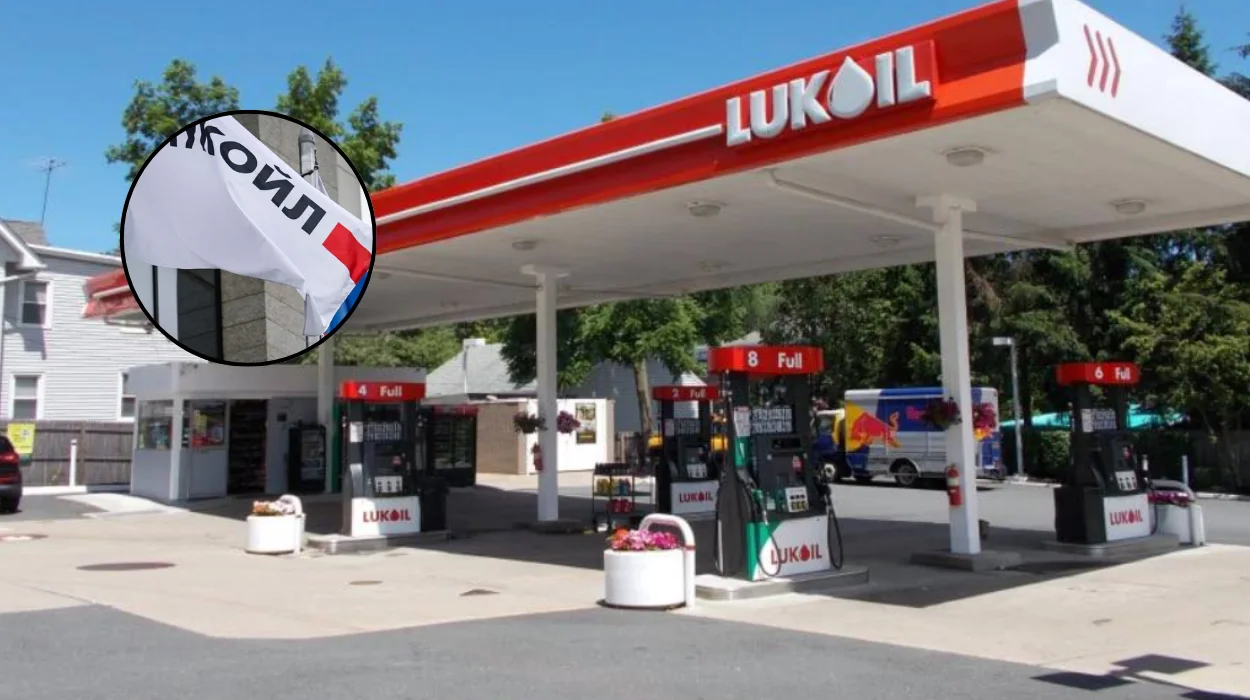
The portfolio spans oil fields, refineries, and fuel stations across continents.
Who Are the Potential Buyers for Lukoil’s Assets?
Lukoil announced in late January 2026 a non-exclusive preliminary agreement to sell most international assets to US firm Carlyle Group, subject to regulatory approvals including OFAC.
Competing bids persist. A Chevron and Texas-based Quantum Energy Partners tie-up remains in talks, as do Xtellus Partners leading a consortium with American billionaire Todd Boehly and UAE’s Allied Investment Partners, sources told Reuters in February.
Carlyle, Chevron, and rivals continue negotiations per Oilprice.com.
What Is the Role of West Qurna 2 Field in Iraq?
The West Qurna 2 field, Lukoil’s largest foreign asset with 75% stake, produces around 460 thousand barrels per day (kb/d).
Following UK and US sanctions in October 2025, Lukoil declared force majeure. Iraq approved an amicable settlement transferring operations to state Basra Oil Company, per Iraqi News Agency on 18 February 2026.
Lukoil seeks settlement ahead of US deadlines to clear paths for sales, potentially to Chevron, though nationalisation risks exist, as reported by MEES.
How Do Sanctions Affect Lukoil’s Operations?
Sanctions force divestment of assets outside Kazakhstan, valued at $22 billion. Lukoil’s overseas portfolio drew global interest despite constraints.
US licences allow maintenance and wind-down, e.g., for service stations until recent extensions. Iraq’s transfer removes a key barrier for buyers.
No direct revenue reaches Russia, aligning with broader freezes of $335 billion in Russian assets since 2022.
What Previous Extensions Occurred?
- November 2025: Licence to 13 December for sales needing approval.
- February 2026: To 1 April, third delay per Reuters.
- Early April 2026: To 1 May.
- 29 April 2026: To 30 May, latest per OFAC.
Each maintains pressure while enabling deals supporting peace efforts.
Background of the Development
US sanctions on Lukoil stem from October 2025 actions amid stalled Ukraine peace talks. President Trump’s administration targeted Russia’s energy sector to curb war funding, freezing assets and mandating sales without revenue repatriation.
Lukoil, as Russia’s second-largest producer, controls vast international holdings built over decades, including West Qurna 2 discovered in 2010s with massive reserves. Prior waves froze $335 billion globally post-2022 invasion. Iraq’s field transfer follows force majeure, prioritising local control. Extensions balance divestment with negotiation leverage.
Prediction: Impact on International Energy Investors
This extension allows more negotiation time for buyers like Carlyle and Chevron, potentially enabling deals for high-value assets like refineries and fields under strict US oversight.
Investors face prolonged uncertainty, with OFAC approvals delaying closings and frozen proceeds limiting liquidity. For firms eyeing West Qurna 2, Iraq’s transfer simplifies entry but introduces nationalisation risks.
Broader effects include sustained pressure on Russian energy revenues, possibly aiding peace talks, while bidders weigh geopolitical risks against $22 billion opportunities. Energy markets may see shifts as assets transition to Western or local hands, affecting supply chains in Iraq and beyond.