

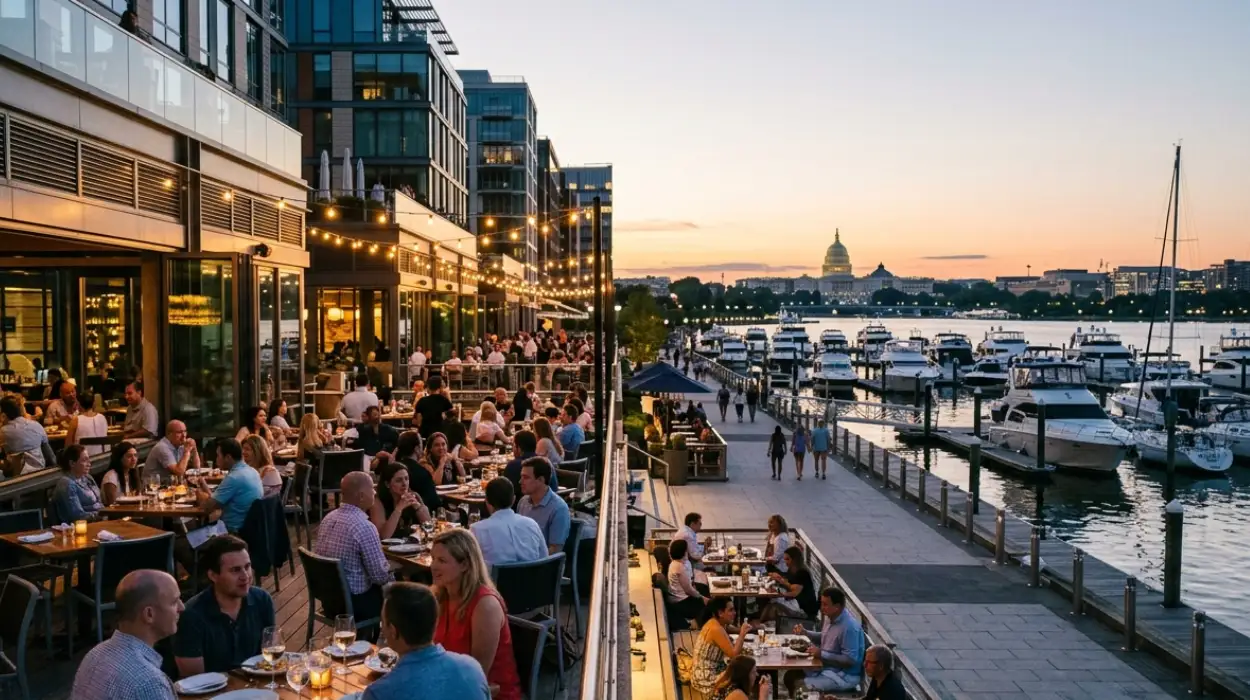
The Wharf in Washington, DC is a planned, mixed‑use waterfront district on the Southwest Waterfront and the Washington Channel, designed to blend dining, residential, retail, and marine activities into a single “live‑work‑play” environment. It has become one of the city’s primary destinations for evening dining with front‑row water views, modern architecture, and close proximity to the U.S. Capitol, National Mall, and the Wharf Marina.
- What is The Wharf in Washington, DC?
- Why should you dine at The Wharf in the evening?
- What defines a “waterfront restaurant with a view” at The Wharf?
- Which waterfront restaurants at The Wharf have the best views?
- Mi Vida: Southwest‑facing Mexican with skyline views
- Del Mar: Spanish‑Mediterranean fine dining by the water
- La Vie: Mediterranean with marina‑facing terraces
- Which more casual waterfront spots are best for easy evenings?
- Hank’s Oyster Bar: classical seafood and oyster bar
- Kirwan’s on the Wharf: Irish pub‑style with waterside outdoor seating
- Rappahannock Oyster Bar: neighborhood oyster‑centric spot
- How do costs and menus differ across waterfront restaurants at The Wharf?
- What time of day and year offers the best experience?
- How should you plan a full evening at The Wharf?
- What role do views, service, and ambiance play in guest satisfaction?
- How does The Wharf compare to other waterfront dining areas in Washington, DC?
- What practical tips should first‑time visitors follow?
- What is the long‑term outlook for waterfront dining at The Wharf?
This guide focuses on waterfront and near‑water restaurants at The Wharf that emphasize views, atmosphere, and consistency so diners can plan high‑impact evening meals that remain relevant year after year.
What is The Wharf in Washington, DC?
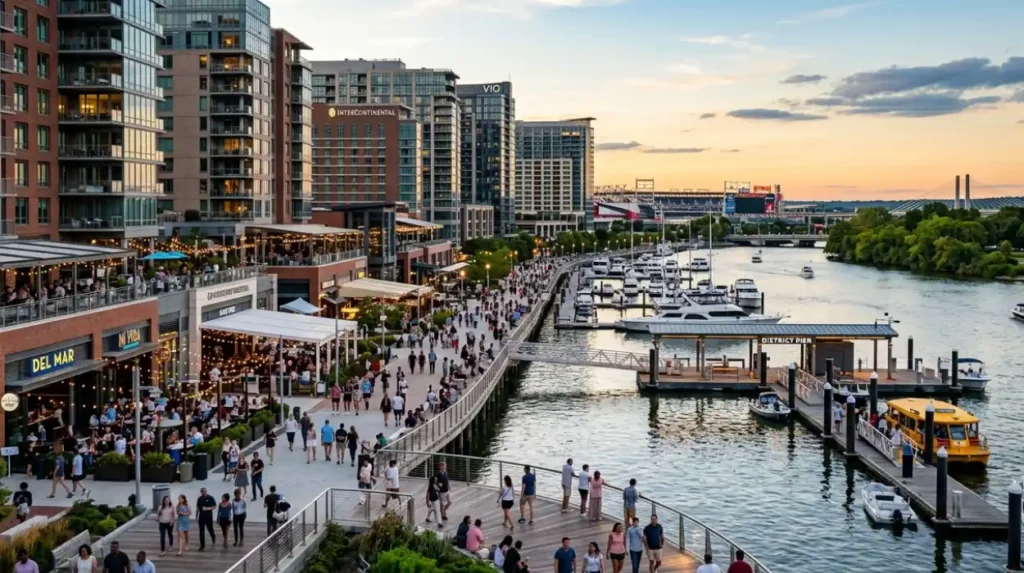
The Wharf is a 50‑acre, two‑phase redevelopment of the Southwest Waterfront that began opening in 2017 and substantially completed by the early 2020s. It sits along the Washington Channel, bordered by the Potomac River to the south, and connects via bridges and pedestrian paths to East Potomac Park and the Nationals Ballpark across the river.
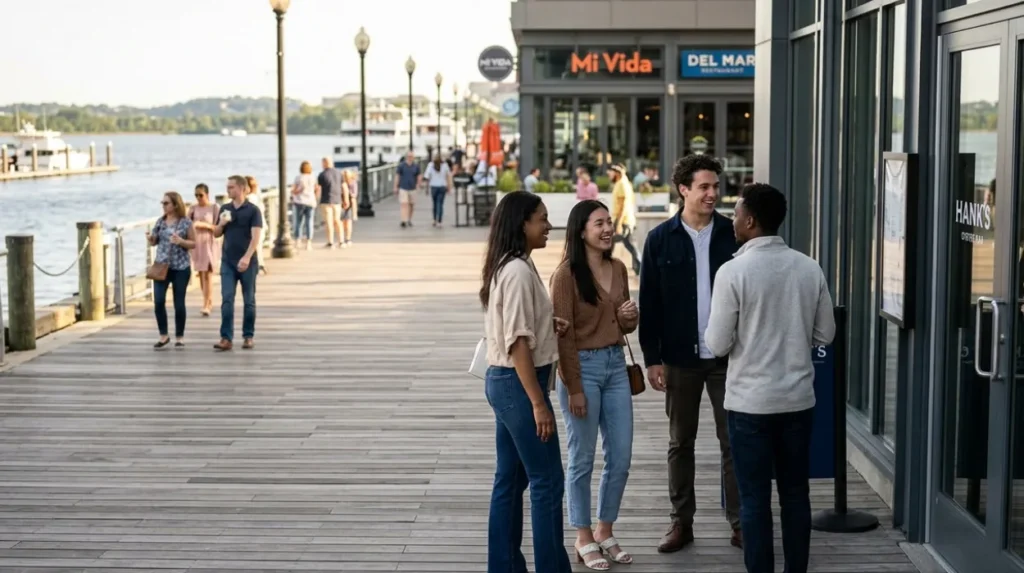
The project includes more than 1.5 million square feet of residential and hotel space, over 300,000 square feet of retail, and multiple restaurants, bars, and marinas. Its “waterfront promenade” runs along the Washington Channel and is lined with public piers, performance spaces, and open plazas, creating a continuous dining and strolling experience.
Why should you dine at The Wharf in the evening?
Evening dining at The Wharf capitalizes on softened light over the Washington Channel, illuminated boats, and the glow of district landmarks visible from the channel front. The area’s layout funnels pedestrian traffic along the waterfront promenade, which means restaurant patios and rooftop terraces fill but rarely feel isolated or deserted.
The Wharf also hosts seasonal events such as outdoor concerts, food festivals, and holiday markets, which amplify the social and sensory appeal of an evening meal. Because the district is destination‑oriented rather than purely residential, many restaurants operate late into the evening, seating diners after 9 p.m. most nights.
What defines a “waterfront restaurant with a view” at The Wharf?
A “waterfront restaurant with a view” at The Wharf is a full‑service dining venue that places patrons either directly on or very near the Washington Channel, with window lines or outdoor seating oriented to capture the water, boats, and distant skyline. These venues typically feature patios, terraces, or floor‑to‑ceiling glass that frame the water while minimizing visual obstructions such as large walls or dense landscaping.
Best‑view restaurants also maintain a stable menu mix—seafood‑forward, Mediterranean, or Latin American cuisines—so the visual and culinary themes align with a classic waterfront dining archetype. Consistent reservation availability via platforms like OpenTable and positive recent review scores (generally 4.4/5 or higher) reinforce their reputation as reliable evening destinations.
Which waterfront restaurants at The Wharf have the best views?
Mi Vida: Southwest‑facing Mexican with skyline views
Mi Vida is a high‑end Mexican restaurant at The Wharf with a large, multi‑level terrace overlooking the Southwest Waterfront and the Washington Channel. It combines a contemporary Mexican menu—tacos, ceviches, grilled meats, and tequila‑centric cocktails—with a design that emphasizes glass balustrades and uncluttered sight lines toward the water and the city skyline.
OpenTable and other review platforms consistently rate Mi Vida above 4.5/5 for its “view” and “ambiance” categories, underscoring customer agreement that it ranks among the district’s top view‑driven spots. Its success has helped anchor the Southwest Waterfront as a rival to Georgetown’s waterfront for evening dining.
Del Mar: Spanish‑Mediterranean fine dining by the water
Del Mar, by chef Fabio Trabocchi, is a Spanish‑influenced seafood restaurant on the Wharf promenade that has earned a Michelin star and is frequently cited as one of the area’s most refined waterfront options. Its interior faces the channel with large windows and an outdoor terrace, and the menu leans on seafood paella, grilled whole fish, and tapas‑style plates suited to a waterfront setting.
Reviews emphasize the combination of polished service, creative plating, and reliable reservation availability, which makes Del Mar a strong choice for formal evening meals with a view. The restaurant’s positioning within the Wharf’s core—near the marina and public piers—means it benefits from year‑round activity along the waterfront.
La Vie: Mediterranean with marina‑facing terraces
La Vie is a Mediterranean restaurant at The Wharf that situates its main dining room and terrace directly overlooking the Wharf marina and Washington Channel. The space uses a light, coastal‑style palette—white walls, wood finishes, and minimal window frames—to keep the water and moored boats in visual focus while diners eat.
The menu draws from Southern European traditions, including grilled fish, roasted vegetables, and mezze‑style starters, aligning with the casual‑yet‑refined vibe of waterfront dining. Because La Vie is positioned along one of the Wharf’s main promenade segments, it also benefits from foot traffic and events that keep the atmosphere lively in the evening.
Which more casual waterfront spots are best for easy evenings?
Hank’s Oyster Bar: classical seafood and oyster bar
Hank’s Oyster Bar, with a second location on the Wharf, operates as a casual seafood and oyster bar with indoor seating and outdoor tables near the Far East side of the promenade. It emphasizes raw oysters, clam chowder, fried seafood platters, and approachable cocktails, making it a go‑to for relaxed, group‑oriented evenings without the formality of fine‑dining service.
The Wharf location retains Hank’s familiar layout—bar seating, communal tables, and a modest outdoor area—while orienting several tables toward the water so diners get partial views of boats and passing traffic on the channel. Its reputation for affordability within the Wharf ecosystem has helped it occupy a niche between upscale waterfront restaurants and purely bar‑oriented spots.
Kirwan’s on the Wharf: Irish pub‑style with waterside outdoor seating
Kirwan’s on the Wharf is an Irish pub‑style venue with a strong emphasis on beer, whiskey, pub fare, and live music, but it also offers a roped‑off outdoor seating area adjacent to the marina. This configuration allows guests to sit near the water and watch yachts and boats move past while drinking and sharing plates such as fish‑and‑chips, burgers, and sliders.
The venue’s “spill‑out” design—open walls and retractable sections—means the space can feel more like an extension of the waterfront promenade than a closed‑off restaurant. For diners seeking a low‑pressure, alcohol‑forward evening with a waterfront edge, Kirwan’s balances view‑adjacent seating with a pub‑like price point.
Rappahannock Oyster Bar: neighborhood oyster‑centric spot
Rappahannock Oyster Bar at The Wharf is an oyster‑focused establishment that sits near the historic fish‑market area and offers outdoor seating with sight lines toward the marina and channel. The menu centers on oysters from the Chesapeake and mid‑Atlantic, raw bar platters, and simple seafood dishes that pair well with white wine and local beer.
Its location on the eastern end of the Wharf promenade gives it a slightly more neighborhood‑feel than some of the flashier, centrally located venues, which can translate into steadier crowds and more consistent seating availability. For visitors prioritizing a strong oyster‑based experience with a casual waterfront backdrop, Rappahannock functions as a reliable evening option.
How do costs and menus differ across waterfront restaurants at The Wharf?
Waterfront restaurants at The Wharf range from mid‑priced casual spots to high‑end fine‑dining venues, with typical entrée prices from about 18–22 USD at casual oyster bars to 40–70 USD at white‑tablecloth, Michelin‑recognized outlets. For example, Hank’s Oyster Bar and Rappahannock Oyster Bar cluster in the lower‑to‑mid range, while Del Mar and Mi Vida sit firmly in the “expensive” category on reservation platforms.
Menu structures also diverge sharply. Hank’s and Rappahannock emphasize value‑driven plates such as oyster dozen specials, combo platters, and bar‑style sliders, which appeal to groups and late‑night diners. Del Mar and Mi Vida, by contrast, offer tasting menus or multi‑course formats, higher‑priced seafood presentations, and curated wine or cocktail pairings that align with fine‑dining expectations.
What time of day and year offers the best experience?
The Wharf’s waterfront restaurants are most visually compelling in the late afternoon and early evening, roughly from 5 p.m. to 8:30 p.m., when the setting sun reflects off the Washington Channel and the skyline lights begin to appear. In spring and fall, outdoor seating is in high demand and often fills quickly, which has led many restaurants to implement reservation systems or wait‑list apps.
Summer months bring the highest foot traffic, with weekend evenings seeing extended patio hours and more live music or street‑style entertainment along the waterfront. Wintertime shifts the emphasis indoors, but large windows and heated terraces at venues such as Del Mar and Mi Vida still allow diners to maintain a strong visual connection to the marina and the water.
How should you plan a full evening at The Wharf?
Planning a full evening at The Wharf usually begins with selecting a primary dining venue that matches your budget, cuisine preference, and view priority. Next, booking a table in advance—especially on weekends or during festival seasons—increases the likelihood of securing window or patio seating rather than interior‑only options.
After dinner, many visitors walk the promenade, take in the marina lights, or stop at rooftop or bar venues such as Whiskey Charlie Rooftop Bar, which offers elevated views of the channel and the district skyline. Weekday evenings often allow for more spontaneous seating and shorter wait times, whereas weekend evenings may require earlier reservations and flexible timing.
What role do views, service, and ambiance play in guest satisfaction?
Reviews and scoring data for Wharf waterfront restaurants consistently highlight three factors: view quality, service reliability, and overall ambiance. Diners frequently call out Mi Vida and Del Mar for “great views” and “outstanding service,” which correlates with higher average ratings and repeat visitation.
Service expectations scale with price: casual spots like Hank’s and Kirwan’s are praised for quick turnover and friendliness, while Del Mar and Mi Vida are judged more strictly on pacing, wine knowledge, and attention to detail. Ambiance is often described in terms of “water‑facing,” “lively but not too noisy,” and “good for groups,” which indicates that diners prioritize both visual payoff and social comfort.
How does The Wharf compare to other waterfront dining areas in Washington, DC?
The Wharf differs from Georgetown’s waterfront primarily in its scale, programming, and density of restaurants per linear foot of shoreline. Georgetown’s waterfront offers iconic spots such as Sequoia and Fiola Mare, which provide dramatic Potomac‑facing views and long‑established reputations, but with fewer venues concentrated along the same stretch.
The Wharf, by contrast, clusters multiple view‑oriented restaurants within a tight, walkable corridor, allowing diners to move between options without long drives or complex transit. This density, combined with public events and marina activity, creates a more intensely “destination‑oriented” evening experience than the more dispersed waterfront venues in other parts of DC.
What practical tips should first‑time visitors follow?
First‑time visitors should book reservations for Mi Vida, Del Mar, and La Vie at least 3–7 days in advance, especially on weekends or during peak seasons. For Hank’s Oyster Bar, Rappahannock, and Kirwan’s, walk‑ins are more feasible on weekdays, though groups of four or more should still call ahead.
Arriving 15–20 minutes before your reservation allows time to orient yourself along the promenade, identify the best outdoor seating, and use nearby public restrooms and parking. Evening diners should also check for special events or weather‑related closures, since outdoor seating is central to the Wharf’s waterfront appeal.
What is the long‑term outlook for waterfront dining at The Wharf?
The Wharf’s status as a planned, mixed‑use district gives waterfront dining there a stable structural advantage, as the city and developers have invested to keep the marina, public spaces, and access infrastructure active year‑round. Ongoing additions—new restaurants, seasonal pop‑ups, and expanded event programming—are likely to reinforce the Wharf’s role as Washington, DC’s primary modern waterfront destination.
For diners, this means that a focus on Mi Vida, Del Mar, La Vie, Hank’s, Rappahannock, and Kirwan’s will remain a defensible strategy for evenings with a view for the foreseeable future. As long as the Washington Channel remains a focal point for both marina activity and public promenade use, these venues will continue to anchor evening waterfront dining in the district.
What is The Wharf in Washington, DC?
The Wharf is a large, mixed-use waterfront district in Washington, D.C. that combines dining, residential, retail, and marina activities along the Washington Channel.
It spans about 50 acres on the Southwest Waterfront and was developed in phases starting in 2017. The area features a continuous waterfront promenade lined with restaurants, hotels, piers, and public spaces, making it one of the city’s main destinations for dining and entertainment.