
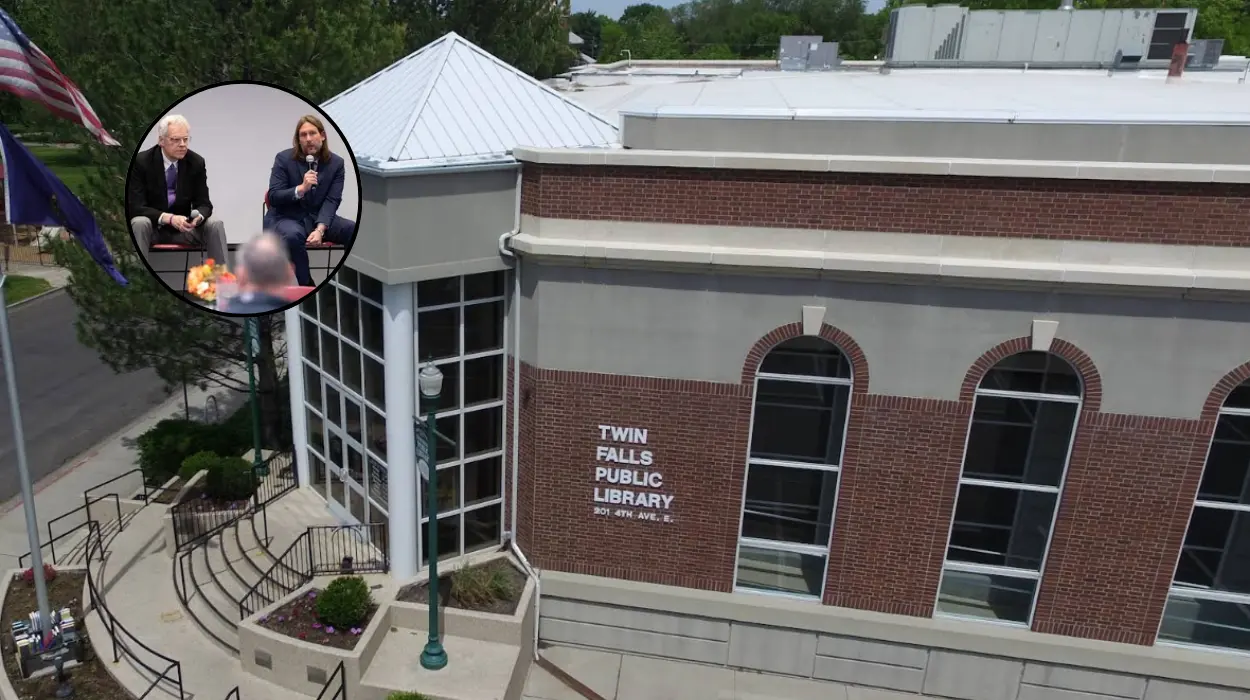
Key Points
- Dr. Markie McBrayer, Associate Professor of Political Science at the University of Idaho, will present on the history of US political parties at Twin Falls Public Library.
- The event highlights that all US presidents except George Washington represented a political party.
- George Washington, elected before the party system emerged, warned against parties in his 1796 Farewell Address, stating they “serve always to distract the public councils and enfeeble the public administration. It agitates the community with ill-founded jealousies and false alarms, kindles the animosity of one party against another, foments occasionally riot and insurrection.”
- Presentation covers the evolution of party systems over time.
- Program presented under “Politics & Parties” series by Dr. Markie McBrayer at Twin Falls Public Library.
- Made possible by the Idaho Humanities Council.
- Speaker bio: Dr. McBrayer teaches American politics, public policy, and statistics; researches local and state politics, social policy, housing, and gentrification; publications in Political Research Quarterly, Urban Affairs Review, and Policy Studies Journal.
Twin Falls (Evening Washington News) April 21, 2026.
- Key Points
- What Is the History of Political Parties in the United States?
- Who Is Dr. Markie McBrayer and What Are Her Qualifications?
- Why Did George Washington Warn Against Political Parties?
- What Will the Presentation Cover?
- How Is the Event Supported?
- When and Where Is the Presentation Taking Place?
- Background of the Development
- Predictions for Local Audience Impact
What Is the History of Political Parties in the United States?
Twin Falls Public Library has scheduled a presentation titled “Politics & Parties” by Dr. Markie McBrayer, as detailed in the library’s official event listing. The event underscores a key historical fact: in the history of the United States, all presidents represented a political party, with the exception of one.
Founding Father George Washington was elected before a party system fully emerged, although political parties began to form while he was in office.
Washington expressed strong reservations about political parties. In his Farewell Address of 1796, he warned that a party system
“serves always to distract the public councils and enfeeble the public administration. It agitates the community with ill-founded jealousies and false alarms, kindles the animosity of one party against another, foments occasionally riot and insurrection.”
Dr. McBrayer will discuss the party systems and the evolution of political parties over time during this program.
The presentation is made possible by the Idaho Humanities Council, according to the event description provided by Twin Falls Public Library staff.
Who Is Dr. Markie McBrayer and What Are Her Qualifications?
Dr. Markie McBrayer serves as an Associate Professor of Political Science at the University of Idaho, where she teaches American politics, public policy, and statistics. Her research focuses on local and state politics and policy, particularly social policy, housing, and gentrification in the United States.
Her scholarly work has appeared in prominent journals, including Political Research Quarterly, Urban Affairs Review, and Policy Studies Journal.
These details come directly from the speaker bio in the Twin Falls Public Library’s event announcement for the “Politics & Parties” presentation.
As reported in the library’s program listing, Dr. McBrayer’s expertise positions her to provide an informed discussion on the development of US political parties.
Why Did George Washington Warn Against Political Parties?
The event description quotes George Washington’s 1796 Farewell Address verbatim:
“[a party system] serves always to distract the public councils and enfeeble the public administration. It agitates the community with ill-founded jealousies and false alarms, kindles the animosity of one party against another, foments occasionally riot and insurrection.”
Washington was elected as the first US president without formal party affiliation, as no organised party system existed at the time of his initial election.
Political parties began to form during his tenure, leading to his public caution against their potential to divide the nation.
Dr. McBrayer’s presentation will explore this context as part of the broader evolution of party systems, per the Twin Falls Public Library announcement.
What Will the Presentation Cover?
The program focuses on the party systems and the evolution of political parties over time. It begins with the exception of George Washington among US presidents and incorporates his Farewell Address warning.
Presented under the banner
“Politics & Parties (Presented by Dr. Markie McBrayer @ Twin Falls Public Library),”
the event aims to educate attendees on these historical developments. No additional topics beyond those stated in the library’s description have been announced.
How Is the Event Supported?
This program is made possible by the Idaho Humanities Council, as explicitly noted in the Twin Falls Public Library’s event details. The council’s support enables public access to such educational sessions.
When and Where Is the Presentation Taking Place?
The announcement aligns with the current date of April 21, 2026, indicating the presentation falls under ongoing library programming at Twin Falls Public Library in Twin Falls, Idaho. Specific timing within the day has not been detailed beyond the library’s standard event scheduling.
Background of the Development
The “Politics & Parties” presentation emerges from Twin Falls Public Library’s commitment to public education through its speaker series. Dr. Markie McBrayer’s invitation reflects the library’s collaboration with academic experts from institutions like the University of Idaho.
The Idaho Humanities Council’s funding supports these initiatives, which trace back to efforts to promote civic understanding in rural Idaho communities. George Washington’s Farewell Address has long served as a foundational text in discussions of American political history, frequently cited in educational programmes since its publication. Dr. McBrayer’s selection builds on her established research profile, with prior publications establishing her as a voice in state and local policy analysis.
Predictions for Local Audience Impact
This development can affect residents of Twin Falls and surrounding Idaho communities by providing accessible insights into US political history, potentially increasing local awareness of party evolution amid ongoing national elections.
Attendees, including students, voters, and civic groups, may gain context for current partisan dynamics, informed by Washington’s warnings and historical precedents. Library patrons could apply this knowledge to local policy discussions, such as those on housing and social policy where Dr. McBrayer specialises. The event, backed by the Idaho Humanities Council, supports sustained public engagement, possibly encouraging further library attendance and informed participation in state-level politics without altering broader electoral outcomes.