

Key Points
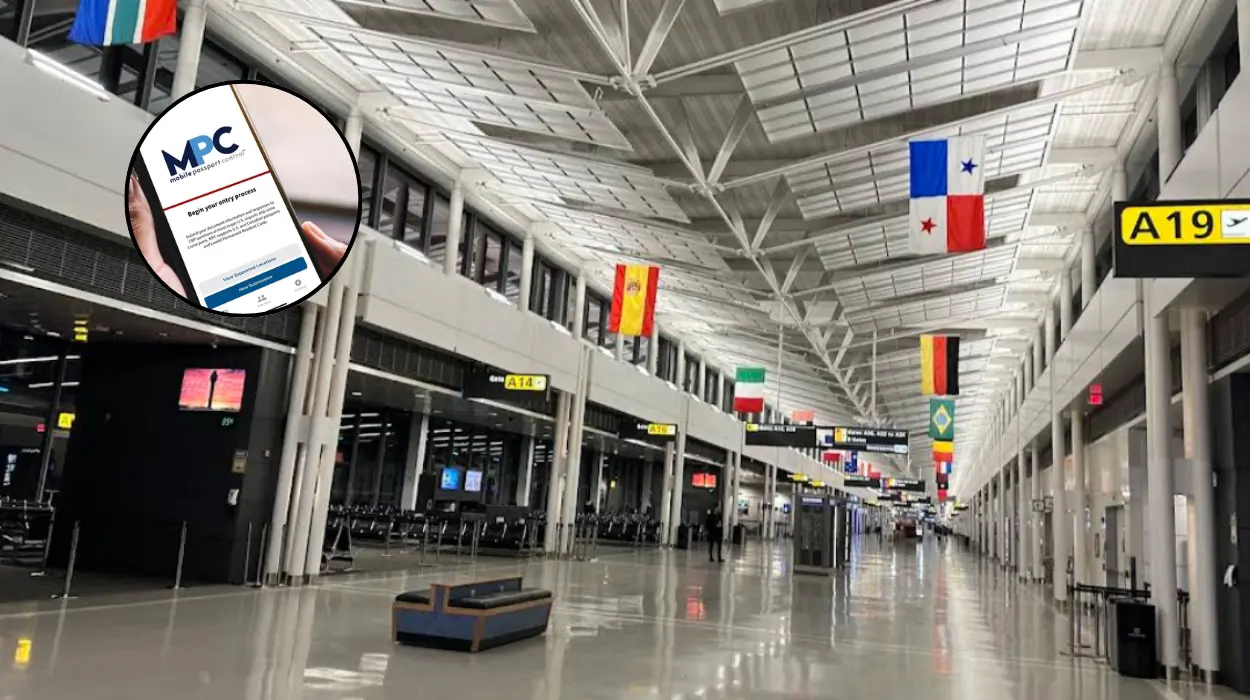
- Mobile Passport Control (MPC) is a free app developed by U.S. Customs and Border Protection (CBP) that lets eligible travelers submit passport and customs‑declaration information from their phone before arriving at selected U.S. entry points.
- The app is available at certain U.S. airports, seaports, and land‑border crossings but does not replace visas, ESTA, or any other travel‑entry requirement.
- MPC is designed to act as a pre‑arrival declaration tool, cutting down the time spent at the inspection counter and in queues.
- Travelers can file one submission for up to 12 people and still must present their passport and related documents in person to a CBP officer.
- MPC has recently been rolled out at four pedestrian land‑border crossings in Washington State along the Canadian border, expanding its use beyond air terminals.
Olympic Peninsula / Seattle – U.S. (Evening Washington News) April 21, 2026 Customs and Border Protection has extended its Mobile Passport Control (MPC) app to four pedestrian land‑border crossings in Washington State along the Canadian frontier, marking a modest but notable step in the agency’s drive to modernise U.S. border processing. As reported by U.S. Customs and Border Protection in its local‑media release, the app is being introduced at these land‑port crossings to give eligible travellers a digital alternative for submitting key entry information before they reach the inspection zone.
- Key Points
- What exactly does the MPC app do?
- How does the app work for an arriving traveller?
- Who is eligible to use the MPC app?
- Where and when can travellers use the MPC app?
- What benefits does the MPC app offer?
- How does MPC fit into the broader U.S. border‑processing landscape?
- What is the broader background of this development?
- How might this development affect travellers and border agencies?
What exactly does the MPC app do?
Mobile Passport Control (MPC) is a smartphone application developed and operated by U.S. Customs and Border Protection (CBP) that enables eligible travellers to submit certain passport, biographic, and customs‑declaration information electronically from their mobile device.
According to CBP’s own description, the app is available at selected U.S. airports, seaports, and now these four pedestrian land‑border crossings, and its primary function is to “pre‑position” traveller data ahead of the face‑to‑face inspection.
Explaining the tool, CBP states that MPC is neither a visa, nor an entry‑authorization document, nor a substitute for existing entry requirements such as a visa or an Electronic System for Travel Authorization (ESTA).
Instead, it is positioned as a complementary pre‑arrival declaration service that streamlines the in‑person inspection process rather than replacing it.
How does the app work for an arriving traveller?
Travellers who choose to use MPC must first download the official app from the Apple App Store or Google Play, where it is described as a free and secure service created by U.S. Customs and Border Protection.
Once installed, the user enters passport details, answers standard CBP inspection questions, and uploads a photo of themselves and, if applicable, each member of their group.
After completing the form, the app generates a virtual receipt that is sent back to the device, which travellers then present along with their physical passport and any required documents at the designated CBP inspection lane.
As noted by CBP, officers can then focus on identity verification, admissibility checks, and the purpose and intent of travel, since much of the administrative data has already been submitted digitally.
Who is eligible to use the MPC app?
According to CBP and several travel‑oriented publications that cover the app’s operation, MPC is currently available to U.S. citizens, Canadian citizens, and certain foreign nationals who meet specific criteria, such as having a valid U.S. visa or being part of certain trusted‑traveller programmes.
Airline information notices, for example those from Delta, clarify that the app is open to U.S. and Canadian citizens at participating airports, aligning with CBP’s eligibility framework.
The app does not require pre‑approval beyond the usual entry requirements, distinguishing it from more intensive programmes such as Global Entry or other Trusted Traveler schemes, which involve an application, background check, and in‑person interview.
Nevertheless, travellers must still meet all standard visa, ESTA, or admission rules; MPC only affects the way information is submitted at the port of entry, not whether someone is legally allowed to enter the United States.
Where and when can travellers use the MPC app?
Originally rolled out at major U.S. airports and selected seaports, MPC has gradually expanded to new locations.
As highlighted in a CBP‑issued local‑media release, the app has now been introduced at four pedestrian land‑border crossings in Washington State along the Canadian border, a move aimed at improving efficiency for travellers crossing on foot.
At each participating air, sea, or land port, travellers who use MPC must follow posted instructions for the mobile‑passport lane, typically presenting the digital receipt and passport to a CBP officer after submission.
A CBP‑produced guide on the app notes that successful users may no longer need to fill out a paper customs‑declaration form or use an Automated Passport Control (APC) kiosk, though officers retain the authority to request additional information or conduct further checks.
What benefits does the MPC app offer?
U.S. Customs and Border Protection promotes several practical advantages of using the MPC app. According to CBP’s local‑media release and the app’s official description, these include shorter wait times by reducing the time spent at the inspection counter, a secure and easy‑to‑use interface, and the ability to submit information for up to 12 people in a single transaction, which is useful for families or groups travelling together.
The Keesing Platform, a technical‑analysis source that has profiled the MPC app, writes that the service streamlines the entry process by reducing passport‑control inspection time and overall wait times, while also easing congestion at busy inspection points. Travel‑oriented guides likewise emphasise that MPC can help travellers
“whisk through customs lines”
and avoid long queues, particularly during peak‑arrival periods at airports such as Atlanta and Seattle, where the app is already in use.
Critically, CBP and third‑party commentators stress that use of MPC is optional; travellers who do not have a suitable device or prefer traditional methods can continue to complete paper forms or use APC kiosks where available.
How does MPC fit into the broader U.S. border‑processing landscape?
As reported by U.S. Customs and Border Protection, MPC is one of several digital tools the agency is deploying to modernise and accelerate border processing without relaxing security standards.
Parallel to MPC, CBP administers the Trusted Traveler programmes, including Global Entry, TSA PreCheck®, SENTRI, NEXUS, and FAST, which offer expedited clearance for pre‑approved, low‑risk travellers at airports and land ports.
A CBP‑produced explainer video on Trusted Traveler programmes notes that these risk‑based schemes are designed to facilitate legitimate trade and travel while improving security through more efficient screening.
In contrast, MPC is available to a broader group of eligible travellers without requiring full pre‑approval or an in‑person interview, acting as a lighter‑touch, app‑based layer atop standard entry procedures.
What is the broader background of this development?
The Mobile Passport Control app is part of a wider, long‑running effort by U.S. Customs and Border Protection to digitise and accelerate border inspections. Over the past decade, CBP has introduced several automated tools, including Automated Passport Control (APC) kiosks, risk‑based traveller‑screening programmes, and various digital declarations, in an attempt to reduce queues and free officers to focus on higher‑risk cases.
Within that context, MPC emerged as a smartphone‑centric alternative that allows travellers to submit the same basic biographic and customs information that would otherwise be entered on paper or at a kiosk, but from their own device.
The recent extension to four pedestrian land‑border crossings in Washington State suggests that CBP is testing how effectively this mobile‑declaration model can be adapted to foot traffic along the busy U.S.–Canada border, where short‑duration visitors and cross‑border shoppers often pad queues during peak hours.
How might this development affect travellers and border agencies?
For occasional or first‑time international travellers who are unfamiliar with MPC, the app can offer a more straightforward, paperless way to complete routine customs declarations, potentially reducing stress and confusion at busy inspection points.
Families and groups may benefit particularly from the ability to submit information for up to 12 people at once, which could shorten the overall time spent at the CBP counter compared with filling out multiple paper forms.
For U.S. Customs and Border Protection, wider adoption of MPC may free officers to concentrate more on identity verification, security‑related checks, and traveller interviews, since the administrative data entry is shifted to the traveller’s device. If the new rollout at Washington‑State pedestrian crossings proves successful, it could encourage CBP to expand the app to other land‑border locations or to refine the interface for even broader use, provided travellers continue to meet standard entry requirements and security protocols.