
Key Points
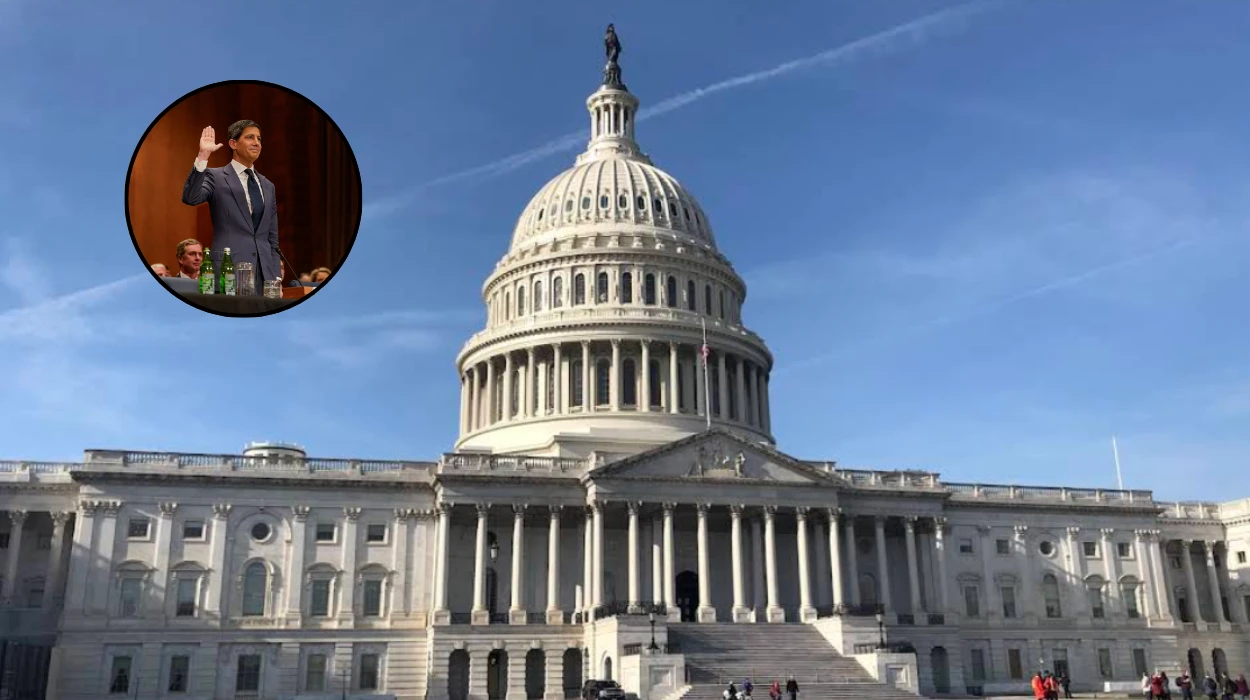
- Kevin Warsh, President Donald Trump’s nominee to replace Jerome Powell as Federal Reserve chair, testified before the Senate Banking Committee on Capitol Hill in Washington, D.C., on April 21, 2026.
- Warsh stood with his wife Jane Lauder after testifying, as captured in a Reuters photograph by Elizabeth Frantz.
- Warsh affirmed the Federal Reserve’s “strict independence” in monetary policy decisions, stating he owes his “best judgment” to the mission of full employment and stable prices.
- He attributed ongoing inflation challenges to “policy missteps” or “errors” from four to five years ago and called for “fundamental policy reforms,” including a new inflation framework and better tools.
- Warsh denied any commitments to President Trump on interest rates, noting Trump has never asked him to pre-commit, and emphasised that elected officials expressing views does not threaten Fed independence.
- Democratic senators questioned Warsh on his over $100 million in assets, which he pledged to divest, describing them as “vanilla” like cash but limited by confidentiality agreements.
- Republican Senator Thom Tillis pledged to block Warsh’s advancement unless the Department of Justice ends its criminal investigation into Powell.
- Warsh committed to fighting inflation, with minimal mention of the labour market in his prepared remarks.
- The hearing featured exchanges on Fed reforms, cost of living, and areas like bank regulation where independence is less strict.
- Jerome Powell’s last day as chair is ostensibly May 15, 2026.
Washington, D.C. (Evening Washington News) April 21, 2026 – Kevin Warsh, U.S. President Donald Trump’s nominee for the next chair of the Federal Reserve, appeared before the Senate Committee on Banking, Housing, and Urban Affairs on Capitol Hill.
- Key Points
- What Did Kevin Warsh Say in His Opening Statement?
- How Did Kevin Warsh Address Inflation and Policy Reforms?
- What Questions Did Senators Ask Kevin Warsh on Independence?
- Why Is There Opposition to Kevin Warsh’s Nomination?
- What Is Kevin Warsh’s Background in Relation to the Fed?
- Background of the Development
- Predictions for Financial Markets and Investors
The hearing marks a key step in Warsh’s nomination process to succeed Jerome Powell, amid tensions over a Department of Justice probe into the current chair.
What Did Kevin Warsh Say in His Opening Statement?
As reported by CNBC Television coverage, Warsh began his opening remarks by stating,
“America’s economic growth potential is rising as we sit here today.”
In his prepared testimony, shared ahead by Politico and covered by CBS News, Warsh declared that the central bank must remain “strictly independent” in setting monetary policy while focusing on its primary goals.
According to New York Times live updates, Warsh, aged 56, said,
“Mr. Trump has never asked [me] to pred[etermine], commit [to], or fix… on any rate decision,”
nor has he ever promised to do so.
BBC live coverage quoted Warsh asserting,
“Independence in monetary policy is crucial” and that decision-makers
He further noted, as per YouTube transcript from the hearing,
“I owe my best judgment and my most faithful efforts in serving the mission that you and Congress assigned to the Federal Reserve, including full employment and stable prices.”
Warsh emphasised,
“Fed independence is at its peak in the conduct of monetary policy,”
and “the Fed must stay in its lane.”
How Did Kevin Warsh Address Inflation and Policy Reforms?
Responding to Republican Senator Tim Scott on tackling the cost of living, as detailed in BBC reporting, Warsh said the Fed is still addressing
He proposed “fundamental policy reforms,” including
“a new framework for inflation, alongside the introduction of innovative tools and enhanced communication strategies.”
Yahoo Finance coverage of the hearing noted Warsh attributing the Fed’s struggle to hit its 2% inflation target to “policy errors” from 2021 and 2022, when the central bank was slow to raise rates.
In written testimony ahead of the hearing, covered by YouTube summaries, Warsh expressed a
“firm commitment to fighting inflation,”
mentioning the labour market only once.
What Questions Did Senators Ask Kevin Warsh on Independence?
Democratic senators pressed Warsh on preserving Fed autonomy from the White House, as anticipated by Axios ahead of the hearing.
In response to Senator Jack Reed, per Yahoo Finance, Warsh said most presidents prefer lower rates but assured the Fed would maintain independence.
Politico reported Warsh arguing that Fed independence is
“not particularly threatened when elected officials — presidents, senators, or members of the House — state their views on interest rates.”
He clarified that while monetary policy requires “strict independence,” this does not extend equally to bank regulation, international finance, or stewardship of public monies.
CNBC’s Squawk Box interview with Trump before the hearing noted the president refrained from confirming support for dropping the Powell probe to aid confirmation.
Why Is There Opposition to Kevin Warsh’s Nomination?
Republican Senator Thom Tillis from North Carolina has vowed to obstruct Warsh’s progress from the committee until the Justice Department concludes its criminal investigation of Powell, as reported by CNBC and Reuters.
Tillis’s stance creates the primary hurdle, despite Warsh being Trump’s pick, according to CNBC live updates.
The probe concerns renovations at the Fed headquarters and is viewed by critics as a threat to independence, per PBS NewsHour and New York Times.
Democrats focused on transparency over Warsh’s $100 million assets, with Warsh pledging divestment but citing confidentiality limiting details, calling them “as vanilla as [possible]” like cash.
Ahead of the hearing, Warsh entered the committee office without comment, as aides set up his name card, noted in CNBC coverage.
What Is Kevin Warsh’s Background in Relation to the Fed?
Warsh served as a former Federal Reserve governor and has criticised the central bank for over a decade, facing a “mark-to-market moment” in the hearing, as described in YouTube coverage by N18G.
He is a wealthy investor and former senior Fed official, facing tough questions on his portfolio, per PBS.
The hearing follows Trump’s repeated criticisms of Powell for not cutting rates faster, while Powell insisted on data-driven decisions.
Live streams from CNBC Television, YouTube, and PBS covered the proceedings, with Warsh testifying post-Powell’s nominal May 15 end date.
Background of the Development
Kevin Warsh’s nomination comes after President Trump’s reelection, with Jerome Powell’s term ending amid public clashes over rate policy.
Warsh, who left the Fed in 2011, has advocated reforms and was considered for the role previously.
The Senate Banking Committee process requires confirmation before a full Senate vote, complicated here by intra-party Republican opposition linked to the DOJ probe initiated under Trump.
This hearing on April 21, 2026, provides the first public platform for Warsh to address policymakers directly since nomination.
Predictions for Financial Markets and Investors
This development could introduce uncertainty into financial markets if confirmation delays persist due to the Powell probe, potentially affecting interest rate expectations.
Investors may see volatility in bond yields and equities as Warsh’s reform pledges signal possible shifts in inflation targeting and tools.
For everyday consumers and businesses, prolonged ambiguity might influence borrowing costs and inflation outlooks, depending on the pace of Senate advancement.
Should Warsh be confirmed, his emphasis on independence could stabilise perceptions of Fed credibility, while asset divestment addresses conflict concerns.