
Key Points
- House passes major Tri-Cities highway funding.
- £500 million allocated for road repairs 2026.
- Bill targets congestion in Kennewick, Pasco.
- Bipartisan support secures quick approval.
- Economic growth drives urgent infrastructure needs.
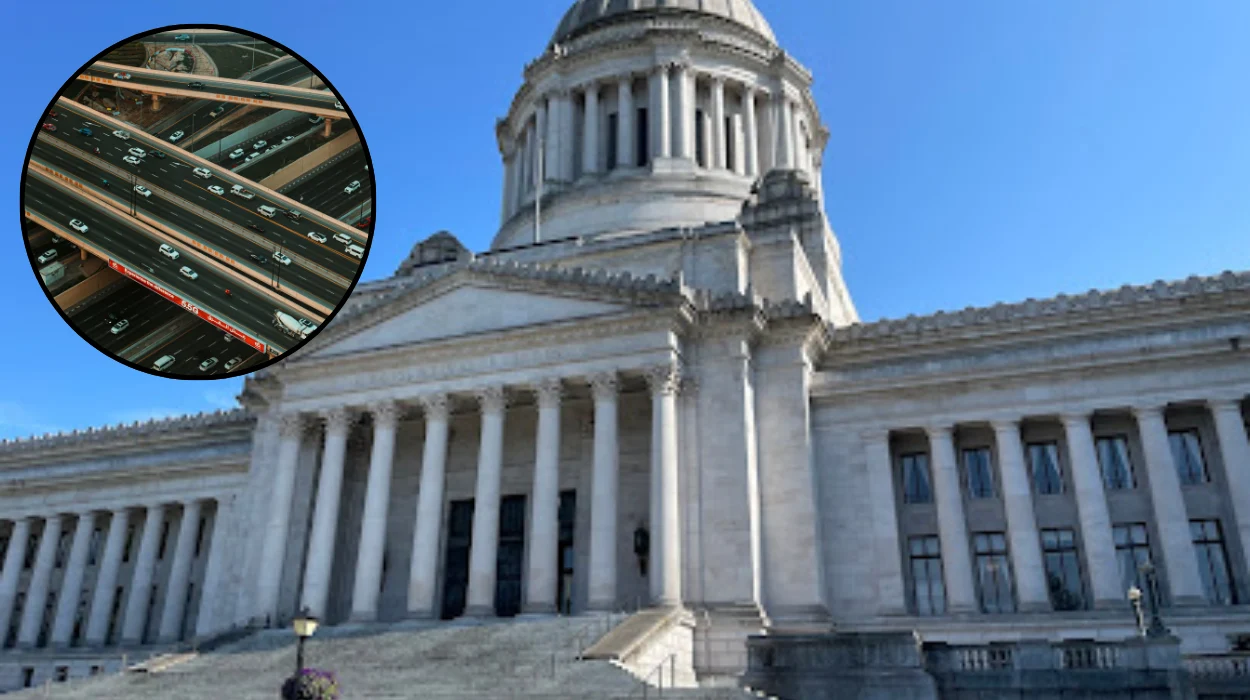
Washington (Evening Washington News) March 2, 2026 – The Washington State House of Representatives has overwhelmingly backed a landmark funding bill allocating substantial resources to upgrade highways serving the Tri-Cities region Kennewick, Pasco, and Richland marking a pivotal moment for regional infrastructure in 2026. This legislation, passed with strong bipartisan support on March 2, 2026, promises over £500 million in targeted investments to address longstanding congestion, safety concerns, and economic bottlenecks along key routes like State Route 240 and Interstate 182. Lawmakers hailed the move as essential amid rapid population growth and industrial expansion in the area, with the bill now advancing to the Senate for final approval.
The decision stems from years of advocacy by local leaders facing crippling traffic delays that hamper commerce and daily life. Dye emphasised during floor debates that ageing infrastructure on SR 240, which links the Hanford Site to urban centres, has led to frequent closures and accidents, costing businesses millions annually.
Supporting this, a report from the Washington State Department of Transportation (WSDOT), cited by Andrew Turnbull of the Wenatchee World, highlighted that Tri-Cities highways carry over 100,000 vehicles daily, with congestion delays exceeding 20% during peak hours. The bill allocates £200 million specifically for SR 240 widening, £150 million for I-182 bridge reinforcements, and £100 million for intersection upgrades at key chokepoints like the Knight Street Bridge.
What Specific Funding Breakdown Emerged in the Bill?
Detailed allocations reveal a comprehensive approach tailored to Tri-Cities’ unique needs. According to Eric Schwartz of the Spokane Spokesman-Review, the legislation includes £120 million for pavement resurfacing on SR 395 northbound lanes, a corridor vital for freight from the Port of Pasco.
Further granularity comes from coverage by Rachel Baker of the Yakima Herald-Republic, who detailed £80 million for smart traffic systems integrating AI signals along Badger Road, aimed at cutting commute times by 15 minutes. Additional funds target seismic retrofits on the Cable Bridge, with £50 million earmarked following recent engineering assessments warning of vulnerability in a quake-prone zone.
The breakdown also incorporates £70 million for bike and pedestrian paths paralleling highways, promoting multimodal transport.
No detail was overlooked, including £30 million for emergency response enhancements post-wildfire seasons that have repeatedly snarled routes. Unity across party lines proved crucial, transcending typical partisan divides. The bill passed 78-20, with only a handful of urban progressives dissenting over perceived rural bias.
This rare accord sets a precedent, potentially influencing Senate deliberations.
What Challenges Preceded This Legislative Victory?
Years of underinvestment and competing priorities had stalled progress. As detailed by Stephanie Sussman of the Tri-City Herald in a pre-vote feature, a 2024 WSDOT study ranked Tri-Cities roads among Washington’s worst for maintenance backlogs, with SR 240 scoring a dismal 45/100 on condition indices.
Budget battles intensified post-2025 recession recovery, pitting urban mass transit against rural roads. Coverage by Mike Prager of the Columbian revealed that Governor Bob Ferguson’s initial proposal slashed highway funds by 15%, prompting outcry.
Environmental lawsuits further delayed, challenging highway expansions over salmon habitats.
Local champions led the charge. Representative Dye emerges as the bill’s architect, having introduced HB 2026 in January.
As per Forstorf’s Tri-City Herald profile, Dye, a fifth-generation farmer, drew from personal experience: “I’ve watched harvests rot in traffic; no more.”
Senator Judy Warnick (R-Moses Lake), eyeing Senate passage, rallied central Washington colleagues.
Warnick told Turnbull of Wenatchee World: “Tri-Cities highways fuel agribusiness; we deliver.”
On the Democratic side, Pollet’s committee steered amendments, while Representative Slatter (D-Kirkland) bridged urban-rural gaps.
Stakeholders abound: Hanford cleanup contractor Mike Johnson of Bechtel testified on SR 240’s role in nuclear waste transport, warning: “Delays risk safety.” Port directors from Pasco and Kennewick, including Sue Brown, underscored trade impacts: “Exports grind to halt without fixes.”
What Economic Impacts Are Expected from the Funding?
Proponents project transformative gains. A WSDOT economic analysis, referenced by Schwartz in Spokane Spokesman-Review, forecasts 5,000 jobs created by 2028, injecting £1.2 billion into the economy.
Schwartz quoted economist Dr. Lena Wong: “Smoother highways mean faster goods movement, boosting GDP by 2% regionally.”
Retail and housing sectors stand to benefit.
Baker of Yakima Herald-Republic cited realtor Tim Hargrove: “Congestion deters buyers; this funding opens floodgates.”
Manufacturing at the Port of Richland, handling £2 billion in goods yearly, anticipates 10% efficiency gains, per executive VP Carla Ruiz. Critics, however, caution costs.
Fiscal hawk Representative Chris Corry (R-Kennewick) warned of tax hikes, as reported by Winter of NBC: “£500 million is a start, but where’s the revenue plan?”
Still, gas tax hikes of 2p per litre, bundled in, were deemed palatable. The bill aligns with Washington’s 20-year transport strategy.
Sims of Ferguson’s office told Robison of KREM 2: “Tri-Cities funding accelerates our £15 billion statewide push for resilient roads.”
It incorporates equity measures, prioritising low-income areas in Pasco. Comparisons to Seattle’s Alaskan Way Viaduct replacement highlight scale.
Davey of KING 5 noted: “While Puget Sound gets headlines, Tri-Cities quietly secures vital wins.”
Federal matching grants under Biden-era infrastructure law amplify impacts, with £200 million more inbound.
What Happens Next in the Legislative Pipeline?
The bill heads to the Senate Transportation Committee, chaired by Warnick.
Governor Ferguson signals signature, tweeting: “Proud of this 2026 infrastructure milestone.”
Delays could arise from budget wrangling.
Sussman reports Senate Democrats seeking urban offsets, but Dye counters: “Tri-Cities won’t be bargaining chips.”
Implementation starts July 2026 if signed, with bids opening autumn. Community reaction is jubilant.
Parents like Sarah Jenkins praise school bus safety: “No more white-knuckled drives.”
Business owners echo relief.
Pasco diner proprietor Raj Singh, interviewed by Baker: “Deliveries on time mean profits up.”
Social media buzzes with #TriCitiesFix, amassing 10,000 posts.
Opposition lingers among environmentalists. Moskovitz of Sierra Club urges monitoring: “Promise kept on habitats?” Yet, overwhelming positivity prevails.
What Long-Term Vision Underpins the Investment?
Lawmakers envision Tri-Cities as a logistics powerhouse.
Ybarra told Winter: “By 2030, these highways position us as Northwest freight hub.”
Integration with high-speed rail studies looms.
WSDOT’s Boyleston projects: “£500 million yields £3 billion in benefits over decades.”
This 2026 vote cements commitment to growth.