
Key Points
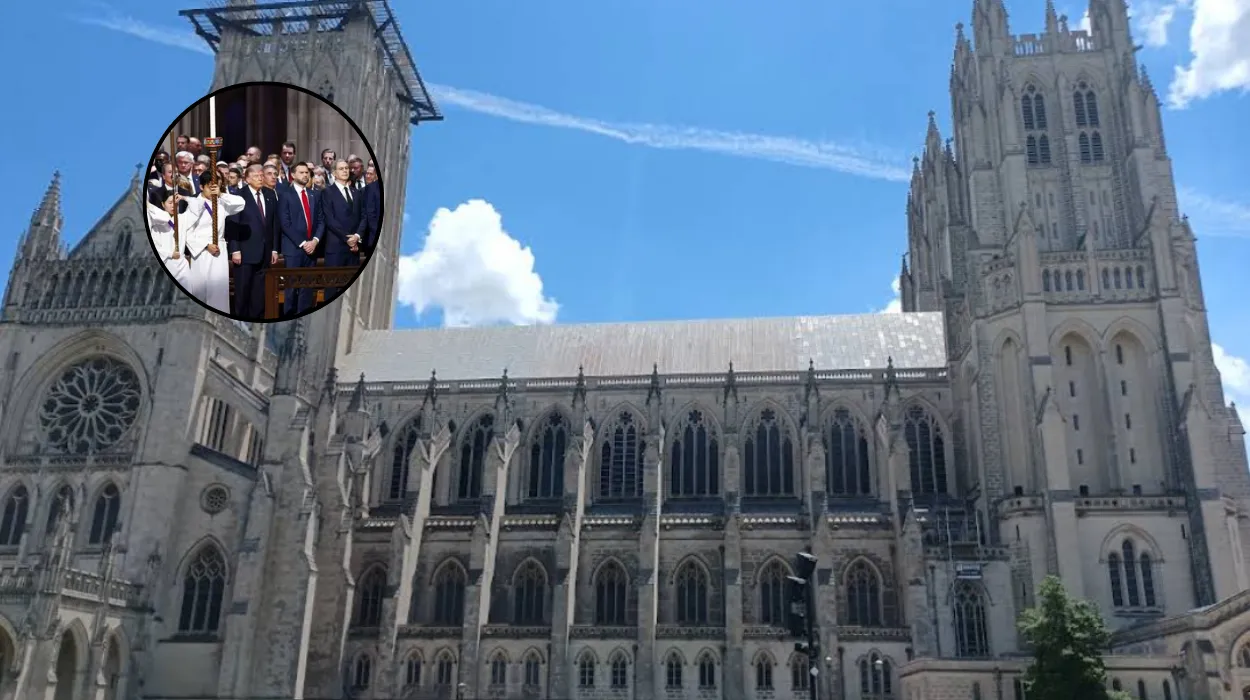
- Funeral Service Held: Funeral services for the late Republican Senator Lindsey Graham were conducted on Tuesday, 28 July 2026, at the Washington National Cathedral following a ceremony in the United States Capitol Rotunda.
- High-Profile Attendance: U.S. President Donald Trump delivered remarks, whilst prominent international dignitaries including Israeli Prime Minister Benjamin Netanyahu and Ukrainian President Volodymyr Zelenskyy attended to pay their respects.
- Cause of Death: Senator Graham unexpectedly passed away on 11 July 2026 at the age of 71 due to an aortic dissection triggered by arteriosclerotic cardiovascular disease shortly after returning from an official visit to Ukraine.
- Distinguished Career: First elected to the U.S. House of Representatives in 1994 and the U.S. Senate in 2002, Graham served for over two decades, holding key committee chairmanships including the Senate Judiciary Committee and the Senate Budget Committee.
- Foreign Policy Hawkishness: Graham was widely recognised for his staunch advocacy of U.S. military intervention, support for the 2003 invasion of Iraq, firm backing of Israel, and relentless advocacy for military aid to Ukraine.
Washington (Evening Washington News) July 29, 2026 –Dignitaries, lawmakers, and foreign heads of state gathered in Washington, D.C., on Tuesday to attend the funeral services for the late United States Senator Lindsey Graham. The long-serving Republican lawmaker from South Carolina, who died unexpectedly on 11 July at the age of 71, was remembered during a national ceremony at the Washington National Cathedral following an official morning tribute inside the U.S. Capitol Rotunda. President Donald Trump delivered a eulogy highlighting Graham’s extensive political tenure and global influence. The event brought together figures from across the international political spectrum, including Israeli Prime Minister Benjamin Netanyahu and Ukrainian President Volodymyr Zelenskyy, reflecting Graham’s decades-long focus on foreign affairs and national security.
- Key Points
- What Transpired at the Funeral Service of Senator Lindsey Graham?
- Who Were the Prominent World Leaders and Figures in Attendance?
- What Did President Donald Trump Say in His Eulogy for Lindsey Graham?
- How Did Fellow Lawmakers and Speakers Pay Tribute at the Capitol and Cathedral?
- Background of the Particular Development After the News
- What Were the Circumstances Surrounding Senator Graham’s Sudden Passing?
- Prediction: How This Development Can Affect U.S. Foreign Policy, the Senate, and the Electorate
- What Does This Mean for International Allies and Defence Legislation?
What Transpired at the Funeral Service of Senator Lindsey Graham?
The day of remembrance commenced on Tuesday morning when an Armed Forces honour guard escorted the casket of Senator Lindsey Graham into the United States Capitol Rotunda.
Members of Congress, Cabinet officials, and Vice President JD Vance gathered to pay their respects during a solemn bipartisan ceremony.
Senate Majority Leader John Thune and Senate Minority Leader Chuck Schumer jointly presented a memorial wreath in front of the casket, signaling a moment of unity amongst congressional leadership.
Following the proceedings at the Capitol, the procession moved to the Washington National Cathedral for an invitation-only funeral service beginning at 2:00 p.m. Eastern Time. As reported by the Episcopal News Service, the Very Reverend Randy Hollerith, Dean of Washington National Cathedral, opened the proceedings by stating,
“We bid farewell to a man much beloved by many. Lindsey Graham was a man of faith, a longtime public servant who devoted his life to his country.”
Outside the cathedral, public crowds and organized demonstrations reflected the polarized reactions to Graham’s foreign policy record. As reported by the Washington Post, two distinct groups gathered near the cathedral grounds.
One group, representing the Freedom Movement for Iran, carried historical Iranian flags in support of Graham’s hawkish stance against the Iranian government, whilst another group displayed a large Palestinian flag and posters protesting the attendance of Prime Minister Netanyahu.
Who Were the Prominent World Leaders and Figures in Attendance?
The funeral drew an exceptionally large delegation of foreign dignitaries, reflecting Graham’s active involvement in international diplomacy throughout his Senate career.
As reported by Reuters, Israeli Prime Minister Benjamin Netanyahu and Ukrainian President Volodymyr Zelenskyy travelled to Washington specifically to attend the National Cathedral service.
Graham’s alignment with both leaders had been a defining element of his later career in the Senate. He maintained a consistent position as one of the most vocal proponents of American military assistance to Ukraine following the 2022 Russian invasion, having made ten separate visits to Kyiv during the conflict.
Similarly, Graham was a steadfast defender of Israel, maintaining close ties with Prime Minister Netanyahu and advocating for continued U.S. defense backing.
In addition to foreign heads of state, the cathedral was filled with key figures from the U.S. political landscape. Attendance included numerous U.S. Senators, members of the U.S.
House of Representatives, Cabinet members such as Homeland Security Secretary Markwayne Mullin, and media figures such as Fox News commentator Sean Hannity, who delivered one of the service’s personal tributes.
Readings during the service were performed by religious and advocacy leaders, including Tony Perkins of the Family Research Council, Marjorie Dannenfelser of Susan B. Anthony Pro-Life America, and the Reverend Franklin Graham.
What Did President Donald Trump Say in His Eulogy for Lindsey Graham?
President Donald Trump delivered the central address during the funeral at Washington National Cathedral, praising Graham as a vital presence in modern American politics. As reported by the Episcopal News Service, President Trump opened his remarks by noting:
“Today, we gather in the deepest gratitude and profoundest sorrow to honor a beloved friend, a devoted brother, a respected statesman, a giant of the United States Senate, a true American original who left us much too soon.”
President Trump recounted their personal relationship, which evolved over several years from intense political rivalry during the 2016 Republican presidential primaries into one of the most visible partnerships in Washington. Trump characterized Graham as a relentless worker who “died doing the work he was born to do.”
As reported by the Washington Post, President Trump departed momentarily from his prepared text to acknowledge Graham’s persistent combativeness in political debate, describing him as a “tough cookie” who was involved in nearly every major legislative debate for three decades.
Trump specifically cited Graham’s passionate defense of Supreme Court nominee Brett Kavanaugh during the 2018 Senate confirmation hearings as a defining moment of his career, calling it “perhaps, Lindsey’s finest hour.”
How Did Fellow Lawmakers and Speakers Pay Tribute at the Capitol and Cathedral?
Tributes delivered across both Washington ceremonies underscored Graham’s dual reputation as a committed legislative strategist and a distinctive personality within the Senate.
During the morning service at the Capitol Rotunda, Senate Majority Leader John Thune focused on Graham’s extensive personal relationships across party lines and international borders. As reported by the Washington Post, Leader Thune stated:
“There was no one, no one who took his job more seriously than Lindsey Graham. But also no one was more capable of cracking up a room.”
Personal reflections were also offered by family members. Emillie Boggs Roberts, one of Graham’s nieces, spoke at the cathedral regarding his dedication to his family, particularly his role in raising his younger sister, Darline Graham, following the unexpected deaths of both of their parents when Graham was in his early twenties.
Members of the opposition party also acknowledged Graham’s legacy. As reported by CBS News, Democratic Senator Mark Warner of Virginia noted that despite frequent political disagreements, Graham’s commitment to national service was never in question, stating,
“Lindsey and I disagreed on plenty over the years, but I never doubted his love for this country or his commitment to serving it.”
Background of the Particular Development After the News
Lindsey Olin Graham had a career in elected office spanning more than three decades. Born on 9 July 1955 in Central, South Carolina, he attended the University of South Carolina, earning both his undergraduate degree and a Juris Doctor.
Before entering politics, Graham served as an officer and attorney in the United States Air Force Judge Advocate General’s (JAG) Corps, later continuing his service in the Air Force Reserve until his retirement with the rank of Colonel in 2015.
Graham entered public office in 1992 upon his election to the South Carolina House of Representatives. In 1994, he won election to the U.S.
House of Representatives representing South Carolina’s 3rd Congressional District. He gained national prominence in 1998 as one of the House managers during the impeachment trial of President Bill Clinton.
In 2002, Graham was elected to the U.S. Senate to succeed the retiring Senator Strom Thurmond. He won re-election in 2008, 2014, and 2020.
Throughout his Senate career, Graham occupied major leadership posts, including Chairman of the Senate Judiciary Committee from 2019 to 2021 and Chairman of the Senate Budget Committee.
Graham was known for an interventionist foreign policy doctrine. He was an ardent proponent of the 2003 military invasion of Iraq, repeatedly pushed for aggressive action against Iran’s nuclear programme, and maintained close foreign policy ties with late Senator John McCain.
What Were the Circumstances Surrounding Senator Graham’s Sudden Passing?
Senator Graham’s death occurred suddenly on the evening of Saturday, 11 July 2026. Just two days prior, Graham had completed his tenth official visit to Ukraine, where he conducted meetings with President Zelenskyy regarding defense equipment and international sanctions against Russia.
As reported by David Smith of The Guardian, emergency medical services responded at approximately 8:30 p.m. to a emergency call reporting chest pains at Graham’s residence on Capitol Hill. As noted by David Smith of The Guardian and subsequent official press releases, the senator passed away shortly thereafter.
As reported by CBS News, the District of Columbia Medical Examiner’s Office confirmed that the cause of death was an aortic dissection resulting from underlying arteriosclerotic cardiovascular disease. An aortic dissection is a critical medical condition involving a tear in the main artery carrying blood from the heart.
Prediction: How This Development Can Affect U.S. Foreign Policy, the Senate, and the Electorate
The sudden vacancy created by Senator Graham’s passing introduces significant political shifting within South Carolina and the broader U.S. Senate. Under South Carolina law, Republican Governor Henry McMaster holds the authority to appoint an interim senator to fill the seat until a replacement is formally chosen.
Because Graham was already scheduled to stand for re-election for a fifth Senate term in November 2026, the political timeline is immediate.
The filing deadline for candidate substitution coincided with the day of Graham’s funeral. Governor McMaster appointed Darline Graham, the late senator’s sister, to fill the interim post.
Darline Graham subsequently entered the primary race for the full term with the formal endorsement of President Trump, alongside candidates from South Carolina’s congressional delegation, including local U.S. Representatives.
For the Senate Republican caucus, Graham’s departure removes one of its most senior negotiators. His absence temporarily alters vote margins on tight legislative measures and forces a reorganization of senior committee positions, specifically within the Senate Budget Committee and Judiciary Committee where Graham exercised considerable control over procedure and judicial nominations.
What Does This Mean for International Allies and Defence Legislation?
Senator Graham functioned as a chief Republican advocate for conventional foreign interventionism and international alliance commitments.
His death removes a powerful voice urging the Republican party toward active international engagement, particularly regarding aid to Ukraine and defense agreements in the Middle East.
The immediate impact on foreign policy was underscored hours after the National Cathedral funeral service concluded on Tuesday. As reported by the Washington Post, the U.S. Senate voted 86–12 to advance long-stalled legislation imposing stricter economic sanctions on Russia—a bill that Graham had drafted and championed prior to his trip to Kyiv.
Ukrainian President Volodymyr Zelenskyy personally observed the vote from the Senate gallery alongside Republican leadership, demonstrating the direct policy continuity Graham’s colleagues sought to signal immediately following his death.
Nevertheless, over the longer term, Graham’s absence may accelerate shifts within the Republican Party regarding defense spending and overseas involvement.
Without his persistent legislative maneuvering, supporters of continued foreign aid may face greater difficulty building bipartisan coalitions for international security expenditures.