
Key Points
- Tragic Accident: A tank failure incident occurred in May this year at the Nippon Dynawave Packaging plant in Longview, Washington, resulting in the deaths of 11 people, making it one of the worst workplace accidents in recent decades.
- Background Information: According to an independent report from the U.S. Chemical Safety Board, the company was aware that the failed tank was “not fit for continued service” several months before the structural collapse.
- Environmental Violations: Washington State’s environmental violation records reveal that the Washington Department of Ecology has cited Nippon Dynawave 54 times for violating environmental rules between 2016 and the present, which earned them a penalty of $41,500, with an additional post-accident violation citation of 35 violations.
- Safety Issues & Fines: Washington State’s Department of Labor and Industries has found more than a dozen safety complaints about the mill since 2018, with a fine of almost $7,000 imposed, along with two further investigations opened after the accident.
- Workers’ Compensation: Workers’ compensation records show that more than $2.4 million has been paid out for more than 169 workers’ compensation claims for workers injured at work since 2015.
- Expert Warnings: The chemical engineering professor from Worcester Polytechnic Institute, Stephen Kmiotek, said that the many equipment malfunctions and violations of safety standards represented a great “red flag” of the plant’s negligence and dangerousness.
- Legal Actions: Sheri Lynn King, who lost her two sons in the accident, has sued Nippon Dynawave in court, claiming that there was negligence in equipment maintenance, safety standards, employee education, and disaster response.
- Company Statement: Sam Jefferies, an official spokesman for Nippon Dynawave, refused to make any comments about particular records concerning old and poorly maintained equipment and is willing to fully cooperate with government officials during the investigation.
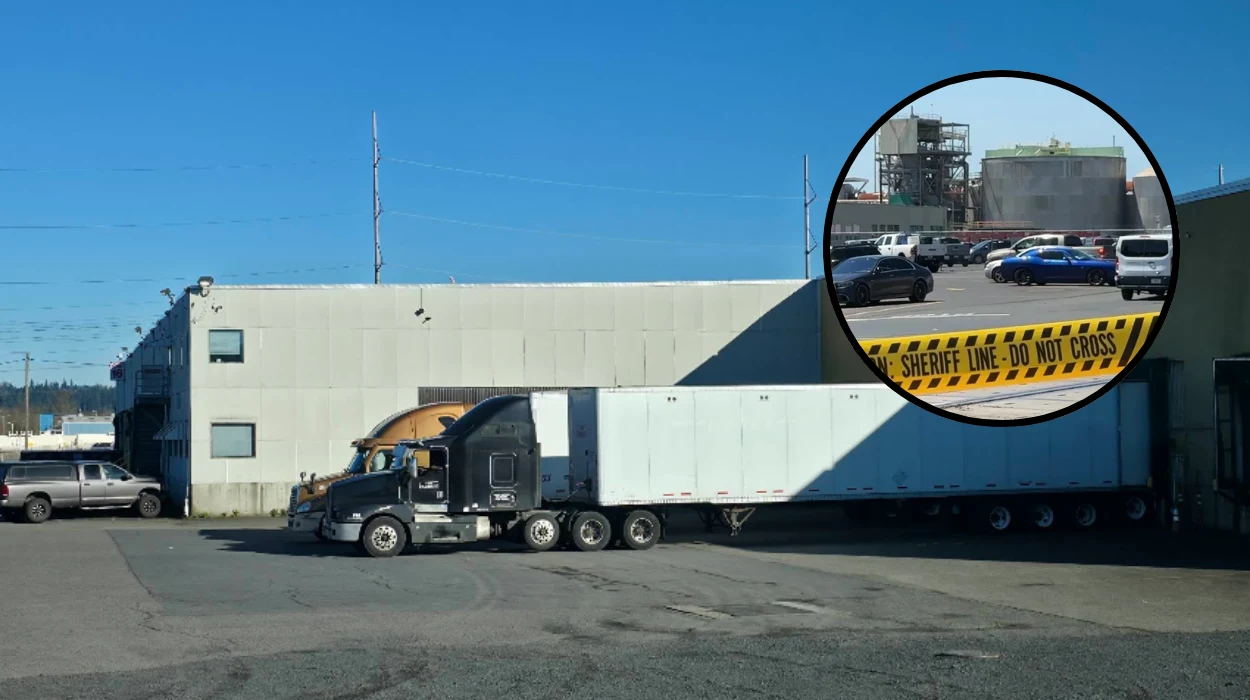
Washington (Evening Washington News) September 5, 2026 — State and federal records have brought to light a deeply troubling history of safety complaints, maintenance neglect, and environmental infractions at the Nippon Dynawave Packaging plant in Longview, Washington, where a catastrophic chemical tank collapse killed 11 workers last May.
- Key Points
- What did federal investigations reveal about the failed tank?
- How did safety regulators handle prior complaints at the mill?
- What are experts saying about the plant’s safety culture?
- What legal actions are families taking against the company?
- How has Nippon Dynawave responded to the allegations?
The tragedy stands as one of the deadliest industrial workplace accidents in the United States in decades, unleashing massive amounts of caustic liquid and prompting intense regulatory scrutiny, ongoing state investigations, and a high-profile wrongful-death lawsuit.
What did federal investigations reveal about the failed tank?
According to findings released by the U.S. Chemical Safety Board, corporate management was well aware of the extreme risks long before the structure gave way. As reported by The Associated Press, the federal agency stated that the company knew the chemical tank was “not fit for continued service” months prior to the failure, yet chose to keep the hazardous equipment running. In the wake of the disaster, the Washington state Department of Ecology filed an extensive violation notice against the enterprise, hammering the facility with 35 separate citations.
The mill, which employs approximately 530 workers and manufactures pulp designated for paper goods, has long been a subject of regulatory concern. Prior to the fatal incident, state records cited by The Associated Press showed that the Department of Ecology had already issued 54 environmental violation notices against Nippon Dynawave starting in 2016, resulting in $41,500 in fines for eight serious violations. Furthermore, data from the state Department of Labor and Industries revealed that over $2.4 million in workers’ compensation claims had been paid out for 169 injured employees since 2015, with many claims directly linked to exposure to dangerous chemical substances.
How did safety regulators handle prior complaints at the mill?
Government documents reviewed by journalists expose a pattern of unaddressed operational hazards. The state’s Department of Labor and Industries investigated over a dozen safety complaints at the facility dating back to 2018, issuing nearly $7,000 in fines. Among these was a chilling complaint filed by an anonymous worker in March regarding an ammonia clarifier tank. As detailed in documents obtained by The Associated Press, the employee warned that the handle on a critical valve was detached, preventing it from closing and creating a severe risk of toxic air releases and potential explosions that endangered delivery drivers.
State inspectors had scheduled interviews with plant workers for May 26 to investigate these exact safety concerns—coincidentally the very day the catastrophic tank failure occurred. Because the disaster disrupted those plans, inspectors returned later, concluding their investigation in August with a formal citation. As reported by The Associated Press, the state penalized the plant $2,890—the highest fine imposed on the facility in the past ten years—for failing to inspect and maintain pipes, hoses, valves, and keep adequate testing records to mitigate the corrosive and abrasive effects of industrial materials.
Explore More Local News
Bungie Subleases Massive Headquarters in Bellevue, Washington (2026)
Why Tacoma Ranks Among Worst Retirement Cities in Washington (2026)
What are experts saying about the plant’s safety culture?
Independent engineering authorities have expressed severe alarm over the systemic failures uncovered at the Longview site. Stephen Kmiotek, a chemical engineering professor at the Worcester Polytechnic Institute who has closely tracked the fatal incident and its aftermath, did not mince words when evaluating the historical data. As quoted by The Associated Press, Stephen Kmiotek called the multiple equipment failures and safety violations a glaring “red flag” for the organisation.
“My impression, you put it all together, including the most recent tank collapse, is that it is a site that has not been maintained, and that creates risk to employees and risk to the public.”
Stephen Kmiotek stated, as highlighted by The Associated Press. The professor’s assessment underlines mounting fears that corporate negligence converted a routine industrial workspace into a ticking time bomb.
What legal actions are families taking against the company?
The human toll of the disaster has translated into immediate legal accountability. Sheri Lynn King, the grieving mother of two brothers who tragically lost their lives when they were burned and crushed by white liquor and heavy debris during the collapse, has filed a comprehensive wrongful-death lawsuit against Nippon Dynawave Packaging.
According to legal filings covered by news agencies, the lawsuit asserts that the company fundamentally failed to maintain and inspect its heavy equipment, failed to properly train and supervise its personnel, and failed to execute mandatory safety policies and emergency response procedures. The litigation seeks to hold corporate leadership directly responsible for the systematic safety lapses that allowed hazardous working conditions to persist unchecked.
How has Nippon Dynawave responded to the allegations?
Facing mounting regulatory scrutiny, a federal safety indictment, and civil litigation, corporate representatives have offered a guarded response. Sam Jefferies, speaking as a spokesperson for Nippon Dynawave, explicitly declined to comment on the archival records detailing years of poor maintenance, aging machinery, and environmental infractions.
Instead, Sam Jefferies emphasized that the organisation is cooperating with state and federal oversight bodies as the multi-agency investigation into the root cause of the tank collapse moves forward.
“We believe the responsible course is to allow the full investigative process to proceed and establish a complete and accurate record before conclusions are reached.”
Sam Jefferies stated, as reported by The Associated Press. Furthermore, Sam Jefferies noted,
“Because the investigation remains ongoing, we will not comment on individual findings or documents at this time.”
As state regulatory bodies pursue two active, separate investigations into the facility, the pressure on Nippon Dynawave intensifies. The convergence of past unheeded warnings, mounting legal battles, and damning federal safety reports ensures that the fallout from the Longview pulp mill disaster will remain at the forefront of national discourse regarding industrial worker safety and corporate accountability.