Key Points
- Ontario Premier Doug Ford is midway through a two-day, media-locked trip to Washington, D.C. focused on trade talks
- No public events were scheduled for Monday, leaving limited visibility beyond a few social media posts
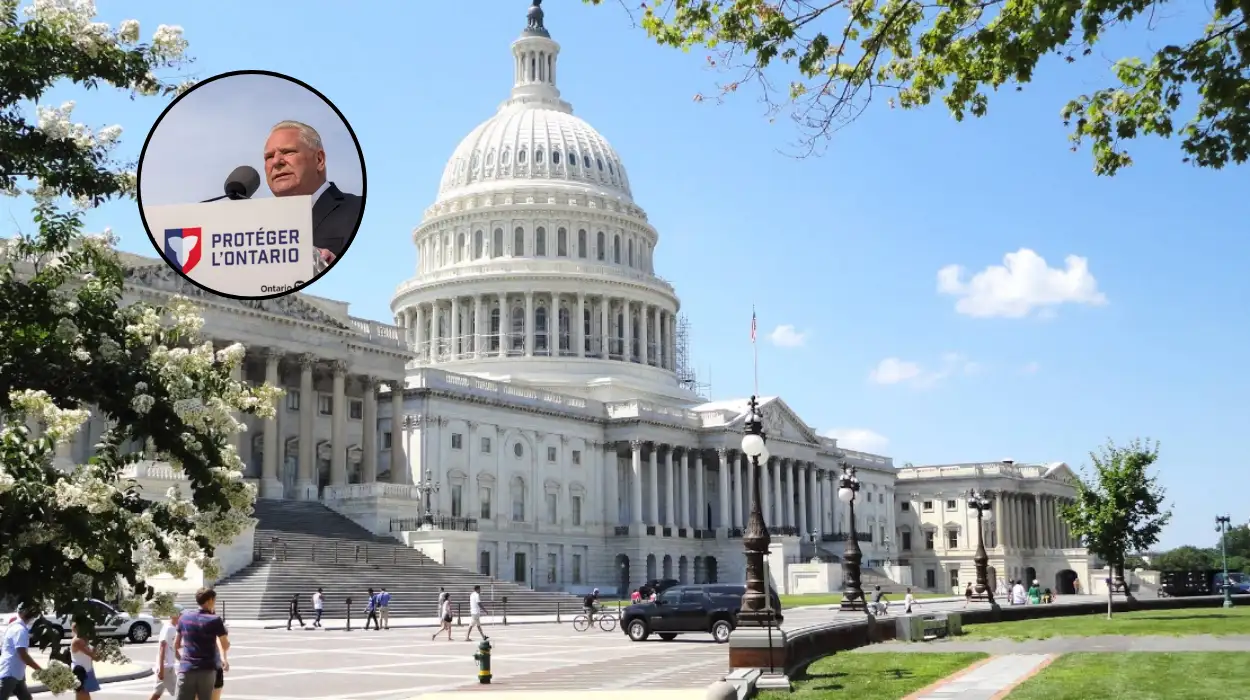
- Ford posted a photo on X showing himself with Canada’s U.S. ambassador Mark Wiseman and Ontario Trade Minister Vic Fedeli on the Canadian embassy rooftop, with the U.S. Capitol in the background
- Ford said he “kicked off” the trip by speaking with Wiseman about making the case for “tariff-free trade in North America”
- Ford is lobbying against U.S. tariffs and pushing for increased free trade between Canada and the U.S.
- This is the first of three U.S. trips Ford plans to make in June 2026
- Ford is promoting “Fortress North America,” an economic growth strategy urging deeper economic ties among Canada, the U.S., and Mexico
- The strategy aims to lower costs, create a jobs boom, and protect shared security across the three countries
- Ford’s delegation will meet with elected officials and business leaders during the two-day Washington visit
- The trip comes amid heightened concerns over a looming U.S.–Canada trade war and potential protectionism
Washington (Evening Washington News) June 9, 2026 – Ontario Premier Doug Ford is halfway through a secretive two-day trip to Washington, D.C., where he is conducting closed-door trade talks with no media access and minimal public visibility, marking his first of three planned U.S. visits in June 2026 as he lobbies against U.S. tariffs and promotes a new “Fortress North America” economic strategy that includes Canada, the United States, and Mexico.
- Key Points
- Why Is Doug Ford’s Washington Trip So Closely Guarded from the Media?
- Who Are the Key Figures Ford Is Meeting With in Washington?
- What Is “Fortress North America,” and How Does It Differ From Ford’s Previous Trade Messaging?
- Why Is Ford Lobbying Against Tariffs at This Specific Moment in 2026?
- How Does This Trip Fit Into Ford’s Larger June 2026 U.S. Trade Strategy?
- What Statements Have Ford, Wiseman, and Fedeli Made Publicly About the Trip?
- What Has Other Media Coverage Said About Ford’s Washington Visit?
- What Could Happen Next if Ford’s “Fortress North America” Strategy Gains Traction?
- Background: How Did Doug Ford and Ontario Reach This Point in U.S.–Canada Trade Relations?
- Prediction: How Could This Development Affect Ontario Businesses, Workers, and Everyday Consumers?
Why Is Doug Ford’s Washington Trip So Closely Guarded from the Media?
As reported by the transcript of Ontario premier visits Washington to promote U.S.-Canada trade ties, Ford’s Monday schedule included no events open to the press, leaving journalists and observers with
“limited visibility as to exactly what he’s up to beyond a few social media posts”.
The Premier’s only public clue was an X post showing him on the rooftop of the Canadian embassy alongside Canada’s ambassador to the U.S., Mark Wiseman, and Ontario Trade Minister Vic Fedeli, with the U.S. Capitol building visible in the background. In that post, Ford stated he “kicked off” the D.C. trip speaking to Wiseman about
“how we can work together to make the case for a tariff-free trade in North America”.
Who Are the Key Figures Ford Is Meeting With in Washington?
Ford’s delegation includes Ontario Trade Minister Vic Fedeli, and his primary diplomatic counterpart in Washington is Mark Wiseman, the former BlackRock executive appointed by Prime Minister Mark Carney as Canada’s new ambassador to the United.
As reported by BBC, Prime Minister Mark Carney
“has designated and former [BlackRock] executive Wiseman Canada’s ambassador to the United States, coinciding with significant trade discussions with the Trump administration”.
Wiseman, who will take over the role on February 15, 2026, is expected to
“broker negotiations in Washington amid the ongoing U.S.-Canada trade war”.
According to the YouTube transcript, Ford’s delegation
“will be going to Washington for two days during which time he’ll meet with elected officials and business leaders”.
The specific officials and companies have not been publicly named due to the media-locked nature of the trip.
What Is “Fortress North America,” and How Does It Differ From Ford’s Previous Trade Messaging?
As reported in the YouTube transcript
“Ontario premier visits Washington to promote U.S.-Canada trade ties,”
Ford is now promoting what he calls “Fortress North America,” an economic growth strategy that expands on his earlier message.
Previously, Ford promoted increased economic ties between Canada and the U.S. alone, but “now it seems like he’s including Mexico in that as well”.
The strategy is described as
“a bold vision for how Canada, the US, and Mexico can work together to lower costs, create a jobs boom, and protect our shared security”.
Ford’s goal is to “make the case against US US tariffs and protectionism” while promoting “increased trade”.
Why Is Ford Lobbying Against Tariffs at This Specific Moment in 2026?
Ford’s trip comes amid “ongoing U.S.-Canada trade war” concerns and fears of rising U.S. protectionism. As noted in the YouTube coverage, Ford plans to
“lobby against President Donald Trump’s tariffs and to promote increased trade”.
President Donald Trump, re-elected in November 2024 and inaugurated in January 2025, has pursued a more aggressive tariff stance toward Canada, raising the stakes for Ontario’s export-dependent economy.
Ontario, as Canada’s largest industrial and manufacturing province, is particularly vulnerable to U.S. tariffs on steel, autos, and other key sectors. Ford’s push for “tariff-free trade in North America” directly addresses these risks.
How Does This Trip Fit Into Ford’s Larger June 2026 U.S. Trade Strategy?
This Washington visit is
“the first of three trips to the U.S. that Ford will make in June”
2026. The repeated visits signal that Ford intends to sustain high-pressure advocacy against tariffs and for free trade over multiple weeks, rather than relying on a single diplomatic push.
What Statements Have Ford, Wiseman, and Fedeli Made Publicly About the Trip?
Ford’s only public statement so far is his X post saying he “kicked off” the trip speaking with Wiseman about “tariff-free trade in North America”.
No separate statements have been released by Wiseman or Fedeli about the closed-door meetings, consistent with the media-locked nature of the trip.
The Ontario government’s official statement (quoted in the YouTube transcript) says Ford will
“meet with elected officials and business leaders to launch Fortress North America,”
emphasizing the strategy’s goals of lowering costs, creating jobs, and protecting security.
Explore More Local News
Why More Deer on WA Roads Now: Avoid Collisions 2026
Barry Farm Redevelopment Brings Affordable Housing to Washington DC 2026
What Has Other Media Coverage Said About Ford’s Washington Visit?
The primary coverage comes from the YouTube video “Ontario premier visits Washington to promote U.S.-Canada trade ties,” which provides the most detailed public account of Ford’s agenda, messaging, and the “Fortress North America” strategy.
BBC reports on Wiseman’s appointment as ambassador highlight the timing of his role alongside
“significant trade discussions with the Trump administration”.
CBC previously covered an Ontario delegation in D.C. for the 2025 inauguration aimed at pushing back on a “looming trade war,” showing this is part of a longer Ontario strategy.
No major U.S. or Canadian newspaper has published a detailed on-the-ground report yet, likely due to the lack of media access to Ford’s meetings.
What Could Happen Next if Ford’s “Fortress North America” Strategy Gains Traction?
Ford’s two-day Washington trip ends Tuesday, June 10, 2026. He has two more U.S. trips planned in June, suggesting continued advocacy. If “Fortress North America” gains support from U.S. elected officials and business leaders, it could lead to:
- Joint Canada–U.S.–Mexico statements opposing new tariffs
- Working groups focused on lowering cross-border costs
- Potential private-sector alliances backing tariff-free trade
However, with no public events and no detailed meetings disclosed, the immediate next steps remain unclear.
Background: How Did Doug Ford and Ontario Reach This Point in U.S.–Canada Trade Relations?
Ontario has long been Canada’s most trade-dependent province, with manufacturing sectors like autos, steel, and aluminum deeply integrated with U.S. supply chains. Past disputes over steel tariffs, dairy access, and clean energy have repeatedly tested the relationship. In 2025, an Ontario delegation visited D.C. for President Trump’s inauguration to “push back on looming trade war” threats, showing Ford’s early recognition of the risk.
Prime Minister Mark Carney’s appointment of Mark Wiseman, a former BlackRock executive, as Canada’s ambassador to the U.S. in December 2025 was explicitly timed to
“coincide with significant trade discussions with the Trump administration”.
Wiseman’s financial background and U.S. experience position him as a key negotiator in what is described as an
Ford’s earlier trade messaging focused on Canada–U.S. ties alone. “Fortress North America” expands this to include Mexico, reflecting a broader North American economic bloc approach that aligns with the existing Canada–U.S.–Mexico Free Trade Agreement framework.
This shift suggests Ford is preparing for a more complex protectionist environment where a unified North American front may be necessary to resist U.S. tariff pressures.
Prediction: How Could This Development Affect Ontario Businesses, Workers, and Everyday Consumers?
If Ford’s “Fortress North America” strategy succeeds in reducing or preventing U.S. tariffs, Ontario businesses in manufacturing, autos, steel, and agriculture would face lower export costs and more stable access to their largest market.
This could help protect jobs in Ontario’s industrial heartland and potentially trigger the “jobs boom” Ford promises.
For Ontario workers, sustained tariff-free trade would reduce the risk of factory closures, layoffs, or reduced hiring tied to export disruptions. It could also support wage stability in trade-sensitive sectors.
For everyday consumers, lower cross-border costs and continued tariff-free trade could help keep prices stable on imported goods, autos, and food items that rely on U.S. supply chains. Conversely, if tariffs are imposed despite Ford’s advocacy, Ontario could face higher production costs, job losses in export industries, and potentially higher prices for consumers as companies adjust to disrupted trade flows.
The closed-door nature of Ford’s Washington trip means immediate results are uncertain, but his repeated June visits signal a sustained push that could shape trade policy outcomes later in 2026.