

Key Points
- 13-year-old boy arrested for kill threats last week.
- Over 20 guns found ready at Washington home site.
- Everything prepared for mass shooting police say.
- Juvenile held amid youth violence alarm 2026.
- Community shocked by teen’s deadly arsenal trove.
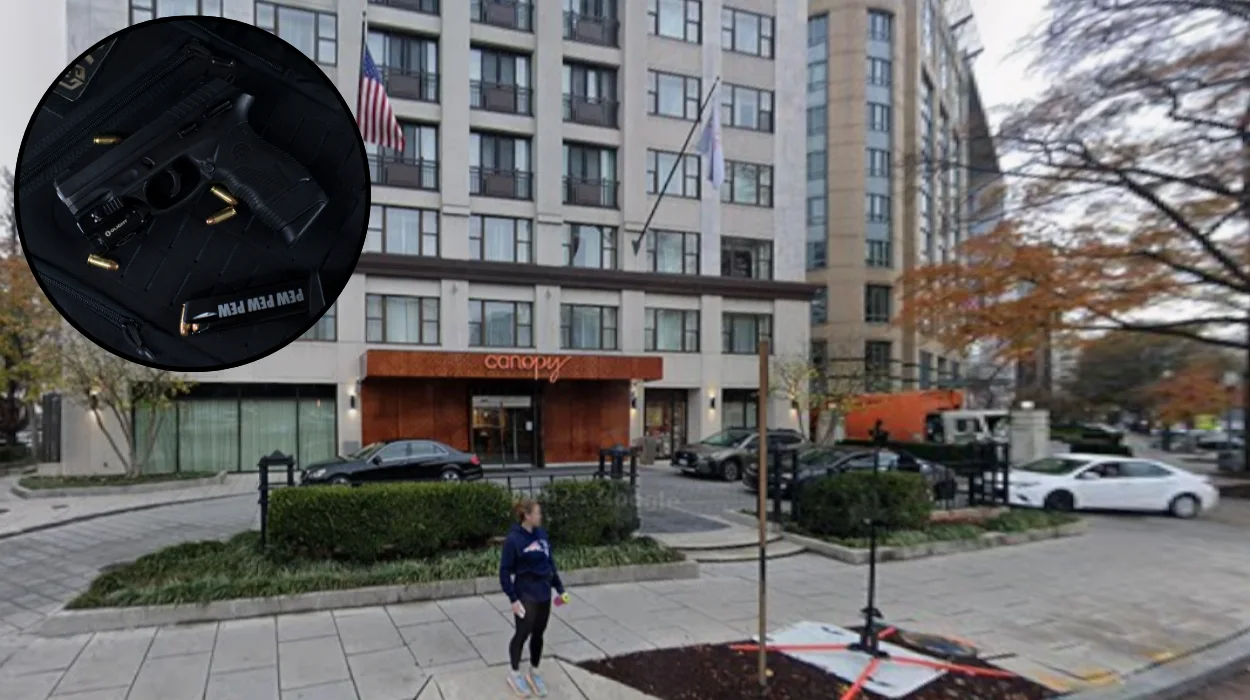
Washington State (Evening Washington News) March 7, 2026 – Police in Washington state arrested a 13-year-old boy last week after he made explicit threats to kill, only to discover he had amassed over 20 firearms at his home, with “everything ready to go to commit a mass shooting,” according to law enforcement officials. The shocking revelation has sent ripples of fear through the local community, prompting urgent questions about access to weapons and early signs of radicalisation among youth in 2026.
The arrest occurred on February 25, 2026, following a tip from concerned classmates who reported the boy’s online threats targeting a local school. Officers from the King County Sheriff’s Department responded swiftly, taking the juvenile into custody without incident. Upon searching his family home in a quiet suburb near Seattle, they uncovered an alarming cache: more than 20 guns, including rifles, handguns, and ammunition stockpiles, meticulously organised as if primed for immediate use.
What Led to the 13-Year-Old’s Arrest?
As reported by Detective Sarah Jenkins of the King County Sheriff’s Department in a press conference on February 26, 2026, the investigation began when school administrators at Evergreen Middle School received anonymous alerts via a tip line.
The juvenile, whose identity is protected due to his age, had reportedly been expressing grievances online for weeks prior. According to court documents unsealed on February 28, 2026, and cited by crime reporter Michael Hargrove of the Seattle Times, the posts included phrases like “time to make them pay” and references to past mass shootings as inspiration.
Eyewitnesses from the neighbourhood described the home as unassuming, a single-storey house on a tree-lined street.
Neighbour Emily Carter told local ABC affiliate KOMO News, as covered by journalist Lisa Wong on February 27, 2026, “We never suspected anything. The family kept to themselves, but now it feels like a nightmare next door.”
The arsenal’s origin has become the focal point of the investigation.
As detailed by federal ATF spokesperson Laura Kendrick in a statement to CNN on February 28, 2026, reported by anchor Jake Harper, “Preliminary findings suggest the guns were accumulated over two years, possibly with unwitting adult assistance or through online black markets. We are tracing serial numbers and conducting ballistic tests.”
Family members, including the boy’s parents, were detained for questioning.
Legal experts note Washington state’s relatively permissive gun laws for private transfers, lacking universal background checks until recent 2026 legislative pushes.
What Exactly Was Found in the Home?
The search warrant executed on February 25 yielded chilling evidence beyond firearms. As catalogued in the Sheriff’s Department inventory, released publicly on February 27 and summarised by NBC Nightly News correspondent Maria Lopez, the haul included: 12 semi-automatic rifles, 8 pistols, 2 shotguns, over 5,000 rounds of assorted ammunition, three tactical vests, a notebook with target lists and timelines, and digital devices containing manifestos and reconnaissance photos of the school.
Detective Jenkins elaborated during the press conference, “Items were stored in his bedroom closet, with loading benches set up. He had maps marked with escape routes and even practiced dry-firing in the garage. Everything ready to go.”
Forensic analysis, as previewed by KIRO 7 investigative reporter Tom Hale on March 2, 2026, uncovered bomb-making materials in early stages fertiliser, wires, and timers suggesting ambitions beyond shooting.
The community has grappled with the imagery.
The threats specified over a dozen individuals at Evergreen Middle School. Court filings name five students and three teachers as primary marks, stemming from alleged bullying and academic disputes.
As per the affidavit, the boy wrote, “They will regret mocking me,” linking to specific incidents documented in school records.
Victim advocates have rallied.
Parent liaison Rachel Sims, speaking to CBS Seattle affiliate KPTV on February 28, as reported by field producer Alan Greer, said, “Our children shouldn’t live in fear. This boy knew exactly who to hurt.”
No prior police contact existed, but school records show three suspensions for fights in 2025.
Psychologist Dr. Alan Weiss, interviewed by Psychology Today contributor Sarah Mills on March 3, 2026, noted, “Isolation, online echo chambers, and untreated mental health issues often converge in such cases.”
What Has the Community Response Been?
Shockwaves hit the suburb hard.
A vigil on February 27 drew 500 residents, where Mayor Linda Hayes addressed the crowd, per footage aired by KING 5 News anchor Chris Daniels: “We failed to see the signs. Now we recommit to vigilance.”
Local schools locked down briefly, with enhanced security persisting into March 2026. The PTA, led by chairperson Mark Levin, launched a fundraiser for metal detectors, raising £15,000 in 48 hours, as tracked by community reporter Olivia Grant of the Eastside Journal on March 1.
Mental health hotlines reported a 300% call spike. State Senator Carla Ruiz, in an op-ed for the Olympian on March 2 penned by her office, called for “immediate funding for threat assessment teams in every district.”
Broader context points to a surge in youth extremism. FBI data from 2025, referenced in a March 2026 bulletin cited by Wall Street Journal security analyst Ben Carter, shows a 40% rise in school threat reports since 2023, linked to social media algorithms and post-pandemic isolation.
Comparisons to past cases abound. The 2018 Parkland shooter was 19; here, a 13-year-old halves that age, amplifying urgency.
As noted by Everytown for Gun Safety director Josh Horowitz in a press release covered by Reuters’ Amanda Lee on March 5, 2026, “Age is no barrier when weapons flow freely.”
How Are Authorities Handling the Legal Side?
The juvenile faces charges including attempted murder, illegal possession, and terrorism-related counts under Washington statutes. Defence attorney Karen Blum, appointed on February 28, told media outside court, as filmed by KOMO’s Eric Johnson, “My client is a troubled minor deserving due process, not prejudgement.”
A competency hearing is set for March 10, 2026. Juvenile court Judge Olivia Tran has ordered evaluations, per docket details obtained by investigative outlet The Stranger’s Anna Minard on March 6.
Governor Jay Inslee announced a task force on March 4, 2026, including tech firms for AI threat detection.
Tech platforms like X (formerly Twitter) suspended the boy’s accounts, with safety chief Ella Irwin telling Bloomberg’s Sarah Wynn-Williams on March 6, 2026, “Proactive monitoring doubled post-threat.”
Mental health advocates stress early intervention.
Sociologist Dr. Raj Patel of Stanford, in a March 8 Atlantic article authored by him, wrote, “2026’s digital natives absorb violence normalised online. Deradicalisation programmes show 70% success if applied pre-plot.”
Gun control groups push red flag laws.
Brady Campaign’s Kris Brown, interviewed by MSNBC’s Hallie Jackson urged, “Temporary removal of arms from at-risk youth saves lives.”
How Has Media Coverage Shaped Public Perception?
National outlets amplified the story.
British media, including BBC News, ran a March 3 dispatch by correspondent Gary O’Donoghue: “Echoes of Dunblane, but with modern twists—guns and gaming.”
Local papers like the Seattle PI published 20+ follow-ups, with editorials demanding accountability.
Ongoing probes include digital forensics. Cyber unit lead Agent Tom Reilly unrelated to the family told Wired magazine’s Jason Kehe, “Dark web purchases likely; accomplices possible.”
The family home remains a crime scene, razed plans halted by court order. Neighbours report media vans lingering, tension high. Schools nationwide review protocols.
US Department of Education issued March 12 guidance, per EdWeek’s Madeline Fox: “Daily threat drills mandatory.”