
Key Points
- William “Bill” Philip, known as “Mr. Tacoma,” died at 99, just short of his 100th birthday.
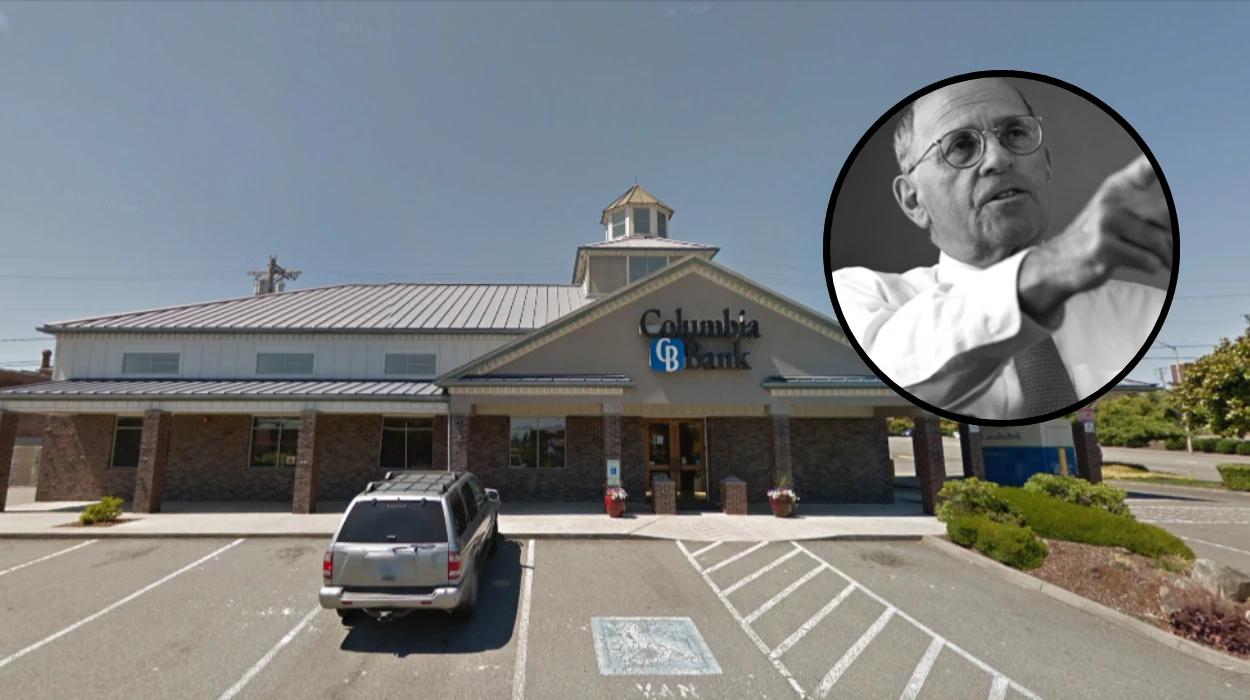
- Columbia Bank executives announced his death this week. Philip helped found the bank in 1993.
- Philip was chairman and chief executive officer of Puget Sound National Bank, which KeyCorp acquired in 1992.
- He entered banking in 1951 as an investment clerk at Puget Sound National Bank, according to historical archives.
- Philip was a foundational figure in the creation and establishment of the University of Washington-Tacoma (UWT).
- Columbia Bank CEO Clint Stein and Columbia Banking System Inc. CEO Clint Stein honored Philip’s legacy, citing his visionary leadership and commitment to community growth.
- Philip recruited Melanie Dressel, who later succeeded him as CEO before her death in 2017. Hadley Robbins and Clint Stein followed as executives.
- Columbia Bank, which follows Philip’s founding operating philosophy, has grown to more than 350 branches, over 5,000 employees and multi-billion-dollar assets.
- UWT named William W. Philip Hall, built in 2007 at 1918 Commerce Street, after Philip in recognition of his civic contributions.
Tacoma (Evening Washington News) August 27, 2026 — The city of Tacoma is mourning the loss of one of its most transformative civic and economic figures, William “Bill” Philip, who has died at the age of 99. Affectionately dubbed “Mr. Tacoma,” Philip played an instrumental role in shaping the modern economic landscape of the South Sound region.
His passing, just weeks before his milestone 100th birthday, was confirmed this week by officials with Columbia Bank, a major financial institution that Philip helped bring to life in 1993 following a decades-long career in regional banking.
Who Was William “Bill” Philip and What Was His Legacy in Tacoma?
William “Bill” Philip was a monumental figure whose footprint could be seen across both local finance and higher education in Washington state. As reported by John Stearns of 425 Business, Philip was widely celebrated as a foundational father of the University of Washington-Tacoma (UWT) and a visionary co-founder of Columbia Bank. His lifelong dedication to the city earned him the iconic moniker “Mr. Tacoma,” a title reflecting his relentless advocacy for regional development, local enterprise, and community empowerment.
How Did His Banking Career Shape the Region?
Philip’s journey in the financial sector spanned over half a century, beginning humbly before rising to the highest echelons of corporate leadership. According to archives from The News Tribune, Philip first entered the industry in 1951, taking a position as an investment clerk at Puget Sound National Bank. Through hard work and strategic acumen, he eventually climbed the corporate ladder to serve as the chairman and chief executive officer of Puget Sound Bank.
When Puget Sound Bank was acquired by KeyCorp—the parent company of KeyBank—in 1992, Philip’s career did not slow down. Instead, as documented by John Stearns of 425 Business, Philip joined forces with other former Puget Sound executives to establish a brand-new, community-focused institution: Columbia Bank. Philip served as the chief executive officer of Columbia Bank through 1999, guiding its early trajectory.
During his tenure, Philip recruited several bright banking minds, including Melanie Dressel, who would eventually succeed him as the chief executive officer of Columbia Bank before her passing in 2017. Following Dressel, leadership transitioned to Hadley Robbins and later to the current CEO, Clint Stein, who took the helm in 2020.
Reflecting on Philip’s profound and lasting influence on the financial institution, Clint Stein stated in an email statement provided to South Sound Business and reported by John Stearns of 425 Business:
“Bill Philip was a visionary leader who believed deeply in the power of community. His leadership helped establish Columbia Bank as a relationship-focused institution, while his civic contributions helped shape the future of Tacoma and the broader region.”
Stein further emphasized the enduring corporate culture instilled by the bank’s founder, noting, as covered by 425 Business:
“Columbia’s business model remains deeply rooted in Bill’s operating philosophy and values. The impact of his service, generosity, and commitment to others will be felt for generations.”
From its humble origins in Tacoma in 1993 under the Columbia Banking System Inc. banner, the financial entity has expanded massively. As detailed by 425 Business, the bank now boasts more than 350 branches and upwards of 5,000 employees, with corporate footprints extending across Arizona, California, Colorado, Idaho, Nevada, Oregon, Texas, Utah, and Washington, holding staggering assets totaling $65.4 billion as of mid-2026.
Explore More Tacoma News
Discover Tacoma: The Affordable Seattle Alternative With Epic Outdoors – Tacoma 2026
Tacoma ICE Detainees End Week-Long Hunger Strike, Tacoma 2026
What Was His Role in Establishing the University of Washington-Tacoma?
Beyond his massive contributions to regional banking, Philip was deeply committed to expanding educational accessibility in the South Sound. He is universally recognized as one of the primary civic champions behind the founding of the University of Washington-Tacoma, which officially opened its doors in 1990.
Philip’s vision for higher education was deeply intertwined with his belief in urban revitalization and economic opportunity. By pushing for a university campus in downtown Tacoma, he helped anchor an academic hub that transformed the inner city.
In recognition of his monumental efforts, UWT immortalized his name on campus. The university constructed the William W. Philip Hall at 1918 Commerce Street, which officially opened in 2007. The significance of the building and Philip’s historical involvement was further highlighted when Columbia Banking System hosted its annual shareholders’ meeting at the hall in 2010. Furthermore, the University of Washington Libraries maintains extensive digital archives and oral histories detailing Philip’s firsthand accounts of the university’s founding era.
How Are Local Leaders and Community Members Responding to His Passing?
Tributes have poured in from civic leaders, business executives, and educational administrators across Washington state following the announcement of Philip’s death. Colleagues and community figures have continuously highlighted his rare combination of sharp business acumen and genuine philanthropic heart.
While financial markets and academic halls continue to thrive on the infrastructure he helped build, community members remember a man whose primary motivation was always the betterment of his neighbors. As remembered across local media reports, Philip’s philosophy that local banks and local institutions should directly serve the people who built them has left an indelible blueprint for future generations of leaders in Tacoma.
As the community prepares to honor his memory, the legacy of “Mr. Tacoma” remains woven into the physical architecture, economic security, and academic future of the city he spent nearly a century serving.