
Key Points
- Program Launch: Visit Bellevue introduced “Ride Bellevue” in July 2026, a comprehensive visitor experience program designed to promote car-free exploration through biking and micro-mobility.
- Strategic Partnerships: The initiative is a collaborative effort between Visit Bellevue, the Chicago-based micro-mobility provider Ridy, and the North Bend-based cycling outfitter, The Line Bike Experience.
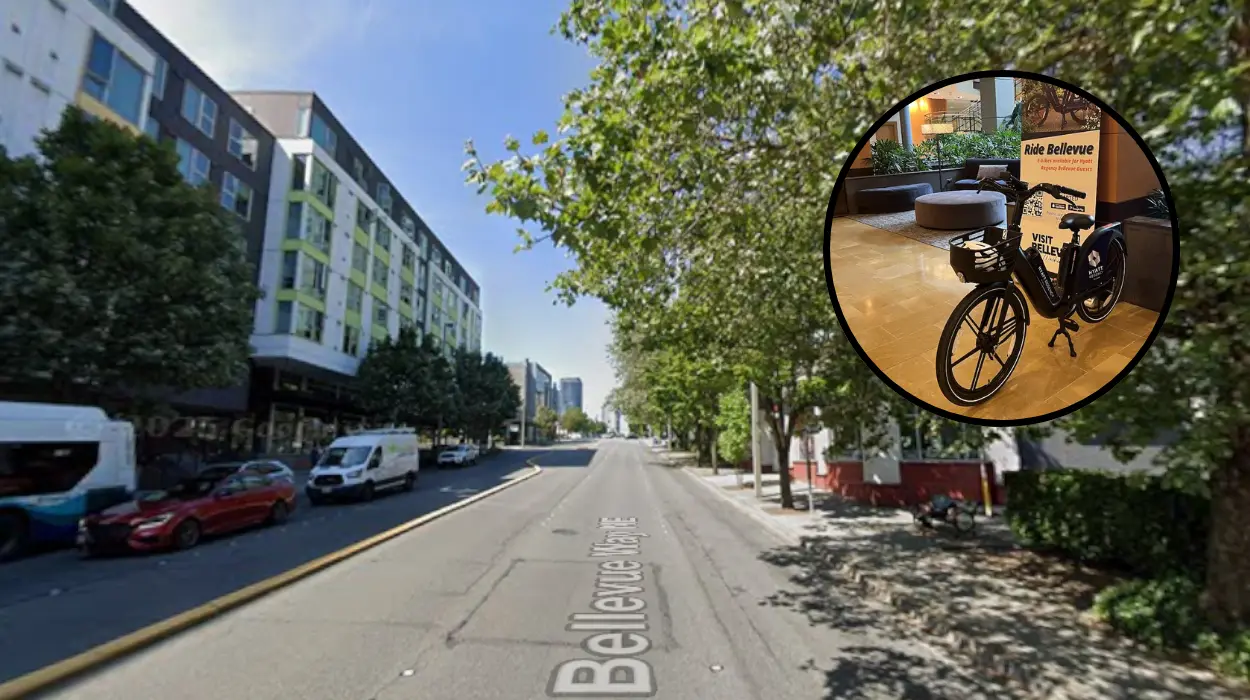
- Convenient Access: E-bikes are stationed directly at the InterContinental Seattle Bellevue and the Hyatt Regency Bellevue, allowing guests to rent bikes instantly by scanning a QR code.
- Complimentary Offers: Guests staying at Bellevue hotels receive a free one-hour ride credit, which can be redeemed at The Line Bike Experience’s locations, including their new solar-powered Eastrail Trailhead Kiosk.
- City Vision: The program aims to position Bellevue as a “gateway to Pacific Northwest adventure,” leveraging the city’s extensive park system, trail networks like the Eastrail, and proximity to scenic routes.
Bellevue (Evening Washington News) August 18, 2026 – Visitors to the city of Bellevue, Washington, are finding it significantly easier to navigate the region’s undulating, fir-studded landscape without the burden of a personal vehicle or the frustration of juggling multiple bike-share applications. The recently launched “Ride Bellevue” program, an initiative spearheaded by the tourism nonprofit Visit Bellevue, has streamlined the rental process by integrating high-quality e-bikes directly into the lobbies of major hotels and providing streamlined access to the city’s sprawling network of over 100 parks and regional trails.
- Key Points
- What is the primary objective of the Ride Bellevue program?
- How are the partnerships with Ridy and The Line Bike Experience structured?
- Why is Bellevue considered an ideal testing ground for this program?
- How does Ride Bellevue support the broader sustainability goals of the region?
- What future developments should users of the program anticipate?
What is the primary objective of the Ride Bellevue program?
The core mission of Ride Bellevue, according to Brad Jones, executive director of Visit Bellevue, is to transform the city into a central “gateway to Pacific Northwest adventure”. As reported by Ron Johnson of Momentum Mag, Mr. Jones stated,
“Our city offers an exceptional combination of urban amenities, scenic trails, and easy access to world-class outdoor recreation”.
By removing the barriers to entry—such as the need to locate rental shops or navigate complex digital interfaces—the program encourages a “car-free” exploration of an area already recognized for its multi-modal downtown and robust transit infrastructure.
How are the partnerships with Ridy and The Line Bike Experience structured?
The program’s efficiency relies on two distinct but complementary partnerships. First, the collaboration with Ridy, a Chicago-based firm specializing in micro-mobility for residential and hospitality settings, facilitates the hotel-based e-bike access. As noted by Visit Bellevue in their media newsroom, guests at the InterContinental Seattle Bellevue and the Hyatt Regency Bellevue can simply scan a QR code on the e-bike display to initiate a rental.
Guru Medasani, founder and CEO of Ridy, expressed enthusiasm for the partnership. As reported by Momentum Mag, Mr. Medasani remarked,
“Visit Bellevue sets the standard for an elevated guest experience, and we share their vision. Through our partnership, we are redefining the guest experience with an effortless, car-free, and sustainable way to step outside and explore Bellevue’s attractions, neighborhoods, waterfronts, parks, Eastrail, and the SR 520 Trail across Lake Washington”.
Simultaneously, the partnership with The Line Bike Experience provides a more adventurous path for cyclists. Based in North Bend, Washington, this outfitter specializes in supporting riders of all experience levels. The company operates a solar-powered kiosk on the 42-mile Eastrail corridor, located just south of the Wilburton Light Rail Station. According to MyNorthwest, the program allows hotel guests to redeem a complimentary one-hour ride credit at either the North Bend headquarters or the new Eastrail kiosk. The fleet at these locations includes manual bikes, pedal-assisted gravel bikes, and hardtail mountain bikes.
Explore More Bellevue News
Leah Rudick Live at Forum Social House Bellevue 2026
Lime Launches Shared E-Bikes and Scooters in Bellevue in 2026
Why is Bellevue considered an ideal testing ground for this program?
Bellevue’s transition from a “sleepy suburb” in the late 20th century to a vibrant hub for the tech industry has necessitated advanced transportation solutions. According to the analysis provided by Momentum Mag, the city is frequently cited as one of the best places to live in the United States, bolstered by low crime rates and excellent mass transit connectivity.
The city is also a “Silver Bicycle Friendly Community,” as designated by the League of American Bicyclists. Its geography, situated across Lake Washington from Seattle, provides a unique opportunity to connect urban density with rugged outdoor terrain. The “Ride Bellevue” program capitalizes on this by linking the downtown core to major regional arteries like the Lake to Lake Trail, the SR 520 Trail, and the extensive Eastrail network, which connects Renton, Bellevue, Kirkland, Redmond, and Issaquah.
How does Ride Bellevue support the broader sustainability goals of the region?
While Ride Bellevue is primarily marketed as a visitor experience program, it aligns with larger environmental and health-conscious trends within the Pacific Northwest. According to resources from Choose Your Way Bellevue, transportation remains the largest source of greenhouse gas emissions in the United States, with personal passenger vehicles being the primary culprit. By providing a frictionless transition from hotel to bike, the program aims to displace vehicle-based trips with cycling.
Research cited by Choose Your Way Bellevue suggests that swapping even one daily car trip for a bike ride can reduce an individual’s annual carbon footprint by approximately 0.5 tons. Furthermore, the mental and physical health benefits are significant; studies, such as the 18-year review published in BMJ Public Health, indicate that active commuters experience lower risks of cardiovascular disease and mortality compared to their sedentary counterparts.
What future developments should users of the program anticipate?
The program is not static and shows signs of further evolution. For visitors seeking more intensive outdoor experiences, The Line Bike Experience is reportedly developing a shuttle service from Bellevue to their North Bend headquarters. North Bend serves as one of the nation’s largest bike demo centers, offering access to more challenging terrain such as the Snoqualmie Valley Trail.
As the Eastside’s trail network continues to grow, so does the integration between different modes of transport. With the regional light rail “2 Line” now operational, travelers can combine rail transit with biking, utilizing bike lockers at stations or loading bicycles onto public transit vehicles, further embedding the “Ride Bellevue” philosophy into the daily fabric of the region.
Summary of Service Offerings
The Ride Bellevue initiative creates a tiered approach to cycling in the city:
- Urban/Micro-Mobility: Convenient, on-demand e-bike rentals via QR code at select hotels for local, car-free exploration.
- Trail-Based Adventure: Access to a wider range of bikes (manual, gravel, mountain) through The Line Bike Experience at the Eastrail kiosk or North Bend headquarters.
- Educational Resources: Integration with local bike maps and digital tools to help riders of all comfort levels plan routes, from simple trips to parks to longer regional excursions.
By effectively bridging the gap between urban hotel hospitality and the expansive natural beauty of the Eastside, Visit Bellevue, Ridy, and The Line Bike Experience appear to have created a blueprint for how mid-sized, tech-heavy cities can cultivate a more sustainable and accessible tourism economy. As the program continues through its inaugural summer and beyond, its impact on both visitor behavior and local traffic patterns will likely remain a point of interest for urban planners and tourism boards across the nation.