
Key Points
- Agricultural Legacy: The Central Washington State Fair, established in 1892, continues its long-standing tradition of promoting the livestock and agricultural industries in the Yakima Valley.
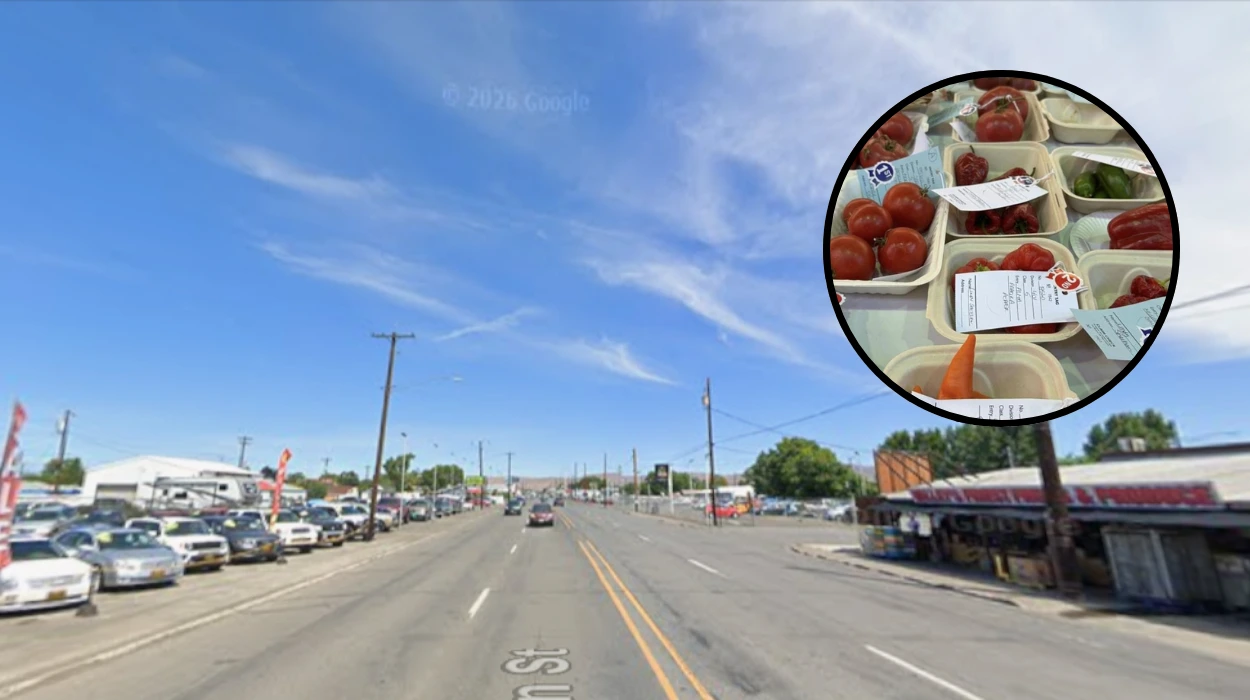
- Valley Produce Department: The fair features an extensive “Valley Produce” competition, where local growers exhibit fruits, vegetables, and specialty crops that reflect the region’s agricultural output.
- Stringent Standards: Entries for the produce department are subject to rigorous quality standards; items showing signs of disease, pests, or improper cleanliness are rejected by organizers to maintain the prestige of the exhibition.
- Legacy Awards: The competition includes commemorative awards, such as the Lee Rosenkranz Memorial Award for the best display of apples and the Ken & Gen Duffield Award for the highest-scoring exhibitor, honoring long-serving superintendents.
- Community Engagement: Beyond commercial agriculture, the fair integrates community involvement through 4-H programs, including quilt challenges and youth-led produce entries, fostering the next generation of agricultural enthusiasts.
- Logistical Procedures: The fair has transitioned to online registration for its various competitions, with specific drop-off windows and release schedules managed by the Department of Agriculture, Education & Exhibits.
Yakima (Evening Washington News) August 11, 2026 – As the Yakima Valley prepares for the upcoming harvest season, the Central Washington State Fair has once again taken centre stage, reaffirming its role as the premier showcase for the region’s rich agricultural heritage. For over a century, this historic institution has served as more than just a place of entertainment; it remains a vital platform for local growers to demonstrate the quality, diversity, and innovation of their produce.
- Key Points
- How does the Central Washington State Fair promote the local agricultural industry?
- What are the requirements for entering produce in the Valley Produce Department?
- How are exhibitors recognized for their contributions to the fair?
- What is the role of 4-H and community groups in the fair’s agricultural exhibits?
- What logistical preparations are necessary for fair exhibitors?
- How does the Central Washington State Fair compare to other regional agricultural events?
How does the Central Washington State Fair promote the local agricultural industry?
The Central Washington State Fair is deeply rooted in the history of the Yakima Valley. According to historical records archived by the organization and Wikipedia, the fair was first held in 1892, when a group of businessmen in Yakima sought to establish a venue to promote livestock and agricultural development. This mission remains the cornerstone of the event today.
As described by the State Fair Park administration, the fair acts as a self-funded 501(c)(3) nonprofit organization. Its primary objective is to celebrate the Yakima Valley by promoting agriculture, education, and community involvement through high-quality events. By providing a stage for farmers, 4-H members, and amateur gardeners to display their harvests, the fair facilitates a direct connection between the agricultural community and the public.
What are the requirements for entering produce in the Valley Produce Department?
The Valley Produce Department represents one of the most competitive segments of the fair. The exhibition is open to all growers 18 years and older, with strict stipulations regarding the origin of the produce. Regulations mandate that all exhibits must be grown by the exhibitor or their immediate family and must represent the current year’s crop.
The selection process for fruits and vegetables is highly technical. Judges evaluate entries based on size, quality, color, trueness to variety, and freedom from blemishes. As noted in the 2025 exhibitor guidebook for the Valley Produce Department, the fair strives for the highest standards; organizers explicitly state that they will “reject entries that are not up to quality standards,” particularly those showing evidence of disease or insect damage. Furthermore, all produce must be thoroughly cleaned before presentation, or it faces disqualification.
Explore More Yakima News
Yakima PD Honours Sgt. Joe Deccio in Yakima 2026
Yakima Police Unveils Sgt. Joe Deccio Memorial Garden, Yakima 2026
How are exhibitors recognized for their contributions to the fair?
The fair honors the dedication of its participants through several prestigious awards. Among the most notable are those established in memory of former staff members who dedicated their lives to the advancement of local agriculture.
The Lee Rosenkranz Memorial Award, for instance, is presented to the exhibitor who displays the best collection of apples from the wide commercial varieties. Lee Rosenkranz served as the horticulture superintendent for 15 years, and the award serves as a tribute to his status as an “outstanding apple orchardist himself”.
Similarly, the Ken & Gen Duffield Award is presented to the exhibitor with the highest cumulative points in the Valley Produce Department. This award commemorates Ken Duffield, who served as the Agriculture Building Superintendent for 15 years, alongside his wife, Gen, who also played an integral role in the fair’s operation.
What is the role of 4-H and community groups in the fair’s agricultural exhibits?
Beyond the commercial and open-class produce entries, the fair heavily emphasises youth development through 4-H participation. As highlighted by the WSU Yakima County Extension, 4-H members contribute significantly to the fair’s still-life and produce departments.
Youth involvement extends to creative community projects, such as the Yakima County 4-H Quilt Block Challenge, which aims to create a collective quilt to be raffled off for the benefit of local 4-H programming. These initiatives ensure that the fair serves as an educational hub, teaching young people the value of agriculture and community service. According to Sophia Smart, the Director of Agriculture, Education & Exhibits at State Fair Park, the fair has recently modernised its operations by transitioning to an online registration system for all contests and competitions, aiming to make participation more accessible for all community members.
What logistical preparations are necessary for fair exhibitors?
For those participating in the 2026 fair season, planning is essential. The fair operates within a strict schedule for entry, judging, and release. Entries are typically categorised by variety, and growers are encouraged to enter as many different varieties as possible to showcase the range of their harvests.
Vegetables are classified by size—those larger than four inches, such as pumpkins and squash, generally require only one entry, while smaller vegetables must be presented in groups of five or more to ensure uniformity. Grasses and legumes also have specific requirements; for example, sheaves must be tied in three places, and dried legumes must be submitted in clean glass jars to meet the department’s aesthetic and quality standards.
The release schedule is equally rigid, with exhibit removal occurring on specific dates and times—often in the late evening—to ensure the orderly conclusion of the event. The fair organisation emphasises that it cannot be held responsible for any exhibits left past the designated release times.
How does the Central Washington State Fair compare to other regional agricultural events?
While the Central Washington State Fair holds a special place in the history of the Yakima Valley, it exists within a larger network of agricultural celebrations in the Pacific Northwest. For instance, the Washington State Fair in Puyallup, which began in 1900, holds the title of the largest attended event in the state, often welcoming over one million guests.
Despite the difference in scale, the Central Washington State Fair maintains a distinct focus on the specific agricultural challenges and triumphs of the Yakima region. By maintaining a 501(c)(3) nonprofit status and focusing on a mix of rodeo, produce exhibits, and family-friendly entertainment, the fair remains a central pillar of Yakima’s cultural and economic life.
As the region moves toward the late-September fair dates, the focus on the Valley Produce Department serves as a reminder of the agricultural roots that built the Yakima Valley. From the careful selection of a single apple for a memorial award to the collective effort of 4-H quilt makers, the fair remains a testament to the community’s commitment to land, harvest, and tradition.
For more information regarding entries, prospective exhibitors are encouraged to reach out to the State Fair Park administration or the WSU Yakima County Extension office, which continues to provide technical guidance and support for those looking to compete in the coming season.