
Key Points
- Massive Evacuations Lifted: Tens of thousands of residents forced to flee a cluster of fierce wildfires near Spokane, Washington, began returning to their homes on Sunday following days of intense displacement.
- Firefighting Strength: Nearly 1,700 firefighters successfully prevented further spread across three aggressive blazes that originally erupted on August 1 on the outskirts of the state’s second-most populous city.
- Destruction Toll: As reported by Reuters, the fires scorched approximately 10,000 acres (4,047 hectares) and destroyed or heavily damaged upwards of 900 homes and structures in and around Spokane.
- Peak Crisis Numbers: At the height of the emergency, as many as 64,000 residents were placed under strict evacuation orders as wind-driven flames consumed local neighborhoods.
- Casualty Status: Remarkably, authorities confirmed that no serious injuries or fatalities had been reported in connection with the Spokane-area fires.
- Arson Arrest: While official investigations into the spark origins continue, local authorities previously arrested a 37-year-old local resident, Aaron Farinacci, charging him with arson in connection with one of the blazes.
- Broader Regional Crisis: The Spokane-area disaster stood as a top national firefighting priority amidst widespread drought across the Pacific Northwest, coinciding with severe states of emergency and evacuations in neighboring British Columbia and parts of Idaho, Oregon, and Utah.
Spokane (Evening Washington News) August 10, 2026 — Many evacuees among the tens of thousands forced to flee a cluster of wildfires near Spokane, Washington, were allowed back to their homes on Sunday as firefighters stepped up efforts to extinguish remaining hot spots. Despite another round of hot, dry weather over the weekend, nearly 1,700 firefighters managed to prevent further spread of flames from three blazes that erupted on the outskirts of the state’s second-most populous city on August 1, officials said.
- Key Points
- What Are the Latest Statistics on the Spokane Wildfires?
- Why Are Some Evacuees Able to Return While Others Remain Locked Out?
- How Are Returning Residents Coping with the Devastation?
- What Sparked the Spokane Complex Fires and Are Authorities Investigating?
- How Do the Spokane Wildfires Fit into the Wider Western U.S. and Canadian Emergency?
What Are the Latest Statistics on the Spokane Wildfires?
As reported by Steve Gorman of Reuters, the destructive cluster of fires had scorched a massive footprint of 10,000 acres (4,047 hectares) by Sunday. The unrelenting disaster destroyed or heavily damaged more than 900 homes in and around Spokane. At the peak of the conflagration, as many as 64,000 residents found themselves trapped under mandatory evacuation orders as fierce, wind-driven flames swallowed neighborhoods and forced emergency response crews onto the defensive.
Despite the catastrophic property loss, fire officials and local authorities shared a vital piece of positive news: no serious injuries or fatalities had been reported. For several consecutive days, the Spokane-area fires ranked as the foremost firefighting priority across the entire United States, cutting through a drought-parched Pacific Northwest region where dozens of fires had raged for weeks, blanketing surrounding communities in heavy smoke and soot.
Why Are Some Evacuees Able to Return While Others Remain Locked Out?
While relief rippled through parts of the county as roads reopened, a stark disparity remained between neighborhoods spared by the wind and those reduced to ash. As reported by Steve Gorman of Reuters, firefighting mop-up operations continued aggressively on Sunday, with crews dedicating major focus to tamping down lingering hot spots buried deep within the smoldering ruins of the hardest-hit sectors.
Consequently, Spokane County Sheriff John Nowels announced during a Sunday afternoon news conference that communities directly in the heart of the fire zones would remain strictly off-limits to residents indefinitely until authorities could verify structural and environmental safety. However, evacuation orders were lifted, and roads reopened in communities situated beyond the immediate footprint of the fires, allowing displaced locals to re-enter.
“People have been out of their homes for over a week now. That’s a long time,”
Spokane County Sheriff John Nowels stated, as reported by Reuters.
“And I know there’s a lot of people who aren’t sure if they have a home to come home to, or if their home is standing, whether they’ll be able to inhabit it anytime soon.”
Explore More Spokane News
Arson Suspect Planned Spokane Wildfire For Weeks in 2026
WSU Extension Wildfire Relief for Horses and Pets, Spokane 2026
How Are Returning Residents Coping with the Devastation?
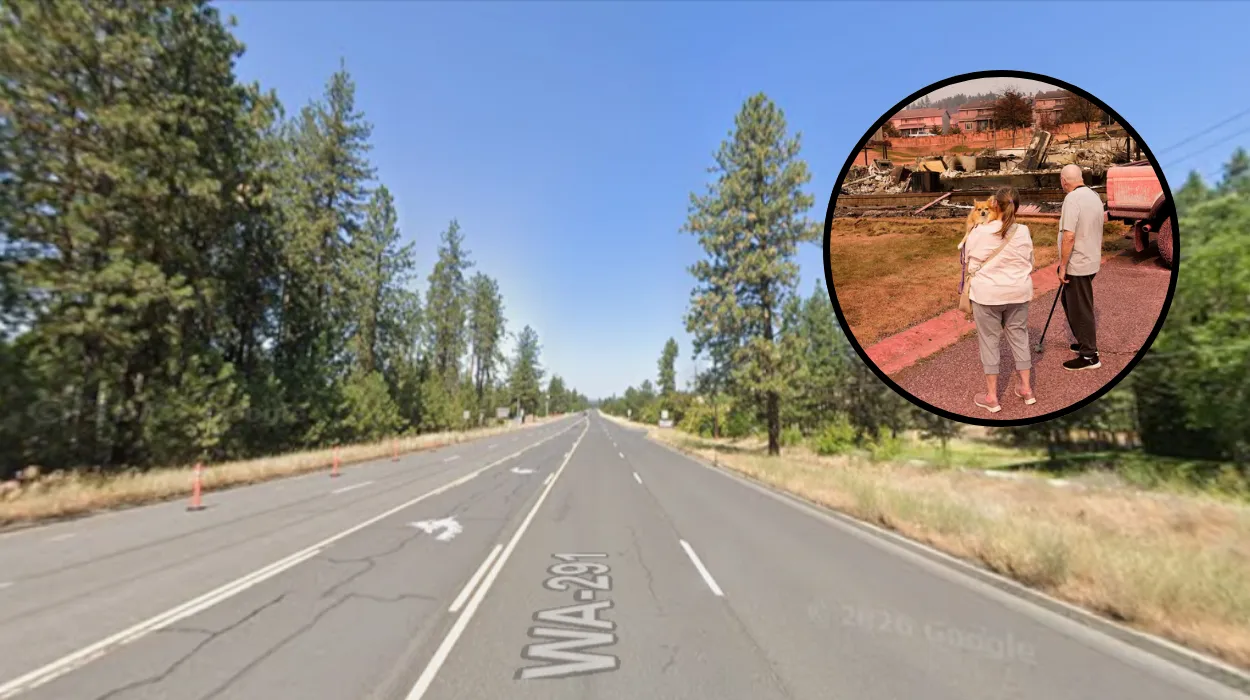
The homecoming experience for many eastern Washington families proved deeply emotional and harrowing. As documented in regional reporting covered by the Hindustan Times and wire services, returning residents walked through neighborhoods turned upside down by the elements, where lawns sat covered in thick gray ash and only brick chimneys remained standing. Evacuees included vulnerable populations, such as patients from the city’s U.S. Veterans Affairs hospital, who had been swiftly moved out of harm’s way.
Among those returning to survey the wreckage were 76-year-old residents Miriam and Daniel Sim. As reported by the Hindustan Times, Miriam Sim placed her hand over her mouth in absolute disbelief while examining the flattened remains of the property where they had resided since 2005.
“It’s like a war zone,”
Miriam Sim stated, describing the grim environment.
“There’s nothing to save.”
When confronting the stark reality of the aftermath, her husband Daniel Sim added,
“At our age, do we want to rebuild?”
Similarly, local residents Angela and Wayde Deatherage, both 49, returned to find their home of nearly 22 years entirely wiped out. As detailed by the Hindustan Times, Angela Deatherage encapsulated the collective heartbreak of hundreds of families, noting,
“It’s just ash… It’s like our house sunk down in the basement… There’s just so much loss for so many people.”
What Sparked the Spokane Complex Fires and Are Authorities Investigating?
The root origin of the fast-moving Spokane-area blazes has kept investigators working around the clock. While official determinations regarding the exact trigger of the primary complex fires remain under active investigation by state and local agencies, law enforcement has already taken legal action on related threats.
According to background details reported alongside the Reuters coverage, local authorities arrested a 37-year-old local resident named Aaron Farinacci last Tuesday. Farinacci was formally charged with arson in connection to one of the individual blazes that helped fuel the multi-fire crisis. Investigators continue to sort through forensic evidence across the charred acreage to establish a comprehensive timeline of how the disaster escalated so rapidly during early August.
How Do the Spokane Wildfires Fit into the Wider Western U.S. and Canadian Emergency?
The crisis near Spokane did not occur in a vacuum; it unfolded amid a punishing continental fire season that stretched federal, state, and local emergency management resources to their absolute limits. North of the U.S.–Canadian border, a separate, fierce wildfire chewed through more than 10,300 hectares of a prominent wine-producing region in British Columbia over the weekend. Canadian provincial authorities responded by declaring a state of emergency, compelling roughly 18,000 individuals to evacuate their properties as towering walls of flame advanced.
Concurrently, other catastrophic fires raged across the western United States. In western Idaho and eastern Oregon, crews utilizing heavy bulldozers and helicopters battled a massive grass fire for a tenth consecutive day. That specific blaze scorched nearly 525 square miles, threatening over 600 homes and 800 auxiliary structures across rural cattle-ranching communities. Meanwhile, in central Utah, an expanding blaze more than doubled in size over the weekend, consuming nearly 57 square miles and killing over 100 cattle, which ultimately forced mandatory evacuations for the town of Fillmore.
Within Washington state alone, the cumulative damage crossed 390 square miles of burned terrain. State officials, including representatives from the Washington State Department of Natural Resources—such as agency spokesperson Courtney James, who noted the complete uncontainment of several regional threats during early phases—repeatedly pleaded with the public. Authorities strongly urged hobbyists and drone operators to refrain from flying unmanned aircraft anywhere near active fire zones, warning that unauthorized drones force immediate, dangerous ground-to-air delays in critical aerial firefighting missions.
As utility crews work to restore power to the thousands of remaining outages and local community hubs—such as a main city convention center functioning as an emergency shelter for roughly 400 displaced individuals—the road to recovery for Spokane will be long. For now, the easing winds and cooler temperatures offer a vital window for firefighters to secure perimeter lines, enabling safe communities to finally welcome their residents back home.