

Key Points
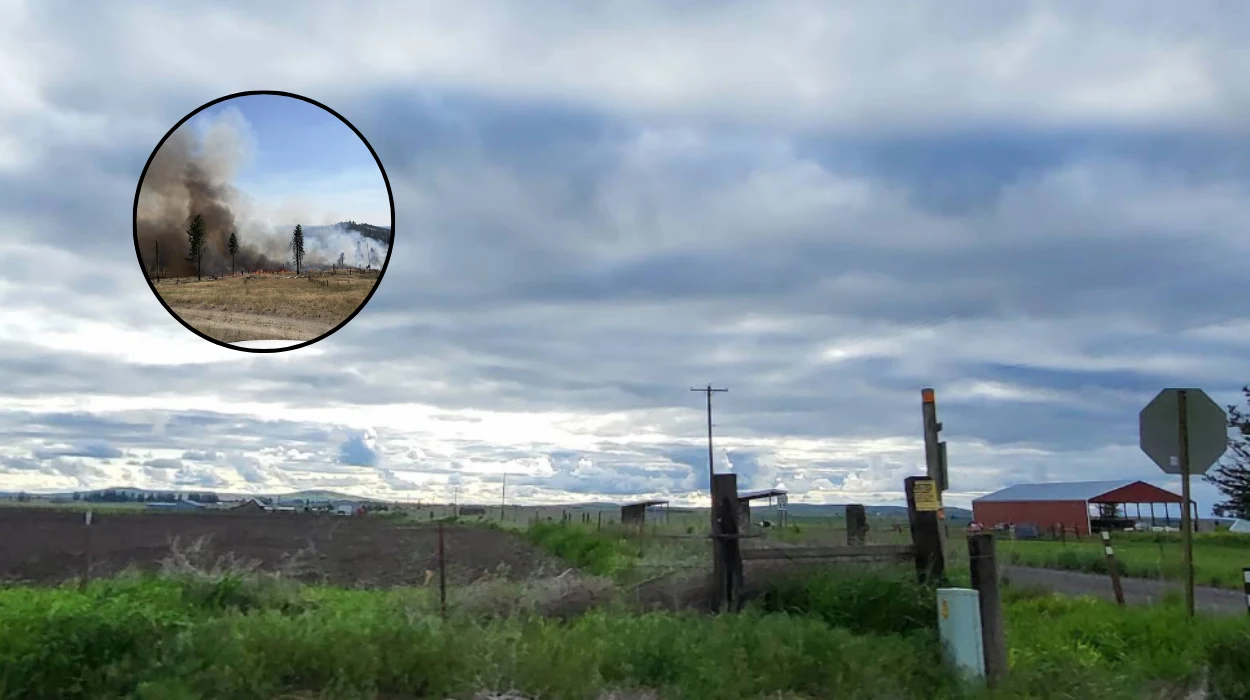
- The Little Baldy Fire in Spokane County has been reported as 100% lined and estimated at 64.1 acres in the latest update.
- Evacuation levels for the affected area have been reduced from Level 3 to Level 2, meaning residents can return home but should be ready to leave quickly if conditions change.
- Earlier updates said the fire had reached 33 acres and was 70% contained, with crews continuing to work through the evening to reinforce lines and mop up hot spots.
- Another report said the fire started near E Valley Springs Road and led to Level 3 evacuations in parts of the Spokane area.
- An evacuation centre was opened at Trent Elementary School, 3303 N Pines Road in Spokane Valley, for anyone affected.
- Spokane County Fire District 9 asked people to stay out of the area and avoid unnecessary travel.
Spokane (Evening Washington News) July 28, 2026 — Firefighters in Spokane County made major progress on the Little Baldy Fire on Sunday, with officials reporting that the blaze was 100% lined and that evacuation levels had been downgraded to Level 2, according to the latest update.
As reported by staff writers covering the fire update, the latest information said the blaze was estimated at 64.1 acres and that evacuation levels had been reduced to Level 2 (Be Set), allowing residents to return home while staying ready to leave quickly if conditions worsen.
What did officials say about containment and fire line work?
In an earlier update, reporters said firefighters had made “significant progress” on the fire, which was then estimated at 33 acres and 70% contained, while crews continued into the evening hours to strengthen containment lines and mop up remaining hot spots.
That update showed the fire response was still active even as crews gained ground, with the focus shifting from rapid spread control to holding the line and reducing the chance of flare-ups.
Where was the fire reported and what evacuations were ordered?
Another report said firefighters were on scene of a grass fire on E Valley Springs Road on Monday afternoon, and that the Spokane County Evacuation Address Lookup was showing Level 3 evacuations for the area north to Clements Lane, south to Valley Springs, east to Theirman and west to Custer.
That same report said the fire was about 5 acres at the time, according to WildWeb, and that Spokane County Fire District 9 was asking people to remain out of the area and avoid unnecessary travel.
Was an evacuation centre opened for residents?
Yes. A report on the fire said an evacuation centre was opened at Trent Elementary School, 3303 N Pines Road in Spokane Valley, for anyone impacted by the blaze.
That step provided a formal place for displaced residents to go while fire crews worked to contain the incident and monitor conditions in the surrounding area.
What does Level 2 mean for residents?
According to Spokane County evacuation guidance, Level 2 means residents should be “Get Set” to leave, which means being prepared to evacuate at a moment’s notice if conditions change.
The county guidance also says Level 3 means “Go, leave now, leave immediately,” so the downgrade to Level 2 indicates an improvement, but not a complete removal of risk.
Background of the development
The fire developed during a period of active wildfire response in the Spokane area, with officials first responding to a grass fire and then expanding evacuation measures as conditions changed.
The background to the incident also includes the county’s broader evacuation system, in which Level 1 means “Get Ready,” Level 2 means “Get Set,” and Level 3 means “Go,” giving residents a framework for how urgently they need to act depending on the fire’s behaviour.
Prediction for affected residents
For residents in the affected Spokane County area, the downgrade to Level 2 suggests a short-term reduction in immediate danger, but it also means they should remain prepared for another change if winds, heat or remaining hot spots cause the fire to move again.
If containment continues to improve, the most likely effect is a further easing of restrictions and a gradual return to normal routines; however, if conditions worsen, residents in the Level 2 zone may need to leave quickly.