
Key Points
- An Extreme Heat Warning is active from 10:00 a.m. until 9:00 p.m. across Washington, D.C., Maryland, and Virginia, with heat index values forecasted between 110°F and 115°F.
- Organisers officially cancelled America’s National Independence Day Parade on the morning of 4 July 2026 to ensure the safety of participants, spectators, and staff.
- The Great American State Fair on the National Mall suspended operations on Friday afternoon after treating 44 people for heat-related illnesses and transporting 11 to hospitals; the fair delayed its Saturday opening until noon.
- Local municipalities throughout the region—including Leesburg in Virginia, as well as Laurel and Takoma Park in Maryland—have either postponed or cancelled their respective Independence Day parades and fireworks.
- Public entry to the Salute to America evening program on the National Mall has been pushed back until 5:00 p.m., though the scheduled military flyovers, presidential address, and historic fireworks display are still set to proceed under high-security protocols.
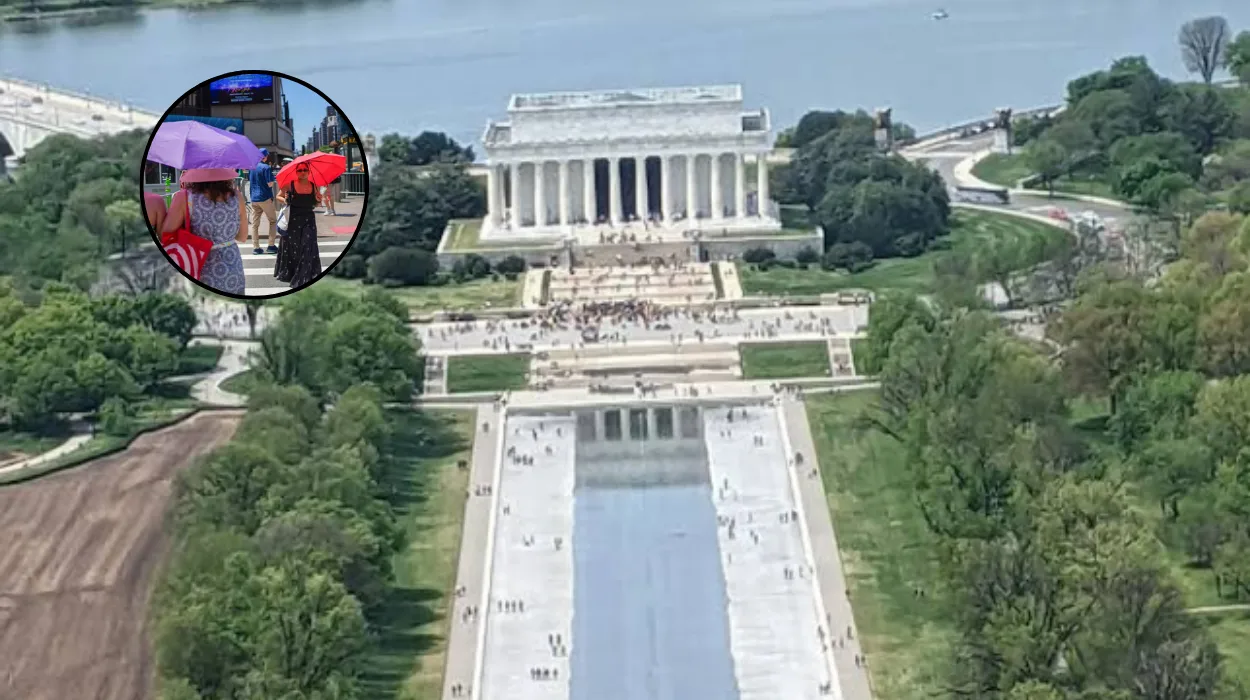
Washington (Evening Washington News) July 4, 2026 – An extreme and dangerous heatwave has forced the cancellation of America’s National Independence Day Parade in the capital and disrupted major celebrations across the mid-Atlantic region on the 250th anniversary of United States independence. The National Weather Service (NWS) extended an Extreme Heat Warning covering Washington, D.C., alongside portions of central, north-central, northeast, northern, and southern Maryland, and central, northern, and northwest Virginia. With temperatures projected to exceed 100°F (38°C) and heat index values—the apparent temperature factoring in humidity—expected to reach between 110°F and 115°F (43°C to 46°C), regional authorities and event coordinators enacted emergency modifications, cancellations, and delays to public events to safeguard hundreds of thousands of anticipated visitors.
- Key Points
- What Forced the Sudden Cancellation of the National Independence Day Parade?
- How Did the Heat Wave Impact the Great American State Fair and Local Health Services?
- What Safety Measures and Schedule Adjustments Altered the Salute to America Program?
- Which Regional Communities Cancelled or Postponed Their July Fourth Festivities?
- Background of the Washington Heat Wave Development
- Prediction: How This Development Will Affect Content Creators and Digital Publishers
What Forced the Sudden Cancellation of the National Independence Day Parade?
The primary disruption to the United States semiquincentennial celebrations occurred late on the eve of the holiday when parade organizers announced that the procession, originally scheduled to march down Constitution Avenue at 10:30 a.m. on Saturday, would not take place. In an official correspondence issued by the event organisers, it was stated that
“this decision was made after extensive and careful consideration of the safety of our participants, spectators, and staff as the top priority.”
As reported by Edward Helmore of The Guardian, the cancellation followed extensive consultation between parade coordinators, the National Park Service (NPS), the District of Columbia municipal government, and the Trump administration, which had heavily promoted the landmark holiday programs.
The decision highlights the operational challenges posed by a heat dome that has blanketed the eastern United States, straining municipal infrastructure and emergency response teams.
How Did the Heat Wave Impact the Great American State Fair and Local Health Services?
The extreme meteorological conditions had already severely impacted operations on the National Mall on Friday, 3 July.
The Great American State Fair, a centerpiece of the national celebration, was forced to close its gates around 1:00 p.m. on Friday as emergency services were stretched thin by attendees collapsing in the heat.
As reported by Aaron Schaffer, Justin Wm. Moyer, and Clarence Williams of The Washington Post, a spokesperson for the D.C.
Fire and Emergency Medical Services Department confirmed that paramedics evaluated and treated 44 patients at the fairgrounds before the temporary shutdown on Friday afternoon. Out of those treated, 11 individuals required transport to local hospitals due to the severity of their symptoms, with seven cases classified as serious.
An event staff member on the scene noted to reporters that heat exhaustion was spreading rapidly among visitors, stating, “It’s like the 30th person. They might have to shut this down,” shortly before organizers ordered the perimeter cleared.
To mitigate the risk during peak temperature hours on Saturday, Freedom 250 officials altered the schedule for the Great American State Fair, delaying the public opening from 10:00 a.m. to noon.
The organizing committee deployed additional logistical support to the National Mall, including free water distribution stations, dedicated cooling tents, and air-conditioned buses stationed along the perimeter to assist visitors experiencing heat stress.
What Safety Measures and Schedule Adjustments Altered the Salute to America Program?
While morning events were abandoned, evening programs on the National Mall were heavily modified rather than entirely cut. Public entry for the high-profile Salute to America program was restricted and delayed until 5:00 p.m. to limit public exposure during the hottest hours of the day.
Despite the daytime cancellations, municipal and federal agencies allowed specific stationary events to proceed under strict guidelines.
The annual Capitol Fourth Concert successfully took place on the evening of 3 July, though the U.S. Capitol Police took the unusual step of banning the public from attending the Thursday evening rehearsal due to ambient temperatures.
A representative for the U.S. Capitol Police issued a statement urging individuals with elevated health risks or pre-existing conditions to exercise extreme caution if they chose to access the grounds.
The main evening itinerary for Saturday, which features military flyovers, a scheduled speech by President Donald Trump at approximately 9:00 p.m., and an expansive fireworks display at 10:30 p.m., remained on schedule.
As reported by CBS News anchor Tony Dokoupil, federal authorities designated the evening festivities as a National Special Security Event, placing the U.S. Secret Service in absolute charge of the operational footprint. Tara McLeese, the special agent in charge of the U.S. Secret Service’s Washington field office, stated that
“hundreds, if not thousands, of law enforcement professionals”
had spent months planning the security framework, which involves the National Guard and multiple regional police forces monitoring the restricted crowds.
Which Regional Communities Cancelled or Postponed Their July Fourth Festivities?
The cancellation of civic activities was not confined to the federal district, as communities across Maryland and Virginia faced identical thermal threats. In Virginia, local administrators in the town of Leesburg officially called off their traditional morning parade.
In Maryland, the municipal governments of Laurel and Takoma Park enacted total cancellations of their daytime gatherings.
As reported by local correspondents for The Washington Post, Tara Egan, the president of the Takoma Park Independence Day Committee, communicated the group’s rationale in a directive sent to participants and volunteers. Egan wrote that “in this heat, parading is particularly risky,” further adding that the committee members felt
“it would not be safe, or responsible, to ask our community to march or to gather in this heat.”
Furthermore, meteorologist Tucker Barnes of FOX 5 noted during regional weather broadcasts that atmospheric conditions on Saturday afternoon could cause heat indices to climb as high as 115°F.
This prompt assessment caused surrounding suburban jurisdictions to either push their fireworks displays to later dates or cancel them entirely to prevent large crowds from gathering in unshaded public parks during the late afternoon.
Background of the Washington Heat Wave Development
The extreme heatwave affecting Washington, D.C., on 4 July 2026 is the culmination of a persistent atmospheric heat dome that has anchored itself over the eastern half of the United States.
According to data published by the US Weather Prediction Center, the meteorological phenomenon has placed more than 197 million Americans from Kansas to Maine under active heat warnings or advisory notes during the holiday weekend.
Historically, Independence Day in the nation’s capital frequently encounters high humidity and summer temperatures, but the 2026 system has approached historic thresholds.
The forecasted air temperature of 102°F (39°C) threatens to surpass the capital’s previous record high for 4 July, which was a reading of 100°F set more than a century ago in 1919.
Climatologists and meteorologists tracking the system have stated that the intensity and duration of this heat dome have been exacerbated by broader global climate trends, which have systematically raised baseline summer temperatures across the mid-Atlantic region.
The severe thermal load on the urban environment followed a week of elevated night-time temperatures, which prevented the city’s concrete architecture from cooling down, thereby compounding the heat index stress experienced by the public on consecutive days.
Prediction: How This Development Will Affect Content Creators and Digital Publishers
The cancellation of major holiday events and the restructuring of federal programs will directly influence digital content creators, news publishers, and regional tourism media outlets who rely on the Independence Day weekend for substantial traffic and audience engagement.
Publishers covering the Pacific Northwest and the mid-Atlantic regions will need to immediately pivot their content strategies away from standard event coverage and toward real-time public safety journalism.
Digital teams must rapidly update pre-written evergreen travel guides, regional itineraries, and event directories to reflect live cancellations. Outlets that fail to provide immediate, accurate logistical updates risk losing search visibility and reader trust as audiences look for actionable local status reports.
Alteration of Visual Content Production
The cancellation of the National Independence Day Parade heavily restricts the generation of traditional, high-impact photojournalism and stock imagery usually captured during the country’s semiquincentennial.
Content creators and photojournalists focusing on historical landmarks, municipal tourism, and governmental celebrations will face a shortage of dynamic crowd assets. Media operations must shift toward producing localized, highly realistic news-style visuals focusing on safety infrastructure, cooling centers, and empty event spaces, while strictly avoiding generic or heavily filtered stock representations to maintain journalistic integrity.
Long-Term Traffic and SEO Planning
SEO strategists and digital publishers specializing in domestic travel will see a shift in search behavior. Queries regarding outdoor festival attendance will likely decline, while search terms targeting heat mitigation, indoor historical exhibitions—such as air-conditioned Smithsonian museums—and altered evening schedules will spike.
Publishers who quickly build out dedicated hub pages addressing weather disruptions, municipal health advisories, and indoor alternatives will capture the shifting search volume, helping to offset the loss of traffic from the cancelled outdoor events.