
Key Points
- Iraqi Prime Minister Ali al-Zaidi will visit Washington in mid-July 2026 to deepen strategic ties with the United States, focusing on economic, trade, and investment cooperation
- Government spokesperson Haider al-Aboudi described the visit as an effort “to enhance the Iraqi-U.S. partnership based on mutual interests”
- The Iraqi government aims to broaden horizons for strategic partnerships with global companies and stimulate an investment-friendly environment contributing tangible benefits to the Iraqi economy
- Since taking office in May 2026, al-Zaidi has signaled that rebuilding Iraq’s economy, attracting foreign investment, and combating corruption will be central to his administration’s agenda
- Iraq seeks to reduce reliance on oil revenues (which account for 88% of government revenues) and tackle high unemployment, especially among youth, and crumbling infrastructure
- Al-Zaidi faces significant challenges including curbing Iran-backed militias, tackling entrenched corruption, and balancing relations between Washington and Tehran
- The announcement comes just after the U.S. and Iran agreed to an interim deal to end the war in the Middle East
- After being nominated for premiership in April 2026, al-Zaidi received congratulations from U.S. President Donald Trump, who hoped for closer cooperation between Baghdad and Washington
- Iraq and the U.S. maintain a strategic framework agreement covering security, economic, and cultural cooperation
- Bilateral ties have occasionally been strained over U.S. troops in Iraq, Baghdad’s relationship with Iran, and U.S. pressure to curb Iran-backed armed groups
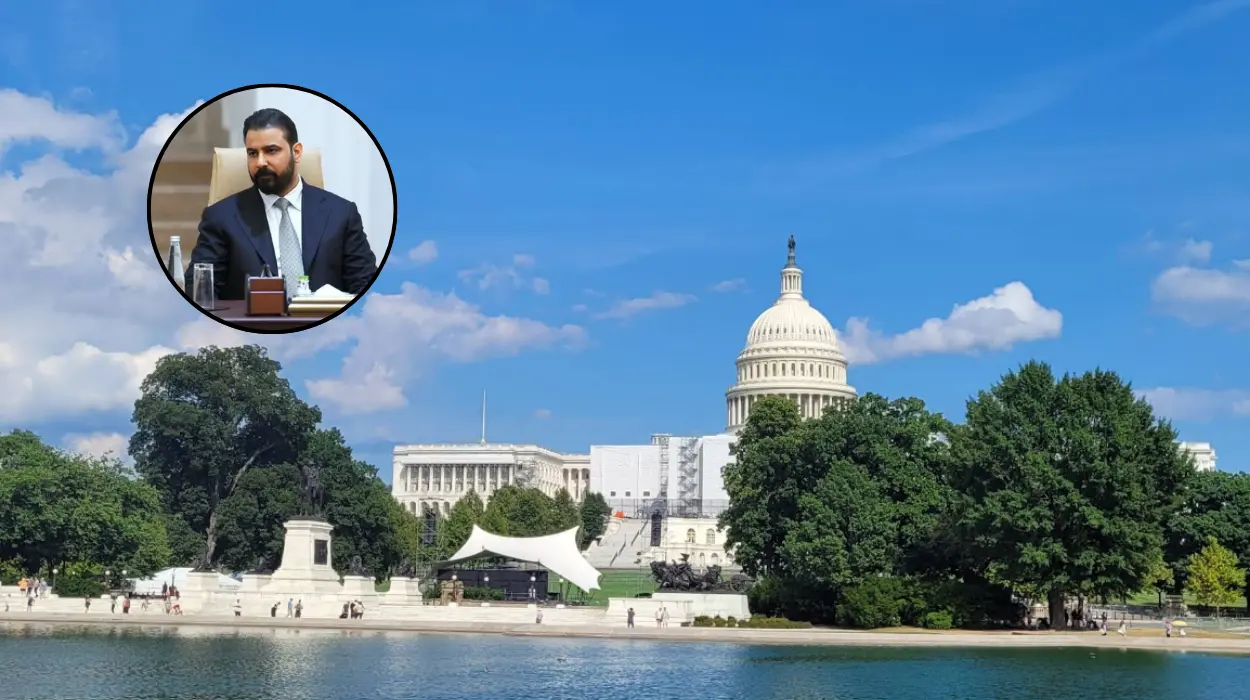
Washington (Evening Washington News) June 16, 2026 — Iraqi Prime Minister Ali al-Zaidi will visit Washington in mid-July with the aim of deepening strategic ties with the United States, focusing primarily on economic, trade, and investment cooperation, a government spokesperson said on Tuesday.
- Key Points
- Who Is Leading This Diplomatic Initiative and What Are Their Primary Goals?
- Why Is Iraq Seeking to Diversify Its Economy Beyond Oil Revenues?
- What Major Challenges Does Al-Zaidi Face Before and During This Washington Visit?
- How Does This Visit Relate to the Recent U.S.-Iran Interim Deal?
- What Did President Donald Trump Say About Al-Zaidi’s Nomination?
- What Framework Governs Current U.S.-Iraq Relations?
- Where Have Bilateral Ties Been Strained Between Washington and Baghdad?
- What Additional Details Have Other Media Sources Reported About the Visit?
- Background of the Development: U.S.-Iraq Strategic Relations Since 2003
- Prediction: How This Development Will affect Iraqi Citizens and U.S. Business Stakeholders
- For U.S. Energy Companies and Investors
- For Regional Stability and Iraqi-U.S. Diplomatic Relations
Who Is Leading This Diplomatic Initiative and What Are Their Primary Goals?
Spokesperson Haider al-Aboudi described the visit as an effort
“to enhance the Iraqi-U.S. partnership based on mutual interests”.
“The government aims to broaden the horizons of our strategic partnership with global companies and stimulate an investment-friendly environment that contributes tangible benefits to the Iraqi economy while strengthening internal stability,”
al-Aboudi told the state news agency.
As reported by the journalist covering Reuters’ Baghdad office, al-Zaidi has made economic reconstruction a priority since assuming office. Since taking office in May 2026, al-Zaidi has signaled that rebuilding Iraq’s economy, attracting foreign investment, and combating corruption will be central to his administration’s agenda.
Why Is Iraq Seeking to Diversify Its Economy Beyond Oil Revenues?
Iraq is seeking to reduce its reliance on oil revenues and tackle persistent challenges such as high unemployment, especially among the young, and crumbling infrastructure.
According to World Bank data, in 2025, oil accounted for an estimated 53 percent of real GDP, 88 percent of government revenues, and 91 percent of merchandise exports.
The country faces a significant youth employment challenge. Youth, aged 15–29, account for nearly 29 percent of the total population, entering the labor market at a time when job creation is limited. Iraq records higher unemployment (13.5 percent) and lower labor force participation rates (38 percent) than the regional average.
What Major Challenges Does Al-Zaidi Face Before and During This Washington Visit?
However, al-Zaidi faces significant challenges, including the need to curb Iran-backed militias, tackle entrenched corruption, and balance relations between Washington and Tehran.
His planned visit to Washington, whose announcement comes just after the U.S. and Iran agreed an interim deal to end the war in the Middle East, is expected to test al-Zaidi’s ability to manage a complex diplomatic situation.
As reported by the Atlantic Council in their analysis of Iraq’s new prime minister,
“Ali al-Zaidi must contend with a growing crisis of legitimacy in the very system that brought him to power and the backing of a coalition that is increasingly unstable”.
The analysis further states that
“al-Zaidi faces potentially insurmountable obstacles: a gaping budget deficit due to the halting of oil exports and a US administration ready to use escalating pressure to compel stronger action to disarm and demobilize Iraq’s militias”.
Iraq was ranked 136 out of 181 on Transparency International’s 2025 Corruption Perceptions Index, and it is estimated that the country lost billions of dollars through embezzlement. As reported by The National News’ Baghdad correspondent, corruption constitutes
“an obstacle to development that delays the progress of the state”.
How Does This Visit Relate to the Recent U.S.-Iran Interim Deal?
The visit’s announcement comes just days after the United States and Iran announced an agreement to end the war, a conflict that spilled into Iraq through missile and drone attacks by Iran-aligned armed groups targeting US facilities in Baghdad and the Kurdistan region.
U.S. President Donald Trump said on Monday a preliminary agreement to end the conflict had been signed by the U.S. and Iran, although details have yet to be made public.
As reported by The Straits Times,
“Doubts swirled around the U.S.-Iran interim deal… both countries said a permanent truce was yet to be negotiated”.
The interim agreement would extend a tenuous ceasefire announced in April by another 60 days and reopen the Strait of Hormuz, which Iran has effectively blocked since the U.S. and Israel attacked Iran in February.
What Did President Donald Trump Say About Al-Zaidi’s Nomination?
After being nominated for the premiership in April 2026, al-Zaidi received congratulations from U.S. President Donald Trump, who said he hoped for closer cooperation between Baghdad and Washington.
As reported by NBC News’ Washington bureau, Trump posted on his social media platform Truth Social congratulating Ali al-Zaidi and wishing him
“success as he works to form a new government free from terrorism that can pave the way for a brighter future for Iraq”.
In a subsequent message on Truth Social, Trump expressed his hopes for “success as he endeavors to create a new government free from terrorism that can pave the way for a brighter future for Iraq”. As reported by Arab News’ Washington correspondent, Trump congratulated Iraq’s new prime minister Ali Al-Zaidi on Thursday, saying his nomination heralded a “tremendous new chapter” between the two countries.
What Framework Governs Current U.S.-Iraq Relations?
Iraq and the U.S. maintain a strategic framework agreement covering security, economic, and cultural cooperation.
The Strategic Framework Agreement for a Relationship of Friendship and Cooperation between the United States and the Republic of Iraq guides their overall political, economic, cultural, and security ties.
According to the U.S. Embassy in Iraq, this agreement is designed to help the Iraqi people stand on their own and reinforce Iraqi sovereignty, while protecting U.S. interests in the Middle East.
The SFA normalizes the U.S.-Iraqi relationship with strong economic, diplomatic, cultural, and security cooperation and serves as the foundation for a long-term bilateral relationship based on mutual goals.
Where Have Bilateral Ties Been Strained Between Washington and Baghdad?
However, bilateral ties have occasionally been strained — mainly over the presence of U.S. troops in Iraq, Baghdad’s evolving relationship with neighbouring Iran, and U.S. pressure on Iraq to curb the influence of Iran-backed armed groups.
As reported by MEES (Middle East Economic Survey),
“Iraq’s Iran-backed militias carried out new drone strikes against Saudi Arabia and the UAE this week, plunging the new government into a diplomatic crisis with its neighbors”.
The attacks overshadowed Prime Minister Ali al-Zaidi’s first days in office and underscore the immense challenges he faces as the U.S. government pushes him to dismantle the groups.
In May 2025, two U.S. legislators asked Secretary of State Marco Rubio to expand sanctions on Iranian-backed militias, though none have been designated as Foreign Terrorist Organizations. Washington has signaled it wants the next Iraqi government to exclude hardline militia leaders and Iranian proxies from senior roles — a condition that could complicate Zaidi’s cabinet negotiations.
What Additional Details Have Other Media Sources Reported About the Visit?
As reported by The National News’ exclusive correspondent, Mr Al Zaidi will discuss strengthening security and economic co-operation, the issue of placing weapons under state control, and attracting investment in energy and infrastructure. The PM will be accompanied by a delegation of Iraqi business leaders to
“expand opportunities for joint investment and economic cooperation, mainly in energy”.
According to information obtained by Channel8, discussions during the visit will focus on several key files, including security cooperation, economic development, trade relations, and efforts to ensure that arms remain under the exclusive authority of the Iraqi state.
The two sides are also expected to explore the establishment of a joint investment fund aimed at supporting economic cooperation and development projects.
As reported by Shafaq News, Baghdad-based news agency,
“Prime Minister Ali Faleh al-Zaidi announced on Saturday an upcoming official visit to the United States, accompanied by businessmen, to expand mutual and joint investment opportunities”.
The development fund is for the private sector and will absorb a contribution from the Central Bank worth $10 billion.
Background of the Development: U.S.-Iraq Strategic Relations Since 2003
The relationship between Iraq and the United States has evolved dramatically since the 2003 invasion that toppled Saddam Hussein.
The Strategic Framework Agreement, signed in 2009 and still governing current relations, established a comprehensive partnership rooted in mutual respect. This agreement provided frameworks for political, economic, cultural, and security cooperation between the two nations.
In the months following the agreement’s signing, United States and Iraqi leaders consulted on steps to deepen commercial ties and promote investment, expand collaboration in the energy sector, and seek new opportunities for cultural and educational cooperation. The United States and Iraq remained unified in their commitment to a comprehensive and mutually beneficial partnership in the years ahead.
The relationship has faced multiple challenges over the past decade, including disputes over U.S. troop presence, Iraq’s growing economic ties with Iran, and Iranian-backed militia attacks on U.S. facilities.
In September 2025, Iraq’s Presidency Council ratified a new U.S.-Iraq security pact consisting of both a strategic framework agreement and a status-of-forces agreement stipulating how U.S. forces are affected by Iraqi laws.
The conflict in the Middle East that began in 2024 has significantly disrupted economic activity in Iraq, causing sizable losses in oil revenues and adding to fiscal strains.
Iraq’s oil-led growth model has been a source of economic volatility, particularly impacting the country’s growth potential and sustainable development.
Prediction: How This Development Will affect Iraqi Citizens and U.S. Business Stakeholders
This development could substantially affect Iraqi citizens, particularly the 29 percent of the population aged 15–29 who face limited job creation opportunities.
If al-Zaidi successfully attracts American investment in energy and infrastructure as planned, it could create private sector jobs that reduce the 13.5 percent unemployment rate.
However, the outcome depends entirely on whether invested funds reach the private sector rather than being lost to corruption, which already cost the country billions of dollars.
The $10 billion contribution from the Central Bank for the private sector development fund mentioned by Shafaq News could stimulate economic activity if properly managed.
Iraqi citizens will benefit most if the joint investment fund aimed at supporting economic cooperation actually materializes, as Channel8 reported.
Conversely, if al-Zaidi fails to curb Iran-backed militias or address corruption, the economic benefits may remain limited, perpetuating the youth unemployment crisis where youth unemployment reaches 32 percent.
For U.S. Energy Companies and Investors
U.S. energy companies stand to gain significantly from this development. As reported by Arab News, the leaders welcomed Iraq’s decision to support the resumption of operations by US energy companies HKN, Western Zagros and Hunt, and to launch negotiations with Chevron to develop the West Qurna-2 and Nasiriyah oil fields.
These companies could access major oil field development opportunities if al-Zaidi successfully navigates the diplomatic complexities.
The planned rehabilitation of the Kirkuk-Baniyas pipeline and boost in energy cooperation, including Excelerate Energy’s proposed LNG import terminal at Khor Zubair, represents concrete business opportunities.
However, U.S. investors face risks if Iran-backed militias continue attacks or if corruption remains unaddressed, as Iraq ranks 136 out of 181 on corruption perceptions.
For Regional Stability and Iraqi-U.S. Diplomatic Relations
The timing of this visit—immediately following the U.S.-Iran interim deal—creates both opportunities and risks for regional stability.
If al-Zaidi successfully balances relations between Washington and Tehran while curbing Iran-backed militias, it could strengthen Iraq’s sovereignty and reduce regional tensions.
However, if he fails to disarm armed groups operating outside state control, as the joint statement emphasized, bilateral ties could strain further, potentially jeopardizing economic cooperation.
The visit’s success will determine whether the “tremendous new chapter” Trump described after al-Zaidi’s nomination materializes into concrete economic partnership. Iraqi citizens, U.S. businesses, and regional stability all depend on al-Zaidi’s ability to manage this complex diplomatic situation while addressing Iraq’s fundamental economic challenges.