Key Points
- Half of all renters in 2023 — a record 22.6 million households — were housing cost-burdened, spending 30% or more of income on housing and utilities
- Renter cost burdens reached another record high in 2023 per Harvard University’s Joint Center for Housing Studies “State of the Nation’s Housing 2025” report
- Washington, D.C. faces especially acute affordable housing challenges due to rapid development and rising costs impacting longtime residents and working families
- The Barry Farm redevelopment in Southeast D.C. will include nearly 1,000 housing units across rental and for-sale properties
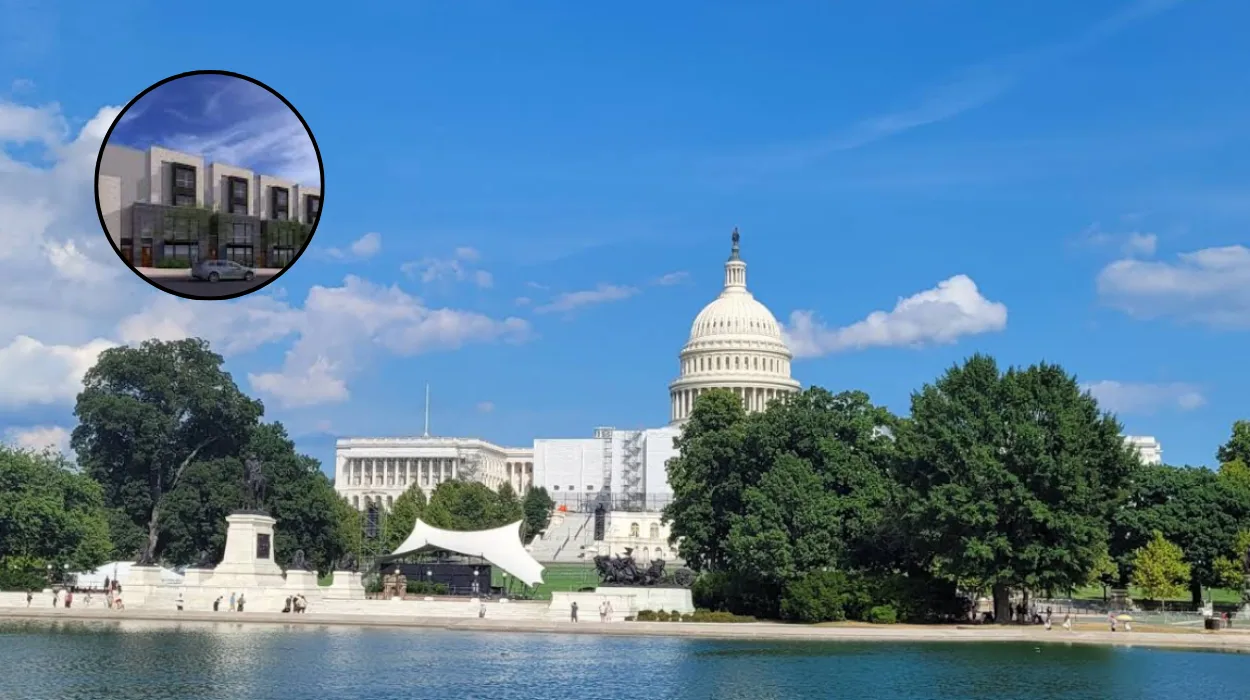
- Hillsdale Flats, one of three residential communities in Barry Farm, will bring 90 townhome-style stacked flat apartments targeting households earning 30%-80% AMI
- Hillsdale Flats is a $98.3 million development financed with $47 million in tax-exempt bonds and $36.2 million in federal LIHTC equity
- 42 of Hillsdale Flats’ 90 units will serve as replacement units for former Barry Farm residents returning to the community
- Preservation of Affordable Housing (POAH) developed Hillsdale Flats with support from JPMorganChase as part of the broader Barry Farm initiative
- The full Barry Farm redevelopment will create 380 affordable replacement units onsite for former residents, 320 other affordable units, and 200 homeownership units
- Beyond housing, the redevelopment includes upgraded public utility systems, eco-friendly landscaping, community retail space, and a large central park
- JPMorganChase serves approximately 170,000 customers in Washington, D.C. and has invested more than $60 million in local nonprofits over the past five years
- The firm supports 15,000 small business clients and provided a $1 million grant to POAH in June 2025 for financial health programming
- Construction completion for the full Barry Farm project is expected by 2030
- The Asberry, the first on-site building with 108 affordable senior apartments (55+ preference), opened in 2024
- The Edmonson, a 139-unit multifamily building, is expected to complete toward the end of 2026
Washington D.C. (Evening Washington News) June 9, 2026 — The redevelopment of Barry Farm in Southeast Washington, D.C. has moved forward with groundbreaking for Hillsdale Flats, a $98.3 million affordable housing development that will deliver 90 townhome-style apartments while restoring community infrastructure and strengthening a neighborhood with deep roots in D.C.’s history, as renter cost burdens hit record highs nationwide and housing affordability continues declining across the country.
- Key Points
- What Does the Harvard Housing Report reveal About Renter Cost Burdens in 2023?
- How Does the Barry Farm Redevelopment Plan Address Affordable Housing Needs in Southeast D.C.?
- How Does JPMorganChase Support Affordable Housing and Economic Opportunity in Washington, D.C.?
- Background: The History and Development of Barry Farm in Southeast Washington, D.C.
- Prediction: How Will the Barry Farm Redevelopment Affect Former Residents and Working Families in Washington, D.C.?
What Does the Harvard Housing Report reveal About Renter Cost Burdens in 2023?
The
“State of the Nation’s Housing 2025”
report from Harvard University’s Joint Center for Housing Studies found that renter cost burdens reached another record high in 2023, with half of all renters — a record 22.6 million households — spending 30% or more of their household incomes on housing and utilities.
As reported by the National Low Income Housing Coalition, renters with annual incomes under $30,000 on average had only $250 left to spend on other necessities after paying for housing. Eighty-three percent of households with annual incomes less than $30,000 were cost-burdened, and two-thirds (67%) were severely cost-burdened.
The rate of cost burden among households with incomes between $45,000 and $74,999 doubled to 45% since 2001, according to the Harvard report. The issue is widespread, with the share of cost-burdened renters increasing in 43 states and in 89 of the country’s largest metro areas between 2019 and 2023.
Similarly, the JPMorganChase Institute reports that renter affordability continues to decline, forcing many households to devote a larger share of their income to housing costs. Rising home prices and elevated interest rates have made homeownership inaccessible for many families, while increasing rental demand has placed additional financial pressure on renters nationwide.
How Does the Barry Farm Redevelopment Plan Address Affordable Housing Needs in Southeast D.C.?
The growing need for affordable housing is especially evident in Washington, D.C., where rapid development and rising costs continue to impact longtime residents and working families.
To help close that gap, organizations like Preservation of Affordable Housing (POAH) are working to create housing options that support residents across a range of incomes and needs .
In Washington, D.C., the redevelopment of Barry Farm is focused on strengthening community infrastructure alongside expanding housing access .
Developed by POAH and supported by JPMorganChase, Hillsdale Flats is one of three residential communities planned within the larger Barry Farm redevelopment initiative, which is expected to include nearly 1,000 housing units.
As reported by Megan McGrath of NBC4 Washington, District leaders and a few former Barry Farm residents broke ground on Hillsdale Flats during a groundbreaking held Wednesday morning, with the development bringing a total of 90 townhome-style apartments to the area.
The project will consist of 90 stacked flat apartments with seven one-bedroom units, 31 two-bedroom units, 33 three-bedroom units, 15 four-bedroom units, and four five-bedroom units. Hillsdale Flats is a $98.3 million development that will target households earning between 30% and 80% AMI.
For the construction of Hillsdale Flats, on December 19, 2025, DCHFA issued $47 million in tax exempt bonds and underwrote $36.2 million in federal LIHTC equity.
Additional funding includes a $12.5 million NCI loan from the Deputy Mayor’s Office for Planning & Economic Development.
The Preservation of Affordable Housing and District of Columbia Housing Authority are the developers of Hillsdale Flats, which will be the third development to be financed in the Barry Farm community.
Forty-two (42) of the units will serve as replacement units for tenants returning to the Barry Farm communities.
Beyond new housing, the broader redevelopment plan includes upgraded public utility systems, eco-friendly landscaping, community-serving retail space and a large central park designed to host programs and services for residents.
By combining housing with public infrastructure and community gathering spaces, Hillsdale Flats aims to support long-term neighborhood stability and economic opportunity.
As reported by the Washington Informer, Maia Shanklin Roberts serves as the main speaker on the Barry Farm development and said the goal is to complete Barry Farm construction by 2030.
<h2>What Does Maia Shanklin-Roberts Say About the Purpose of Rebuilding Barry Farm?</h2>
“Rebuilding Barry Farm is about more than housing, it’s about restoring opportunity and strengthening a community with deep roots in D.C.,”
said Maia Shanklin-Roberts, Vice President of Real Estate Development at POAH .
As reported by POAH, Maia Shanklin Roberts is POAH’s Vice President of Real Estate Development for the mid-Atlantic region, based in POAH’s Washington, DC office. In this role Maia manages POAH’s portfolio in the Mid-Atlantic Region including the redevelopment of Barry Farm, part of the District’s New Communities Initiative to transform key neighborhoods by redeveloping public housing and the surrounding area into vibrant mixed-use, mixed-income communities.
“Through our partnership with JPMorganChase, we’re investing in homes, infrastructure and spaces that support long-term stability and ensure residents can grow with their neighborhood,”
Shanklin-Roberts said.
The Asberry, located at 1200 Sumner Road SE, opened in 2024 as the first on-site building for the Barry Farm redevelopment. It is a mixed-use building with 108 affordable rental apartments with a preference for those aged 55+, thoughtful amenities and over 5,000 square feet of retail space.
One of the largest public housing communities in the District, the Barry Farm redevelopment project will create 900 residential apartments of varying types and sizes, including at least 380 affordable replacement units onsite for former Barry Farm residents, an additional 320 other affordable units and 200 homeownership units.
In addition to housing, the redevelopment will include all new public utility systems, “green” eco-friendly landscaping, community-serving retail spaces, and a large central park with community facilities for on-site services and programs.
The next phases include The Edmonson, a 139-unit multifamily building and 20,000 square feet of commercial space, expected to be complete toward the end of 2026. Rental Flats Phase I, which will consist of 98 stacked flats, has a completion date in 2027.
How Does JPMorganChase Support Affordable Housing and Economic Opportunity in Washington, D.C.?
While housing is a foundational need, community development also requires access to economic opportunity and financial resources.
JPMorganChase says it serves approximately 170,000 customers in Washington, D.C., and has invested more than $60 million in local nonprofit organizations over the past five years.
The firm also reports supporting 15,000 small business clients and providing financial health education to thousands of residents.
The organization says those efforts are designed to expand access to banking services, financial wellness resources, homeownership opportunities and long-term wealth-building tools .
As reported by POAH, JPMorganChase provided a $1 million grant to launch the POWER Program supporting financial health for affordable housing residents in June 2025.
The new D.C. grants are part of JPMorgan Chase’s $400 million, five-year commitment to improving affordable housing for underserved households. Since 2021, it has made over $224 million in low-cost loans, investments and grants to 153 organizations across the country.
Chase said it estimates those commitments have helped preserve or create more than 12,500 affordable housing units.
“As we work with local stakeholders to expand housing options, JPMorganChase’s goal is to create inclusive economic opportunity for all,”
said Brett Macleod, Executive Director, Community Development Banking and Chair of the Mid-Atlantic Market Leadership Team at JPMorganChase .
As reported by ConnectCRE, Brett Macleod is Executive Director at JPMorgan Chase in Washington, DC, responsible for originating debt transactions focused on multifamily affordable housing and urban revitalization real estate projects.
“When our communities thrive, we all thrive,”
Macleod said.
Background: The History and Development of Barry Farm in Southeast Washington, D.C.
Barry Farm is one of the largest public housing communities in the District of Columbia, located in Southeast Washington, D.C.. The neighborhood has deep roots in D.C.’s history as a historically Black community.
The Barry Farm redevelopment project is part of the District’s New Communities Initiative (NCI), a program targeting four neighborhoods for transformation through redeveloping public housing into vibrant mixed-use, mixed-income communities.
Ground was finally broken in 2021 for the massive redevelopment project. When complete, the redevelopment will include nearly 1,000 units — both rental and for sale—supported by newly constructed infrastructure, including utilities and new streets to better connect the Barry Farm, Park Chester and Wade Road areas.
The Asberry, the first on-site building, opened in 2024 after years of development planning that began as an ambitious concept in 2006.
The project represents a multi-year effort to replace the former Barry Farm public housing with a vibrant mixed-use, mixed-income community.
Phase I is creating 432 apartments in 3 new multifamily buildings and 115 modern townhomes, totaling 33,000 square feet of living space. The full redevelopment is expected to complete by 2030.
Explore More Local News
AG Nick Brown Seeks Supreme Court Redistricting Review: Washington 2026
NAVFAC Washington Delivers Critical Defense Infrastructure: National Capital Region 2026
Prediction: How Will the Barry Farm Redevelopment Affect Former Residents and Working Families in Washington, D.C.?
The Barry Farm redevelopment will directly affect former Barry Farm residents by providing 380 affordable replacement units onsite, allowing them to return to their neighborhood rather than being displaced to other areas. Of the 90 units at Hillsdale Flats specifically, 42 will serve as replacement units for tenants returning to the Barry Farm communities.
Working families in Washington, D.C. earning between 30% and 80% of the Area Median Income will gain access to 90 new affordable apartments at Hillsdale Flats, addressing the critical shortage of housing for households in this income range. This targets a population that has seen doubling cost burden rates since 2001.
The 1,000 total units planned for Barry Farm will include 320 other affordable units beyond replacement units, plus 200 homeownership units, creating pathways for families to transition from rental to ownership.
This addresses the affordability crisis where elevated interest rates and rising home prices have made homeownership inaccessible for many families.
Residents will benefit from upgraded public utility systems, eco-friendly landscaping, and a large central park with community facilities for on-site services and programs, improving neighborhood infrastructure beyond just housing.
The addition of community-serving retail space will provide access to essential businesses and services within the neighborhood.
The partnership with JPMorganChase extends beyond housing to financial health programming through the POWER Program, providing financial wellness resources to residents.
This addresses the broader economic challenge where renters with incomes under $30,000 have only $250 left for other necessities after housing costs.
Long-term neighborhood stability and economic opportunity are the stated goals of combining housing with infrastructure and community gathering spaces, potentially preventing the displacement patterns that have affected longtime D.C. residents amid rapid development .
The project’s completion timeline extending to 2030 means affected residents will experience gradual transformation rather than immediate disruption.