
Key Points
- The U.S. Commission of Fine Arts gave preliminary approval to the concept design for President Donald Trump’s proposed 250-foot triumphal arch near the Potomac River and Memorial Circle, moving the project to a further review stage.
- The design, prepared by Harrison Design, features a gilded, winged Lady Liberty atop the arch, flanked by golden eagles and four gilded lions at the base, and includes inscriptions such as “One Nation Under God” and “Liberty and Justice for All”.
- The administration argues it does not plan to seek new congressional approval because lawmakers previously ratified a 1924 plan that included a pair of monumental columns in the same area; officials say the new arch would implement those earlier congressional intentions .
- The Commission of Fine Arts — whose members are presidential appointees — has requested revised designs and modifications before a final vote; the commission’s vice-chair has suggested removing some decorative elements, including large eagles and a winged angel, which would materially reduce the structure’s overall height.
- The project has drawn strong public and preservationist criticism, with overwhelmingly negative feedback submitted during the commission’s public comment period, even as the commission moves the proposal forward.
- The administration and White House officials have not publicly committed to seeking congressional authorization, relying instead on the century-old commission report and its 1925 ratification as legal and historical precedent for construction in the protected area of Memorial Circle.
Washington (Evening Washington News) May 20, 2026 – The White House has indicated it does not plan to obtain new congressional approval for President Donald Trump’s proposed 250-foot triumphal arch at Memorial Circle, citing a century-old federal plan and the 1925 ratification of a commission report as authority to proceed, according to reporting in The Washington Post.
- Key Points
- Why are administration officials saying Congress approval isn’t necessary for the arch proposal?
- What did the Commission of Fine Arts decide about the arch at its recent review?
- How does the proposed design look and who created it?
- What have preservationists and the public said in response to the arch plans?
- What legal or procedural hurdles remain before construction could begin?
- What design changes has the commission suggested so far?
- Who are the principal parties involved in approving or opposing the arch?
- What has President Trump said publicly about the arch?
- Which inscriptions and symbols are planned for the monument and why do they matter?
- Who has reported these developments and which journalists provided the sourcing for the statements?
- What remaining uncertainties could lead to legal or political challenges?
- Background of this development
- Prediction:
Why are administration officials saying Congress approval isn’t necessary for the arch proposal?
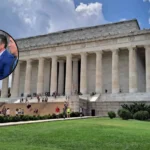
As reported by reporters at The Washington Post, White House officials and administration sources told the paper that they believe a 1924 plan by a federal commission — ratified by Congress in 1925 and which proposed monumental columns framing the Lincoln Memorial — provides sufficient legal grounding to build the new structure without additional authorisation . Those officials argue that the arch would be fulfilling a vision Congress once endorsed, and therefore no fresh legislative action is required .
What did the Commission of Fine Arts decide about the arch at its recent review?
As reported by The Associated Press and other outlets, the U.S. Commission of Fine Arts voted to approve the concept design for the arch in April and moved the project forward to the next design-review stage, while reserving the right to request changes and a revised set of plans before any final approval.
The commission — whose seven commissioners are presidential appointees — took a preliminary step to advance the project and scheduled further consideration of updated designs at a future meeting.
How does the proposed design look and who created it?
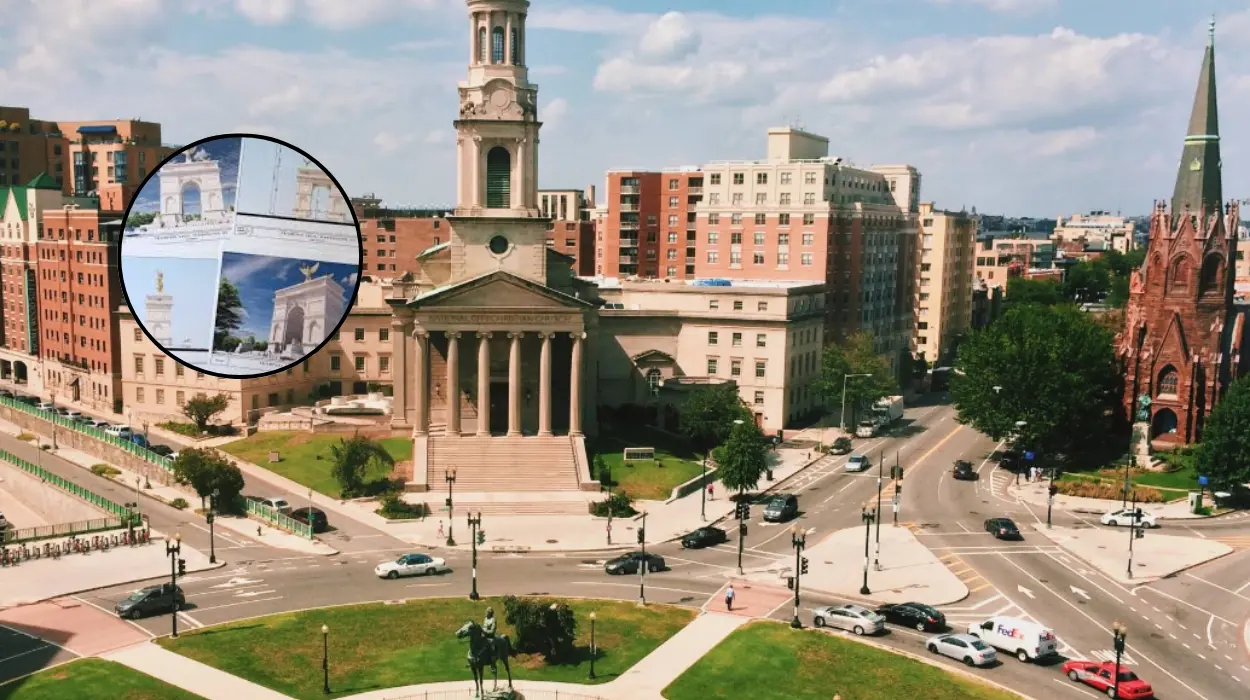
As reported by NBC News and CNBC, renderings by Harrison Design depict a monumental white arch rising near the Potomac River and the Lincoln Memorial, topped by a gilded, winged Lady Liberty figure holding a torch and flanked by dozens of eagles, with four golden lions guarding the base and inscriptions including “One Nation Under God” and “Liberty and Justice for All.”
The statue and ornamentation together would raise the total structure height to approximately 250 feet from its base, according to the plans shown to the Commission of Fine Arts.
What have preservationists and the public said in response to the arch plans?
As reported by CNN and other outlets, public comments submitted during the commission’s review were overwhelmingly negative, with preservation groups, historians and members of the public warning that the massive arch, its inscriptions and classical ornamentation risk damaging the historic setting of the National Mall and surrounding memorials.
Critics have described the proposed scale and symbolism as inappropriate for the protected federal landscapes adjacent to Arlington National Cemetery and the Lincoln Memorial.
What legal or procedural hurdles remain before construction could begin?
Legal questions centre on whether construction at Memorial Circle — an area considered protected federal land under statutes that often require congressional authorisation for new monuments — can proceed without fresh congressional approval.
While administration officials point to the 1925 ratification of a planning commission’s report as precedent, critics say that the area’s status under current law makes congressional review and explicit authorisation the appropriate path forward.
Additionally, the Commission of Fine Arts has asked for a revised design and made clear that a final vote will follow only after that updated submission and further review.
What design changes has the commission suggested so far?
As reported by The New York Times, the commission’s vice chair recommended significant modifications, including removing the large golden eagles and a winged angel that sit atop the design — changes that would cut a substantial portion of the proposed height of the monument. The commission has requested those and other adjustments ahead of a final approval vote.
Who are the principal parties involved in approving or opposing the arch?
Key decision-makers include the Department of the Interior and the U.S. Commission of Fine Arts, whose review role is advisory but influential in federal memorial design, and members of Congress who could be asked to authorise construction if legislators demand it.
Opposition voices include preservationist organisations, historians, civic groups and members of the public who filed comments opposing the design during the commission’s public review.
What has President Trump said publicly about the arch?
According to reporting summarised by NBC News, President Trump heralded the submission of plans to the Commission of Fine Arts as a proud step, calling the proposed structure
“the best and most beautiful triumphal arch, anywhere in the World”
in a public statement issued by his administration as the designs were unveiled.
Which inscriptions and symbols are planned for the monument and why do they matter?
The proposed arch would be inscribed with phrases drawn from national rhetoric, including “One Nation Under God” and “Liberty and Justice for All,” and decorated with large gilded figures and animal motifs — choices that have sparked debate over the monument’s intended message, its religious language, and whether such overtly symbolic embellishment is appropriate on federally protected landscapes.
The commission voted to approve the concept, and asked designers to submit revised drawings incorporating requested changes; commissioners plan to review those updated designs and may vote again on the proposal at a subsequent meeting before issuing a final recommendation.
Who has reported these developments and which journalists provided the sourcing for the statements?
- The Washington Post reported administration officials’ plans regarding congressional authorisation and the 1924 commission report, as described in coverage on May 20, 2026 .
- The Associated Press reported the Commission of Fine Arts’ concept approval and noted the commission’s role in reviewing the design.
- NBC News and CNBC published renderings and descriptions of the proposed design by Harrison Design.
- CNN and NBC reported on the strong public and preservationist backlash and the nature of the public comments submitted to the commission during the review period.
- The New York Times covered the commission’s internal suggestions for significant alterations, including the vice-chair’s recommendations.
What remaining uncertainties could lead to legal or political challenges?
Uncertainties include whether Congress will accept the administration’s reading of the 1925 ratification as authorisation for a new monument in Memorial Circle, whether federal preservation laws or litigation could block construction, and whether the Commission of Fine Arts’ final decisions or additional agency reviews will alter the scope of the design or halt progress entirely.
Background of this development
President Trump first signalled interest in a major triumphal arch project in late 2025, and the administration subsequently commissioned designs and began the formal review process with federal advisory panels and the Department of the Interior.
The controversy stems from the scale, symbolism and siting of the project: the proposed arch would stand in an area close to the Lincoln Memorial and Arlington National Cemetery, spaces that are legally and culturally protected and which many preservationists say should remain free of partisan or monumental additions that alter the historic setting.
The administration’s claim that an earlier 1924 commission plan—ratified by Congress in 1925—provides the necessary legal cover adds to the dispute because that earlier plan proposed different elements (columns rather than a triumphal arch) and was never built; opponents argue that implementing a new, substantially different monument requires clear, contemporary congressional authorisation.
Prediction:
If the administration proceeds without explicit new congressional authorisation and the commission ultimately approves a final design closely matching the current renderings, the most immediate effect would be a significant alteration of the visual and cultural landscape near the Lincoln Memorial and the Potomac River, potentially changing how residents and visitors experience this stretch of the National Mall and adjacent memorial spaces.
Preservationists and historians may escalate legal challenges or advocacy campaigns, which could delay or block construction and increase public debate about how national monuments are authorised and sited.
For local stakeholders — including the National Park Service, Arlington officials and tourism businesses — the project would create a period of planning, potential construction disruption and long-term shifts in visitor flows, depending on the arch’s final design and placement. Finally, if Congress asserts that fresh authorisation is required, a political and legislative fight could determine whether the arch proceeds at all; a successful statutory challenge would halt the project, while congressional acquiescence would clear a path for completion.