
Key Points
- A weak front is moving through western Washington on Friday, May 8, 2026, bringing increased cloud cover, patchy drizzle, and cooler highs in the mid-60s Fahrenheit.
- Clouds will slowly break in the Puget Sound area by afternoon, allowing some sunbreaks, while coastal regions experience lingering overcast conditions.
- Central Washington faces breezy conditions with partial sun.
- Sunshine returns over the weekend, though tree pollen levels stay moderate to high with minimal relief anticipated.
- Mild temperatures persist despite the clouds, with no severe weather indicated.
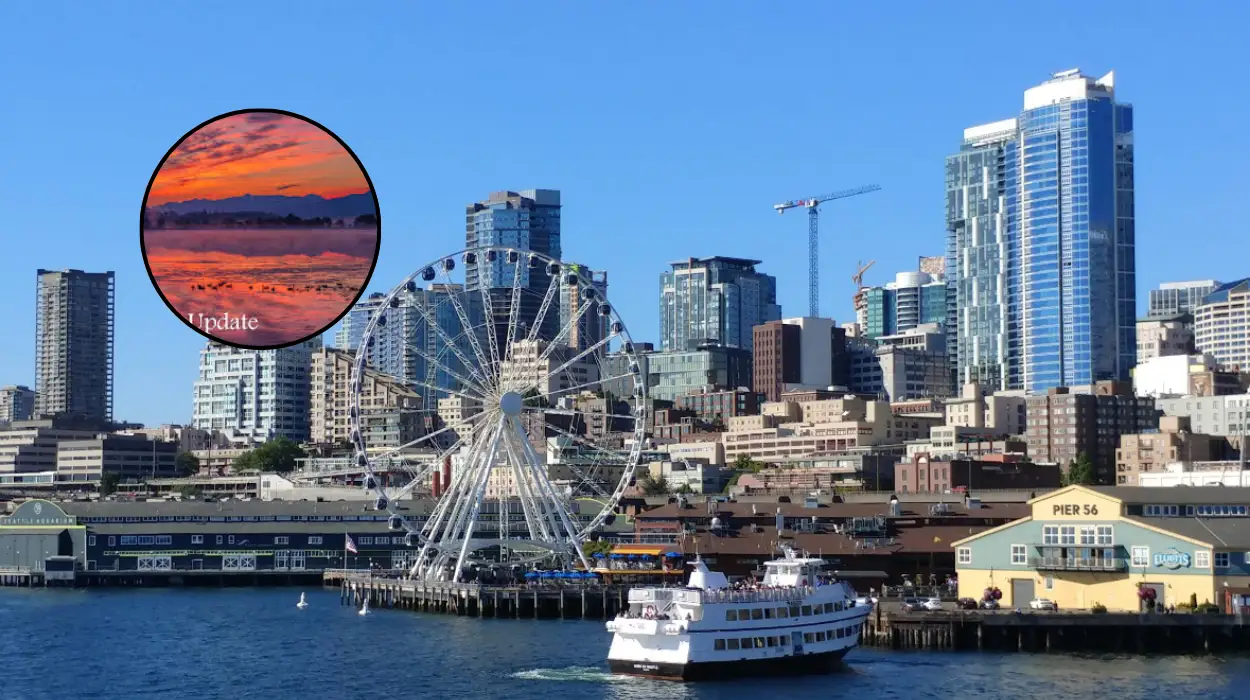
Seattle (Evening Washington News) – May 8, 2026 – A weak front is ushering in a cloudy start to Friday across western Washington, with patchy drizzle possible and highs reaching the mid-60s Fahrenheit, according to reports from local weather outlets.
- Key Points
- What is Causing Seattle’s Cloudy Friday Weather?
- How Will Temperatures and Winds Vary Across Western Washington?
- What About Precipitation Risks This Friday?
- When Can Seattle Residents Expect Sunbreaks?
- Why Are Tree Pollen Levels Elevated Despite Clouds?
- Background of Seattle’s Spring Weather Patterns
- Prediction: Impacts on Western Washington Residents
What is Causing Seattle’s Cloudy Friday Weather?
The primary driver is a weak frontal system advancing through the region, pushing marine air inland and fostering extensive cloudiness. As detailed in the initial forecast summary, this front introduces cooler temperatures compared to recent days, settling highs around 63-66°F (17-19°C) in the Puget Sound lowlands. Clouds dominate the morning hours, particularly along the coast where they persist longer due to cooler sea surface influences.
In the Puget Sound, including Seattle proper, the clouds begin to fracture by early afternoon, permitting intermittent sunbreaks. This pattern aligns with typical May marine layer behaviour in the Pacific Northwest, where weak systems often dissipate under rising solar influence inland. Patchy drizzle remains a possibility with the onshore flow, though accumulations are expected to be light—less than 0.1 inches in most spots.
Coastal areas, such as the Olympic Peninsula and outer shores from Westport to Ocean Shores, will see prolonged cloud cover without significant clearing. Winds from the southwest at 5-10 mph will reinforce the stable, moist air mass there.
How Will Temperatures and Winds Vary Across Western Washington?
Temperatures drop modestly from Thursday’s readings, with Seattle’s official observation site at Sea-Tac Airport forecasting a high near 65°F under mostly cloudy skies. Inland Puget Sound locations like Tacoma and Bellevue mirror this, while Everett and Bremerton may touch 64°F.
Central Washington, encompassing Yakima and Wenatchee, turns breezy with southwest gusts up to 20 mph, aiding some afternoon sun amid variable cloudiness. Highs there climb to 68-72°F, warmer due to downslope effects from the Cascades.
No heat advisories or frost risks apply, maintaining comfortable spring conditions. Overnight lows dip to 48-52°F region-wide, with partial clearing aiding radiational cooling.
What About Precipitation Risks This Friday?
Precipitation stays minimal, confined to patchy drizzle from the marine stratus deck. The weak front lacks robust moisture, so any showers evaporate quickly upon reaching warmer surfaces. Radar imagery would show scattered light echoes near the coast, fading eastward.
This setup echoes countless spring days in Seattle’s climatology, where 70% of May overcast periods yield under 0.05 inches of rain. Urban areas see negligible impact on daily routines.
When Can Seattle Residents Expect Sunbreaks?
Sunbreaks materialise post-1 PM in core Puget Sound zones, as diurnal heating erodes the cloud base. By 3-5 PM, partly cloudy skies prevail south of the city, with clearer intervals near Lake Washington. Northern suburbs like Shoreline retain more clouds until evening.
Coastal clearing, if any, waits until Saturday morning. Twilight brings mixed skies, with 9 hours of usable daylight under partially obscured conditions.
Why Are Tree Pollen Levels Elevated Despite Clouds?
Tree pollen registers moderate to high across western Washington, driven by ongoing alder, birch, and oak dispersal. Cloudy, humid air traps allergens near the surface, offering scant washout without sustained rain. Forecasts from regional monitoring indicate counts of 200-500 grains per cubic metre Friday, peaking afternoons with sunbreaks stirring lofting.
Allergy sufferers note little respite into the weekend, as dry sunshine returns without flushing rains. Urban green spaces amplify local concentrations.
Background of Seattle’s Spring Weather Patterns
This development traces to the Pacific Northwest’s transitional spring meteorology, where decaying winter storm tracks yield to high-pressure ridges. Weak fronts like Friday’s stem from a broad upper-level trough offshore, funnelling cool, moist northerly flow southward. Historical data from the National Weather Service Seattle office shows May averaging 1.5 inches of rain over 12 cloudy days, with 60% featuring marine overcast.
The pattern intensified post a warm spell earlier in May 2026, as a persistent ridge aloft weakened, allowing transient Pacific impulses. Tree pollen surges align with the vernal bloom cycle, peaking mid-May amid variable skies. Similar setups occurred on May 3 and May 6 this year, per archived forecasts, blending clouds with mildness.
Prediction: Impacts on Western Washington Residents
This weather shift affects Puget Sound commuters with potential slick spots from drizzle, urging caution on SR 99 and I-5 during morning rush. Outdoor workers in Seattle face interrupted schedules under persistent clouds, though afternoon sunbreaks suit brief tasks.
Coastal communities like Aberdeen experience extended gloom, impacting marine activities and tourism. Central Washington’s breeze may challenge cyclists and agriculture, scattering pollen further. Allergy-prone individuals across the region encounter sustained high counts, prompting indoor precautions through Sunday.