
Key Points
- Onshore flow on Wednesday brings morning clouds to western Washington, with gradual clearing and afternoon sunbreaks expected
- High temperatures Wednesday will reach the upper 60s to low 70s, depending on how quickly clouds dissipate
- Tuesday struggled to warm up as clouds remained stubborn through the afternoon
- High pressure remains the main weather influence, but increased onshore flow will keep highs in the mid to upper 60s through Thursday
- A weak front tracking Friday will increase cloud coverage, bring a slight chance of sprinkles, and lower temperatures
- Temperatures will rebound this weekend with more sunshine returning
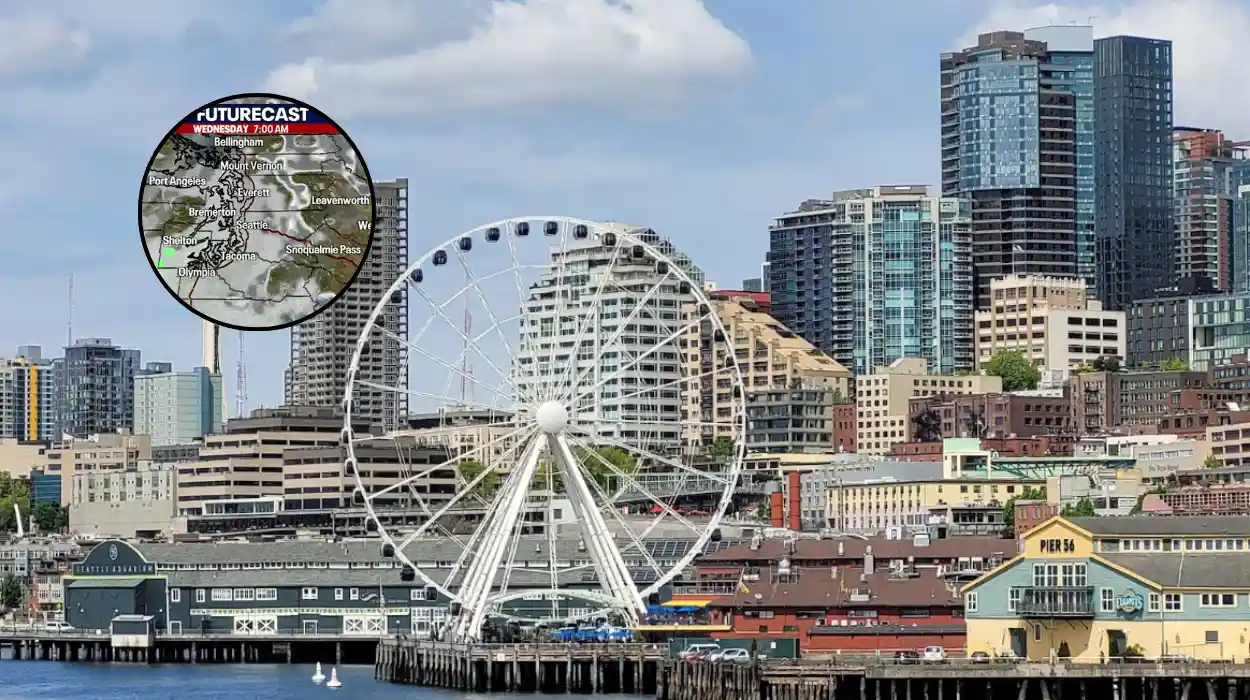
- The forecast originates from Seattle and covers western Washington region
Seattle (Evening Washington News) May 6, 2026 – Onshore flow Wednesday will bring another round of morning clouds to western Washington, with clouds starting to break up by midday and more afternoon sunbreaks expected across the region. Highs will reach the upper 60s to low 70s, varying depending on how fast the clouds dissipate.
- Key Points
- Why Are Morning Clouds Returning to Seattle Wednesday?
- How Warm Will Wednesday’s Temperatures Be Compared to Tuesday?
- What Weather Patterns Will Persist Through Thursday?
- When Will Cooler, Cloudier Weather Arrive on Friday?
- How Will Weekend Weather Differ from Friday’s Conditions?
- What Does the Onshore Flow Mean for Local Weather Patterns?
- Why Is Cloud Dissipation Rate Critical for Temperature Forecasting?
- What Background Explains This Weather Development?
- How Will This Weather Development Affect Seattle Residents and Visitors?
- What Impact Will Wednesday’s Weather Have on Outdoor Activity Planning?
- How Will Temperature Variability Affect Daily Clothing Choices?
- What Should Commuters Expect from Wednesday’s Driving Conditions?
- How Will Weekend Plans Be Influenced by the Weather Forecast?
As reported in the weather forecast covering Seattle and western Washington, Wednesday’s weather pattern features a classic spring transition with initial cloud cover giving way to sunshine. The onshore flow, which refers to wind moving from the ocean toward land, is the primary driver bringing moisture and cloud cover to the area in the morning hours.
Why Are Morning Clouds Returning to Seattle Wednesday?
The onshore flow is responsible for transporting moist air from the Pacific Ocean onto the western Washington coastline. According to the weather report, this atmospheric pattern will deliver “another round of morning clouds to western Washington” on Wednesday . The term “another round” indicates this is a recurring weather pattern, not an isolated event.
Clouds are expected to start breaking up by midday, marking the transition from overcast morning conditions to clearer afternoon skies. This midday clearing is significant for residents planning outdoor activities, as it suggests the worst of the cloud cover will be confined to morning hours.
How Warm Will Wednesday’s Temperatures Be Compared to Tuesday?
Wednesday’s high temperatures are forecast to reach the upper 60s to low 70s Fahrenheit, a range that depends directly on “how quickly clouds break up” . This temperature variability highlights the critical relationship between cloud cover and warming potential.
Tuesday presented a contrasting scenario where the area “had a hard time warming up as clouds remained stubborn through the afternoon” . This statement indicates Tuesday’s cloud cover persisted longer than ideal, preventing temperatures from reaching their potential maximum. The forecast expresses hope that Wednesday will see “better clearing Wednesday for warmer conditions” .
The distinction between Tuesday’s stubborn clouds and Wednesday’s expected clearing represents a key weather development for local residents. Where Tuesday’s cloud cover limited warming, Wednesday’s predicted midday break offers improved conditions for outdoor plans.
What Weather Patterns Will Persist Through Thursday?
High pressure remains the “main influence” on western Washington’s weather pattern, according to the forecast . High pressure systems typically bring stable, clear conditions, but the forecast notes an important modification: “with the more onshore flow, highs will stay in the mid to upper 60s through Thursday” .
This distinction matters because while high pressure alone might suggest warmer temperatures, the increased onshore flow moderates this effect. The result is temperatures that remain comfortably mild but not exceptionally warm, staying in the mid to upper 60s range rather than climbing into the 70s or 80s.
When Will Cooler, Cloudier Weather Arrive on Friday?
A “weak front is still tracking Friday,” according to the weather report . This frontal system will bring three specific changes to the weather pattern:
| Impact | Description |
|---|---|
| Cloud coverage | Increased cloud coverage compared to Wednesday and Thursday |
| Precipitation | Slight chance of a sprinkle |
| Temperature | Cooler temperatures compared to midweek |
The term “weak front” indicates this is not a major storm system, but rather a modest atmospheric boundary that will still produce noticeable weather changes. The “slight chance of a sprinkle” suggests light precipitation is possible but not guaranteed, and if it occurs, it will be minimal rather than heavy rain.
How Will Weekend Weather Differ from Friday’s Conditions?
Temperatures “will rebound for the weekend with more sunshine” according to the forecast . This rebound indicates a return to warmer conditions following Friday’s cooler temperatures. The phrase “more sunshine” suggests improved cloud cover conditions compared to Friday’s increased cloudiness.
The weekend recovery follows a predictable pattern: Friday’s weak front passes through, bringing temporary cooler and cloudier conditions, then the system moves away allowing high pressure to rebuild and sunshine to return. This pattern is common in western Washington’s spring weather, where brief frontal passages interrupt otherwise stable periods.
What Does the Onshore Flow Mean for Local Weather Patterns?
Onshore flow represents wind moving from the Pacific Ocean toward the landmass of western Washington. This atmospheric movement carries moisture from the ocean, which manifests as cloud cover when the moist air encounters the cooler land surface. The forecast specifically attributes Wednesday’s morning clouds to this onshore flow mechanism .
The strength and persistence of onshore flow directly influence cloud duration and thickness. Stronger onshore flow typically brings more extensive cloud cover and longer persistence, while weaker onshore flow allows clouds to dissipate more quickly. Wednesday’s forecast of midday clearing suggests moderate onshore flow that weakens or shifts during the day.
Why Is Cloud Dissipation Rate Critical for Temperature Forecasting?
The forecast explicitly states that Wednesday’s high temperatures “will vary depending on how fast the clouds dissipate” . This relationship exists because clouds block solar radiation from reaching the surface. When clouds persist, they prevent the ground from warming through solar heating, keeping temperatures lower.
Conversely, when clouds break up quickly, solar radiation reaches the surface more effectively, allowing temperatures to climb higher. This is why the upper 60s to low 70s range exists rather than a single predicted temperature – the actual high depends on the timing and extent of cloud clearing.
Tuesday’s experience demonstrates this principle in action: clouds that “remained stubborn through the afternoon” prevented the area from reaching warmer temperatures . Wednesday’s forecast hopes for “better clearing” to achieve warmer conditions .
What Background Explains This Weather Development?
The weather pattern affecting Seattle and western Washington on Wednesday represents a typical spring transition period characterized by alternating periods of cloud cover and sunshine. High pressure systems dominate the region’s weather during stable periods, providing the foundation for generally mild conditions. However, onshore flow from the Pacific Ocean occasionally interrupts this stability by transporting moisture inland.
The recurring nature of morning clouds follows a predictable daily cycle in western Washington during spring months. Overnight and early morning hours often see cloud formation as cooler air moves onshore from the ocean. As the day progresses and solar heating increases, these clouds typically dissipate if atmospheric conditions allow. This pattern creates the characteristic morning cloud-to-afternoon sunbreak sequence reported for Wednesday.
Friday’s weak front represents the next atmospheric disturbance in the sequence. Frontal systems, even weak ones, bring changes in wind direction, temperature, and cloud cover as they pass through the region. The slight chance of sprinkles associated with this weak front indicates minimal precipitation potential, consistent with weak rather than strong frontal systems.
The weekend temperature rebound follows naturally from the passage of Friday’s front. Once the frontal system moves eastward, high pressure (rebuilds) behind it, allowing sunshine to return and temperatures to climb again. This cyclical pattern of stable weather interrupted by brief frontal passages characterizes western Washington’s spring weather regime.
How Will This Weather Development Affect Seattle Residents and Visitors?
What Impact Will Wednesday’s Weather Have on Outdoor Activity Planning?
Residents and visitors planning outdoor activities should structure their schedules around the morning cloud-to-afternoon sunbreak pattern. Morning hours will feature overcast conditions that may feel cooler and less inviting for outdoor pursuits. However, the predicted midday clearing means afternoon activities will benefit from improved conditions with sunshine breaking through.
For those planning morning outdoor events, the cloud cover will provide naturally diffuse lighting without harsh shadows, which some photographers and outdoor photographers may prefer. However, individuals seeking maximum warmth or full sunshine should postpone outdoor plans until afternoon hours when clouds break up.
How Will Temperature Variability Affect Daily Clothing Choices?
The temperature range from upper 60s to low 70s Fahrenheit requires flexible clothing strategies. Residents should dress in layers that can be adjusted as clouds dissipate and temperatures rise throughout the day. Morning hours may feel cooler under cloud cover, potentially requiring light jackets or sweaters, while afternoon warming may make these layers unnecessary.
The difference between Tuesday’s stubborn clouds and Wednesday’s expected clearing means temperature variability will be less extreme than the previous day. However, the dependency on cloud dissipation rate means actual temperatures could fall anywhere within the predicted range, necessitating preparedness for both warmer and cooler conditions.
What Should Commuters Expect from Wednesday’s Driving Conditions?
Morning cloud cover will not create hazardous driving conditions, but reduced visibility from low clouds could affect some commuters. The gradual clearing by midday will improve visibility for afternoon travelers. No precipitation is forecast for Wednesday, so road surfaces should remain dry throughout the day.
Friday’s forecasted sprinkles present minimal driving concerns due to their slight chance and light nature. However, commuters should remain aware that even light precipitation can make road surfaces slippery initially, particularly if it follows a dry period.
How Will Weekend Plans Be Influenced by the Weather Forecast?
The predicted weekend temperature rebound with returning sunshine suggests improved conditions for weekend outdoor activities compared to Friday. Residents planning weekend events should feel confident that weather conditions will be favorable, though they should monitor forecasts closer to the weekend for any updates.
Friday’s cooler, cloudier conditions may affect mid-week evening plans but will not significantly disrupt weekend preparations. The return of sunshine for the weekend indicates that traditional spring and early summer outdoor activities will be feasible without weather-related cancellations.