

Key Points
- Egyptian officials and journalists accompanying Egypt’s “Doorknock Mission” held intensive discussions with experts at the Atlantic Council in Washington, highlighting concerns over Egypt’s declining visibility within key US decision‑making circles.
- Participants pointed to a widening gap between Egypt and other regional actors that have built more agile, diversified influence networks in Washington, including lobbying campaigns, think tanks, media platforms, and diaspora‑driven outreach.
- Despite Egypt being the largest Arab country, a major recipient of US military assistance, and home to the largest US embassy in the Middle East, its file is seen as under‑presented in the US Congress.
- Atlantic Council specialists stressed that think tanks such as their own play a central role in shaping US policy debates, and that recent engagements by senior Egyptian officials are positive but need to be embedded into a more systematic, sustained outreach strategy.
- The Egyptian‑American diaspora in Washington, Virginia, and Maryland is acknowledged as an active community, yet Egypt has not fully leveraged this network to build a cohesive advocacy structure capable of shaping congressional deliberations over time.
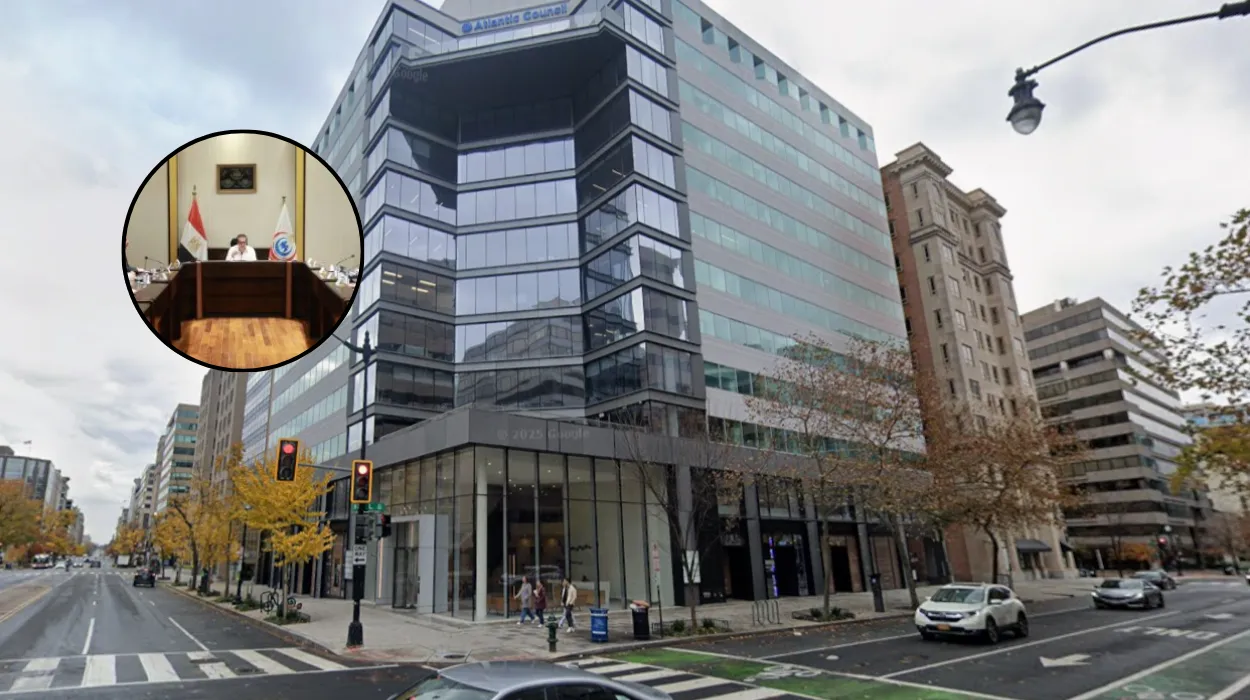
Washington (Evening Washington News)April 27, 2026 In the corridors of power where global alliances are recalibrated and US foreign‑policy priorities are set, Egyptian officials and accompanying journalists engaged in a high‑level dialogue with experts from the Atlantic Council to examine how Egypt can reclaim a more central place in Washington’s strategic calculus, according to a report published by Daily News Egypt on 26 April 2026.
- Key Points
- Why is Egypt’s presence in Washington seen as uneven?
- How are regional peers reshaping influence in Washington?
- What role does the Egyptian‑American diaspora play?
- Think tanks and policy framing: Egypt’s missed opportunities?
- Congress and the visibility of the Egyptian file
- What would a more cohesive strategy look like?
- Background of the development
- Prediction and implications for the audience
The talks, organised around Egypt’s “Doorknock Mission” in the US capital, centred on how Cairo can bridge perceived influence gaps amid a region where competitors have developed more structured lobbying and advocacy ecosystems, while Egypt remains reliant on a more traditional, government‑centric approach.
As relayed by the Egyptian media outlet, participants described a situation in which Egypt’s file is still treated as strategically important in certain US executive‑branch circles, but appears less visible in congressional debates and long‑term policy planning.
Why is Egypt’s presence in Washington seen as uneven?
One recurring theme, stressed by multiple analysts during the Atlantic Council session and reported by the accompanying Egyptian journalists, was that Egypt’s influence is “not absent” but uneven across institutions.
Data and commentary cited during the discussion indicated that Egypt continues to benefit from its status as the largest Arab country, its receipt of substantial US military aid, and the fact that it hosts the largest US diplomatic mission in the Middle East.
Yet, as summarised by the Daily News Egypt account, this weight does not translate uniformly into sustained visibility on Capitol Hill or in broader public‑policy discourse.
The piece paraphrased Atlantic Council‑linked experts as arguing that influence in Washington is not simply about government‑to‑government contact, but also about penetration of think tanks, media, and diaspora‑driven networks that help frame narratives and frame votes.
How are regional peers reshaping influence in Washington?
The discussion highlighted how several regional actors have built more diversified influence channels, including paid lobbying firms, advocacy groups tied to particular states or congressional districts, and frequent appearances in think‑tank panels and media outlets.
Think tanks such as the Atlantic Council, which has long hosted events on Egypt and the broader Middle East, were cited as key nodes in these networks.
According to the Daily News Egypt report, Atlantic Council experts noted that Egypt has been present in such forums, with senior Egyptian officials participating in recent events, but that these engagements remain episodic rather than part of a clearly articulated, long‑term strategy.
The outlet quoted unnamed participants as observing that “influence varies across institutions,” and that the core challenge is not to acquire more influence from scratch, but to organise and coordinate existing channels into a coherent architecture.
What role does the Egyptian‑American diaspora play?
The Egyptian‑American community in the Washington area – including Washington, DC, parts of Virginia, and Maryland – was repeatedly mentioned as both an asset and an under‑utilised resource.
Egyptian‑American voters and activists, especially in swing‑state suburbs where Egyptian‑origin communities are growing, have increasingly been scrutinised by US political parties as a potential bloc that can sway tight electoral contests.
However, as conveyed in the Daily News Egypt narrative, Atlantic Council‑linked analysts and some members of the Egyptian journalistic delegation questioned whether Cairo has developed a structured mechanism to harness this diaspora for sustained policy advocacy, instead of one‑off event‑based outreach.
The report paraphrased participants as noting that Egypt has not yet fully replicated the kinds of diaspora‑driven networks that other countries have used to lobby specific congressional committees, shape legislative language, or influence budget decisions over multi‑year cycles.
Think tanks and policy framing: Egypt’s missed opportunities?
The Atlantic Council’s role in shaping how US policymakers think about Egypt and the wider Middle East was underscored during the session.
The organisation has previously hosted high‑profile debates on Egypt’s democratic trajectory, security role, and economic outlook, and its issue briefs and panels are cited by US officials and congressional staff as reference points.
As reported by the Egyptian‑based outlet, Egyptian officials at the mission described their recent Atlantic Council appearances as “positive steps,” but also acknowledged that such appearances need to be backed by a more systematic engagement plan, including regular briefings, follow‑up research collaborations, and targeted messaging geared toward specific congressional committees and staff. The article quoted unnamed participants as suggesting that think tanks are
“both an opportunity and an under‑utilised channel,”
arguing that Egypt should be more proactive in seeding its own frame of regional stability and partnership before others fill the narrative vacuum.
Congress and the visibility of the Egyptian file
A central concern raised during the Atlantic Council dialogue, as captured in the Daily News Egypt report, was the limited footprint of Egypt‑related debates in the US Congress relative to its size and regional weight.
The report noted that while Egypt remains a major recipient of US military assistance, the way this relationship is framed in legislative debates often lacks the depth and continuity seen with other partners whose lobbies and advocacy groups are more active and visible.
The Egyptian journalists accompanying the mission were said to have highlighted that Egypt’s case is often made in brief hearings or isolated letters to administration officials, rather than through a sustained, multi‑year congressional‑level strategy that includes opinion‑piece placements, expert testimonies, and coalition‑building with sympathetic lawmakers.
Atlantic Council‑linked experts, according to the story, agreed that a country of Egypt’s geopolitical and economic heft cannot afford to remain “peripheral” in long‑term congressional planning on the Middle East.
What would a more cohesive strategy look like?
Out of the dialogue, several conceptual elements of a more cohesive Egyptian strategy in Washington emerged, as summarised in the Daily News Egypt account.
These included: consolidating a centrally‑coordinated outreach unit that liaises with think tanks, media, and diaspora groups; mapping key congressional committees and individual lawmakers whose priorities align with Egypt’s security and economic arguments; and institutionalising a recurring calendar of briefings, roundtables, and opinion‑pieces that keeps the Egypt dossier visible between crises.
The report also suggested that Atlantic Council experts encouraged Egyptian officials to consider digitised and diaspora‑driven campaigns, in line with broader trends in how diasporas engage with US policy processes, including the use of social‑media‑augmented advocacy and targeted messaging aimed at specific constituencies.
However, the Egyptian outlet emphasised that such tools are still nascent in Egypt’s current Washington‑based approach.
Background of the development
The current push to redefine Egypt’s strategic role in Washington is rooted in a longer‑term shift in how US foreign policy on the Middle East has evolved in the past decade. Under prior administrations, Egypt’s relationship with Washington was anchored heavily in security cooperation and the Sinai‑centric counter‑terrorism and counter‑insurgency framework, with military aid serving as the primary visible marker of the partnership.
Over time, think tanks such as the Atlantic Council have broadened the framing to include questions of democracy, economic reform, and regional diplomacy, leading to more nuanced – and at times critical – assessments of Egyptian policy choices.
At the same time, competing regional actors have intensified their lobbying and advocacy efforts in Washington, creating an environment where visibility and narrative‑shaping have become as important as traditional diplomacy.
This evolving landscape has prompted Egyptian authorities to reassess how they project their interests in Washington, especially as the Egyptian‑American community grows in size and political relevance. The “Doorknock Mission” and the Atlantic Council dialogue represent part of a broader effort to shift from a purely government‑to‑government model toward a more multi‑channel engagement that includes academia, civil‑society‑adjacent actors, and diaspora networks.
Prediction and implications for the audience
For Egyptian policymakers and diplomats, the main implication of this re‑assessment is that success in Washington will depend less on episodic high‑level visits and more on the ability to build and sustain a diversified ecosystem of influence that operates across institutions. If Egypt succeeds in consolidating a more structured outreach strategy, it could see greater predictability in US support during moments of regional crisis, more favourable framing in congressional debates, and a stronger platform for shaping multilateral initiatives in which the US plays a central role.
For the Egyptian‑American community, the trend suggests growing leverage in US domestic politics, particularly in swing‑state suburbs where Egyptian‑origin voters are concentrated. As parties and policymakers pay closer attention to this demographic, Egyptian‑Americans may have more opportunities to influence how Egypt‑related issues are framed in Washington, provided they develop sustained advocacy channels of their own, rather than relying on ad‑hoc initiatives.